Bipartisan Energy Legislation Sparks Unlikely Alliances and Debates
The introduction of a new bipartisan bill aimed at fast-tracking energy projects has created unexpected alliances and opposition within the energy sector. This legislation, designed to boost both the fossil fuel and renewable energy industries, has sparked a complex web of support and criticism from various stakeholders.
The push for infrastructure permitting reform—a topic that usually flies under the radar—has gained significant traction and could shape the trajectory of technological development, environmental health, and energy costs. Driven by an unprecedented surge in energy demand, especially due to data center expansions, electricity prices are climbing, highlighting the need for updated infrastructure.
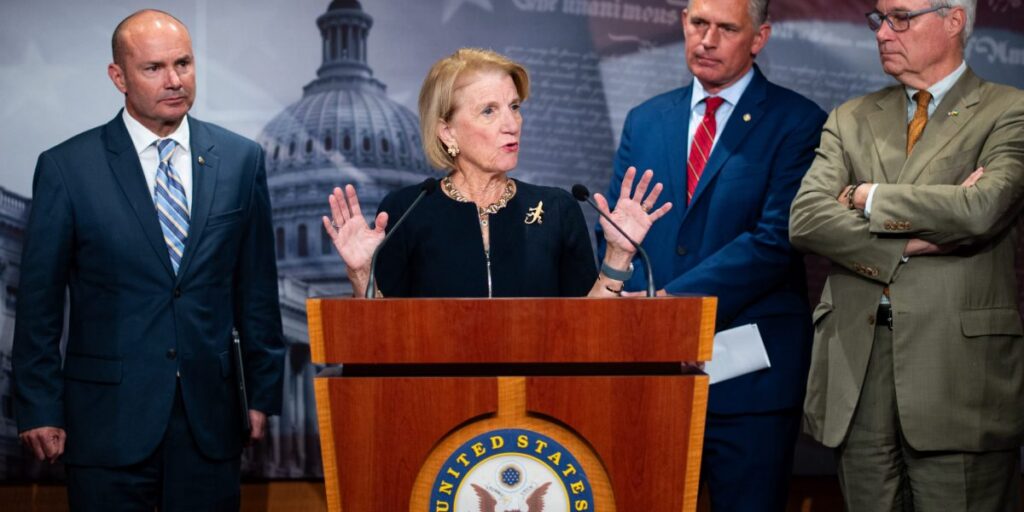
The proposed Bipartisan American Affordability and Jobs Act (BAAJA), authored by Senators Mike Lee, R-Utah, Sheldon Whitehouse, D-R.I., Martin Heinrich, D-N.M., and Shelley Moore Capito, R-W.V., aims to streamline the permitting process for a wide range of energy projects, from solar farms to oil pipelines. It seeks to reduce administrative hurdles, limit certain environmental reviews, and confine litigation to federal courts.
For Democrats, BAAJA represents a potential victory for renewable energy projects that have faced setbacks during the Trump administration. However, concerns persist that the legislation may overly accommodate fossil fuel interests and pose environmental risks. Conversely, Republicans see minimal drawbacks, aside from potential federal overreach into local permitting affairs.
The decision for Democrats is whether to accept the current compromise or wait for a possible congressional majority next year to draft a more favorable version, which could face Republican resistance and potential gridlock. Any delay could still require 60 Senate votes, with a risk of a Trump veto for overly liberal proposals.
With the legislative calendar tight, votes on the bill are expected post-November midterms, and unforeseen challenges could still arise. Ben Norris, Senior VP of Regulatory Affairs for the Solar Energy Industries Association, emphasized the bill’s importance in unlocking new clean energy and transmission capacity, despite some tradeoffs. “The amount of new clean energy, new transmission capacity that’s going to be unlocked under this bipartisan-negotiated language is well worth the tradeoffs that are made in other places,” he told Fortune.
Evaluating Benefits and Drawbacks
The legislation would notably benefit the construction of vast electric transmission systems, which are essential yet challenging to implement due to land ownership issues. Such infrastructure is critical for expanding renewable energy reach, as seen in Texas, where legislative support for transmission lines has bolstered wind and solar power growth.
Despite its potential, the bill faces opposition from environmental groups, who argue that it compromises essential environmental protections. Abigail Dillen, President of Earthjustice Action, criticized the bill for undermining safeguards for water, wetlands, and endangered species, warning of increased fossil fuel infrastructure and pollution.
The Sierra Club echoed these concerns, stating that the legislation weakens environmental laws, limiting states’ ability to protect their waterways through state courts. On the flip side, the fossil fuel industry supports the bill as a means to prevent legal challenges from stalling projects beyond federal statute requirements.
Toby Rice, CEO of EQT, a major natural gas producer, argued that the bill would lower utility costs and provide certainty for infrastructure projects. “If you think it’s hard to get a pipeline built, try building a transmission line,” Rice told Fortune. He advocates for a tech-neutral approach, allowing market forces to determine the best energy solutions.
The legislation promises to support renewable energy and transmission projects, potentially averting previous administrative permit pauses. Rice emphasized the need for both renewables and natural gas, with a focus on enabling market-driven energy development.
Original Story at fortune.com