Azerbaijan’s Green Energy Ambitions at COP31
In a significant move to address energy security and sustainability, Azerbaijan has prioritized ‘Green Energy Corridors’ at the COP31 climate summit in Antalya. The initiative aims to link renewable energy grids across nations and create a direct electricity pathway from the Caspian Sea to Europe.
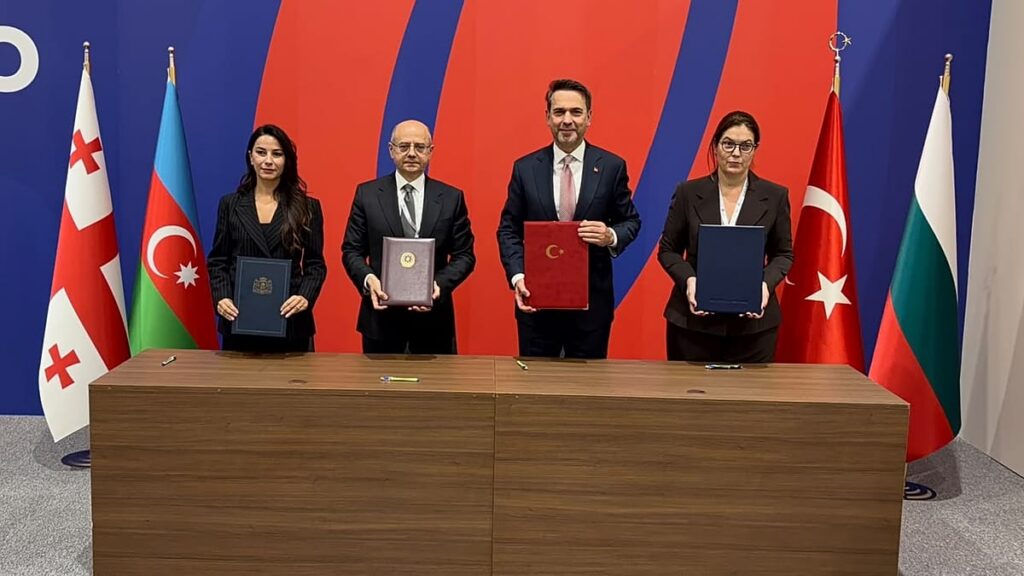
Emphasizing the importance of cross-border infrastructure, Azerbaijan, Türkiye, Georgia, and Bulgaria signed a Strategic Partnership Agreement in Clean Energy. This alliance seeks to diversify energy transmission routes and enhance regional energy security by connecting the South Caucasus with Eastern Europe.
Developing a High-Capacity Network
The agreement, formalized during the Antalya talks, transforms years of planning into actionable commitments. It focuses on establishing a high-capacity transmission network that will channel wind and solar energy from the Caspian basin to Europe.
On November 10, 2026, Azerbaijan’s Energy Minister Parviz Shahbazov and counterparts from Türkiye, Georgia, and Bulgaria signed the agreement, marking a step towards creating an interconnected grid that bypasses traditional obstacles.
The project will expand existing high-voltage lines through Türkiye and the South Caucasus, with a concurrent upgrade in fibre-optic communications to ensure reliable and modern grid management.
Impact on European Energy Supply
Bulgaria’s participation as a signatory is crucial for European markets. The partnership aims to diversify Eastern Europe’s energy imports, thus reducing dependence on fossil fuels. It establishes a new energy link between the South Caucasus power network and the European Union grid.
This Green Energy Corridor promises a stable, alternative source of clean electricity for European consumers, spreading the financial and technical development burdens across four nations.
The Role of Bilateral Grid Diplomacy
Throughout the COP31 summit, Azerbaijan emphasized the ‘Corridor of Dialogue’ concept, highlighting the Azerbaijan-Türkiye energy connection as foundational to the initiative.
Significant investments in renewable energy projects, especially in the Caspian Sea, necessitate robust export infrastructure. The Azerbaijani Ministry of Energy engaged in diplomatic efforts with international renewable companies to advance power generation, energy storage, and cross-border grid projects.
Minister Shahbazov portrayed the Antalya pact as a continuation of Azerbaijan’s historical energy strategy, emphasizing the ministry’s commitment to connecting producer and consumer markets through concrete projects.
Original Story at www.euronews.com