Autonomous Vehicles: A Glimpse into San Francisco’s Future and Past
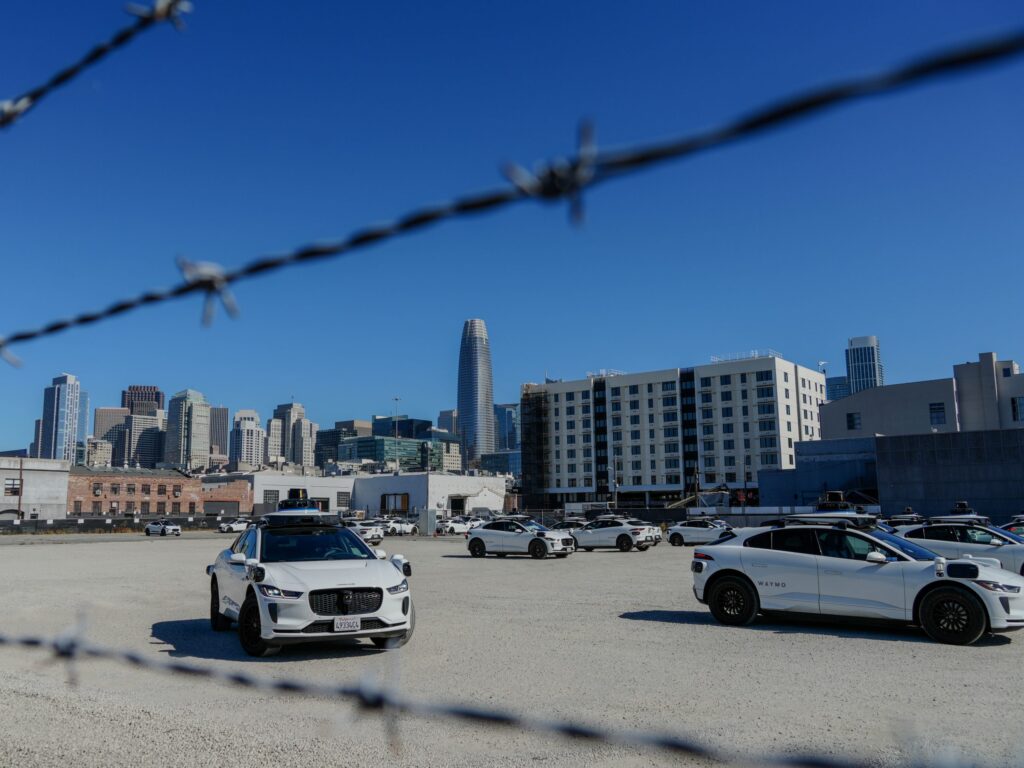
At the intersection of Fifth and Brannan streets, a fascinating scene unfolds as rows of autonomous vehicles, adorned with oscillating lights, await their next venture. This modern spectacle of driverless cars silently navigating the city reflects both San Francisco’s technological future and its historical landscape dominated by vast parking areas.
Today, fleets of Waymo’s boxy Ojais and squat Jaguars operate across the city, epitomizing the futuristic vision of transportation by seamlessly ferrying passengers on demand. Yet, this operation is reminiscent of SoMa’s past, characterized by sprawling open and parking lots, now repurposed for these high-tech vehicles.
As these autonomous vehicles glide through the streets, they become a staple feature for locals, even as tourists stop to marvel. While San Franciscans focus on their road interactions with other vehicles and first responders, less attention is given to the logistics when these cars are parked and idle.
Behind the scenes, strategic planning for parking and maintenance of these fleets is essential. Almost a decade ago, Molly Turner, a lecturer at UC Berkeley’s Haas School of Business, learned from an industry insider that acquiring real estate for vehicle parking and charging was a top priority for autonomous vehicle companies, even before they were widely deployed.
Autonomous vehicles require parking not only for charging but also for maintenance and cleaning. The absence of a human driver often leads to vehicles being misused by passengers, necessitating rigorous cleaning and maintenance routines.
Yet, the preferred locations for these parking and maintenance facilities often clash with the city’s land-use aspirations. A list obtained by Mission Local reveals several sites where AV companies have placed or attempted to place their cars, primarily near high-demand areas. While this makes business sense, it may not align with the city’s development goals.
Real estate brokers note that autonomous vehicle companies target central areas for their facilities, aligning with customer demand. Companies like Terrawatt, specializing in electric vehicle fleet charging, emphasize the importance of positioning in high-demand zones, according to their website.
A map of San Francisco’s autonomous vehicle parking sites, including current and potential locations, shows that most are situated in the bustling northeast, where rideshare demand is highest. Though locating services near customers is sensible from a business perspective, it surprises urban studies experts who expected these facilities in less populated areas.
Professors Nico Larco and Robert Binder from the University of Oregon, in their study, expressed surprise at finding large robotaxi depots in upscale Los Angeles neighborhoods. They questioned whether these sites were zoned for such industrial use.
While placing a product near its users is sound business, using prime city land for parking lots contradicts modern urban planning ideals. Cities like San Francisco face a dilemma where growth requires more housing, while autonomous vehicle companies need more parking.
Though the current impact of AV facilities on housing development is minimal, the potential for future conflict looms as both sectors vie for valuable city space. Even temporary parking arrangements could hinder development if lucrative long-term leases are established.
Moreover, the costs of setting up charging infrastructure are significant, with expenses reaching hundreds of thousands of dollars per station. This financial commitment often results in long-term leases, further complicating future development.
Ultimately, the presence of autonomous vehicles in San Francisco poses intriguing questions about urban development. While they promise efficient transportation, they also bring complex challenges in balancing the city’s growth and technological evolution.
Original Story at missionlocal.org