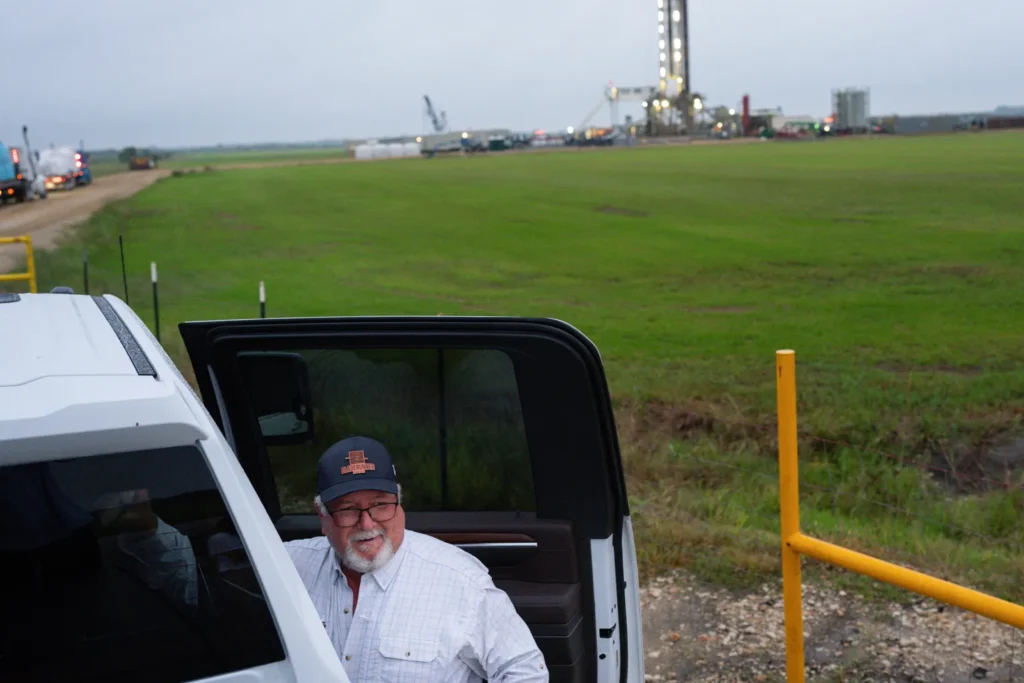
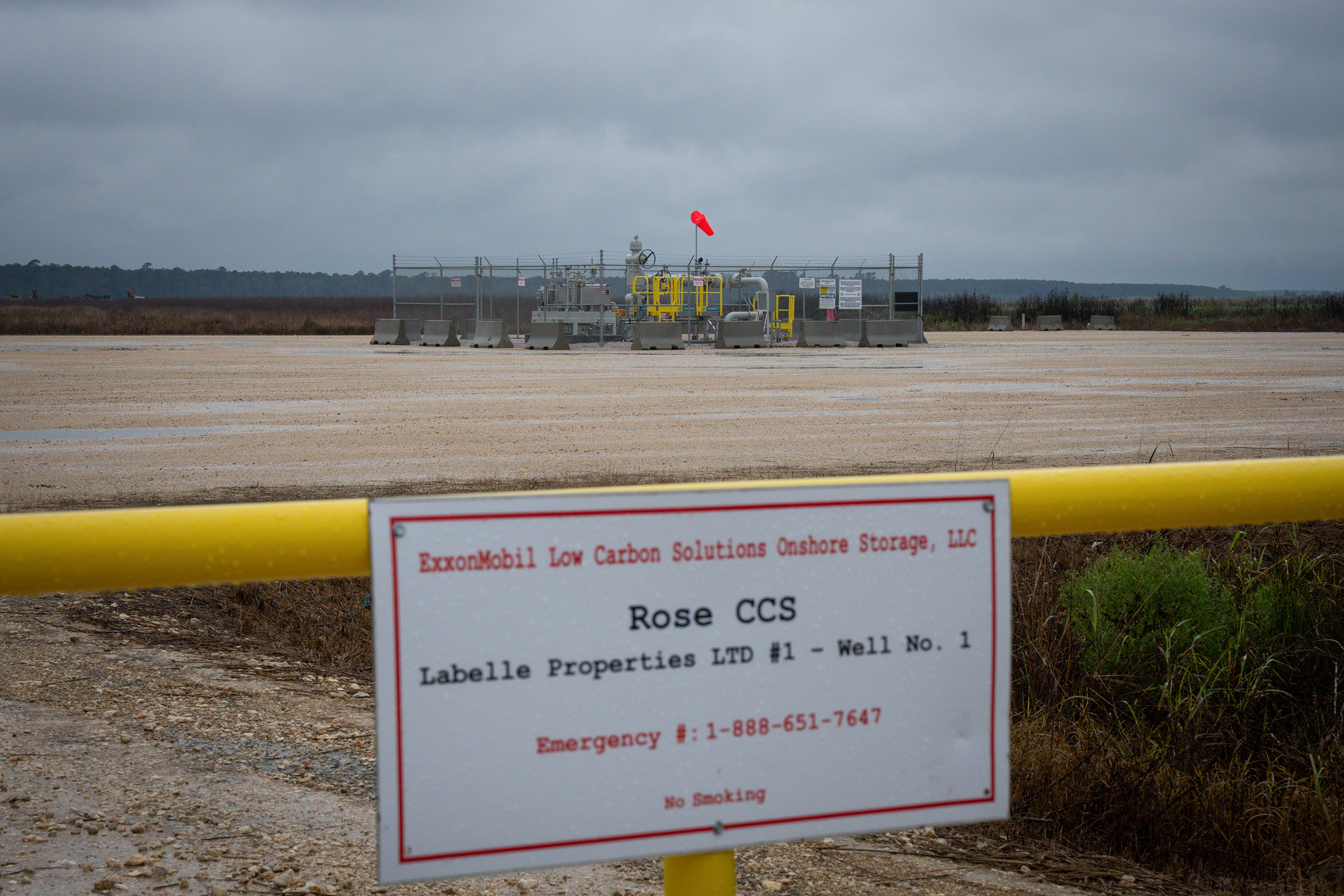
CHEEK—On a rural road outside Beaumont, a Texas energy giant is set to pump carbon dioxide underground for permanent storage, aiming to prevent its contribution to global warming. This could be Texas’ first operating project of its kind.
This project marks a significant milestone for the oil and gas industry, which views carbon capture and storage as key for reducing emissions. Texas lawmakers backed the technology, and state regulators have long sought federal permitting authority to expedite projects.
The Texas Railroad Commission gained this authority last year and approved ExxonMobil’s project in September. However, Cheek’s community has requested a permit review.
The project area is predominantly Black, with many working-class or elderly residents. Local distrust persists regarding the company’s safety assurances for residents and groundwater.
Few carbon storage wells have secured permits nationwide, and past CO2 accidents raise safety concerns. Experts warn of risks like pipeline accidents and underground leaks, prompting fears among Cheek residents about potential groundwater contamination or air release.
Douglas Cormier, president of the Cheek Texas Community Association, stated, “We’re just shocked that they would want to do this so close to homes.”
Texas companies are pursuing 13 projects for underground carbon dioxide storage, mostly near existing pipelines.
Residents oppose being technology test subjects, with some experts like Harvard’s Naomi Oreskes calling carbon capture a “dangerous distraction”.
A Drilled and ProPublica investigation claimed carbon capture requires more resources than feasible to significantly cut emissions.
Supporters argue emissions storage is vital in a comprehensive approach to climate change. Federal tax credits bolster projects, making East Texas appealing due to its pipeline network, geology, and nearby industrial facilities.
ExxonMobil has agreements with seven companies to store CO2, equaling emissions from 2 million cars.
“Community concerns about injection project safety are real and need serious consideration,” said Nichole Saunders from the Environmental Defense Fund. “Yet, the necessity for more carbon management infrastructure is undeniable.”
The project’s progress raises questions about whether the industry and Railroad Commission adequately address community concerns amid a project backlog.
Watchdogs criticize the commission for historically failing to protect communities from industry risks. State Rep. Drew Darby urged the agency to advance carbon-capture projects swiftly while ensuring safety.
Railroad Commission’s Bryce Dubee stated the organization has a record of safeguarding drinking water while regulating injection wells. The authority to regulate carbon storage “speaks volumes to this expertise,” Dubee said.
ExxonMobil held early meetings with Cheek’s community. Their permit mandates automatic shut-off systems, underground CO2 plume monitoring, and a 24/7 contact number.
Permitting requires local emergency official coordination. ExxonMobil supports emergency training via Texas A&M Engineering Extension Service.
“Community members can trust us to operate responsibly, communicate openly, and prioritize safety,” wrote Dominic Genetti, senior vice president, in a blog post.
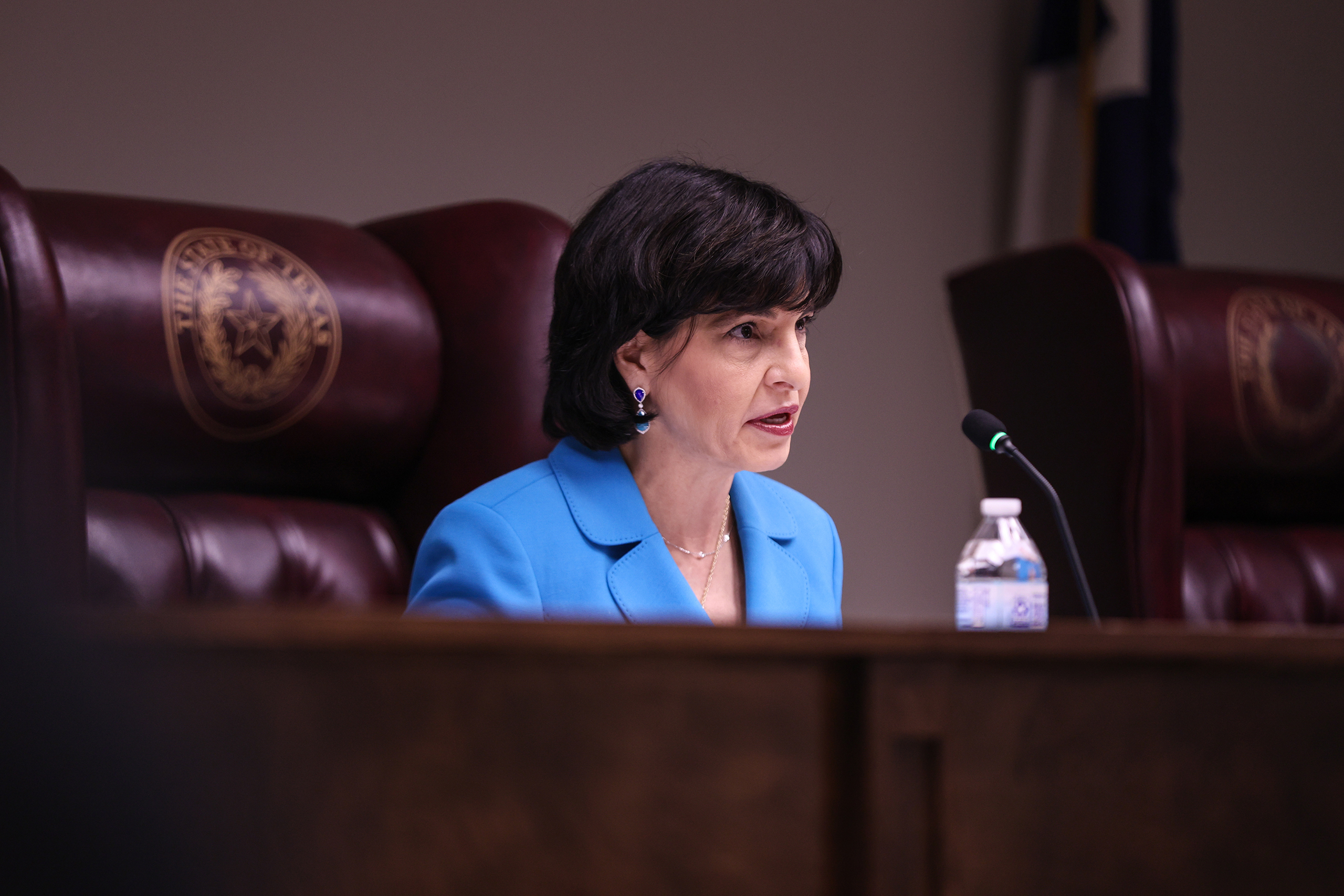
Despite Darby’s remarks, Chair Christi Craddick critiqued ExxonMobil for inadequate resident support since legal representation was hired by the community.
“Provide them information,” she urged. “Ensure their safety. Offer a fire truck if needed.”
She then voted for the permit.
Community Distrust
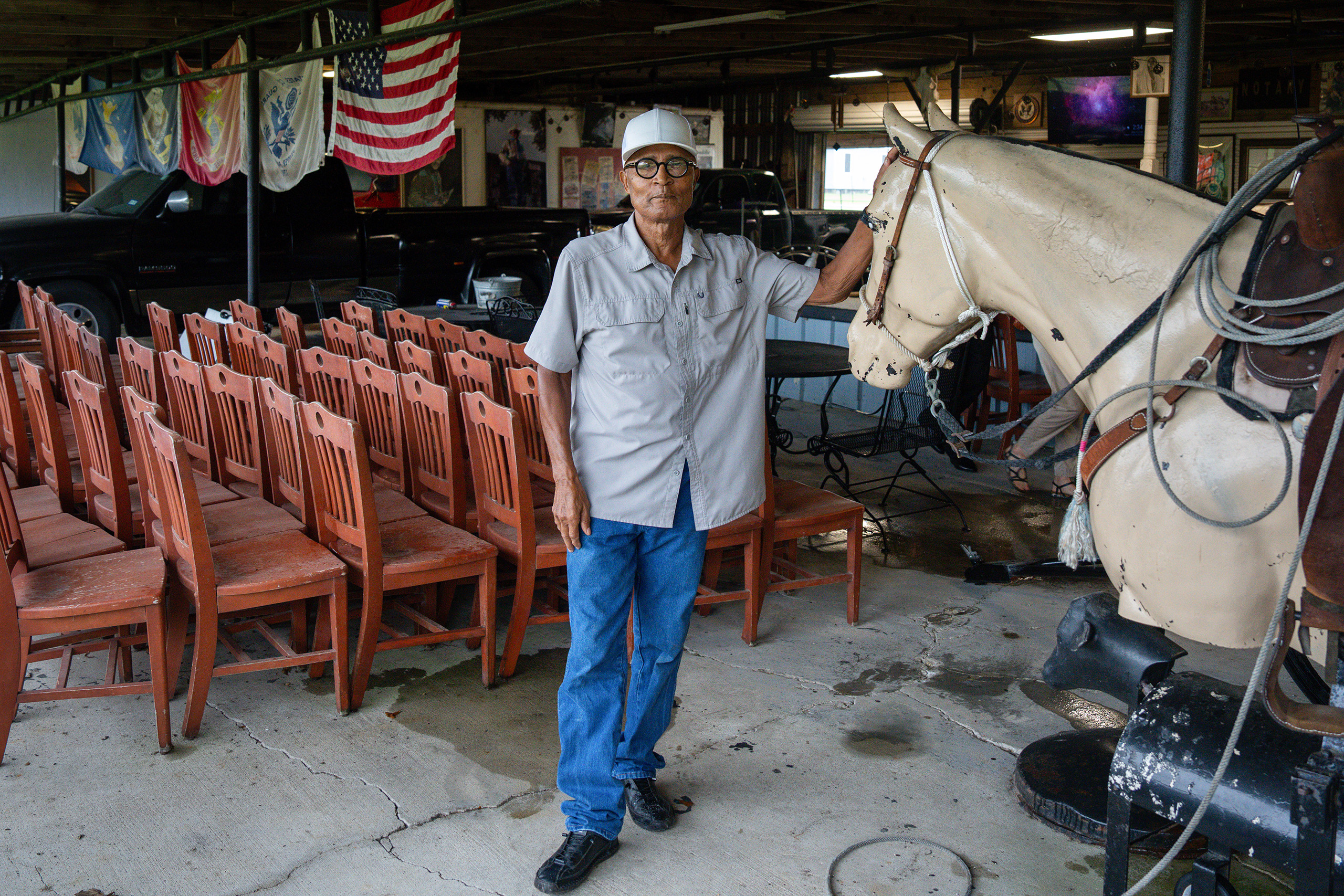
Photos and posters about Cheek’s local rodeos history adorn 81-year-old Preston Frank’s museum. An upholsterer, Frank inherited land from his family, viewing it as vital for generational wealth.
“That’s why we’ve been fighting ExxonMobil,” he said. “We don’t want them diminishing our land’s value.”
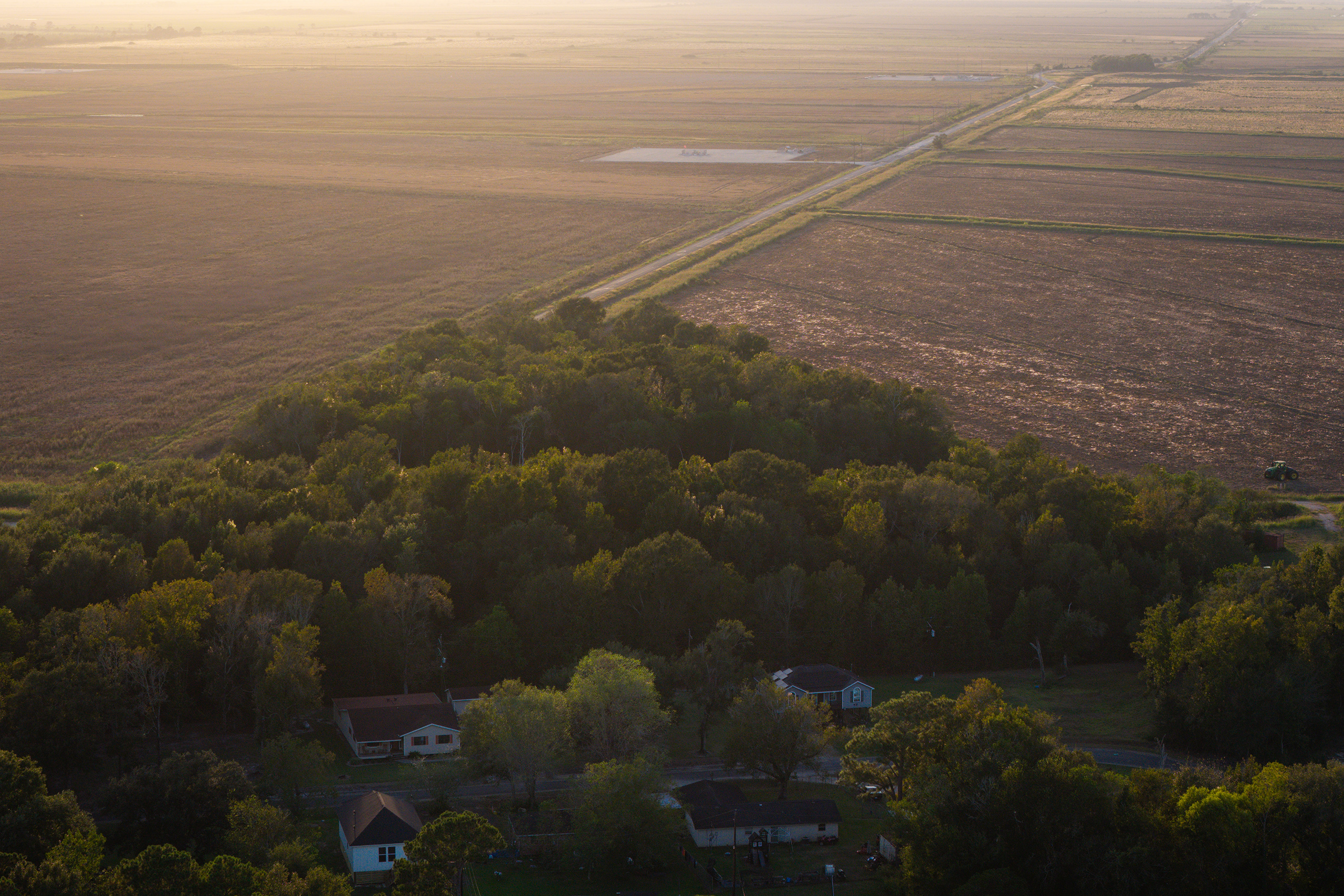
West of Beaumont off Interstate 10, Cheek is split by a highway and railroad, with many large tracts of land hosting cattle and horses. Neighbors wave to each other. On the north side, there’s a Catholic and a Baptist church. Residents gather annually for a community picnic.
ExxonMobil plans to compress CO2 into an “almost liquid state” and pump it deep into the Earth, expecting it to dissolve in salty water or get trapped in rock spaces. Residents have voiced concerns from the outset.
How does ExxonMobil ensure the molecules’ behavior? What if the project is abandoned?
CO2 leaks could increase groundwater acidity, causing metal contamination, according to advocacy groups. If it leaks into the air or a pipeline ruptures, a sufficient plume could cause suffocation.
“Contamination of drinking water with CO2, or with metals or chemicals leaching out of rock due to CO2 acidification, could be very costly if the affected aquifer is used by a lot of people,” wrote Lawrence Berkeley National Laboratory researchers in a 2007 paper. “Once any aquifer is contaminated, it will remain so.”
Cheek’s community association signed with Earthjustice attorneys in July 2025. They contested the permit approval, arguing ExxonMobil hadn’t sufficiently ensured water and public safety.
“It’s the first project close to a community, making water and safety issues paramount,” said Jen Powis of Earthjustice’s Gulf regional office.
The project raises environmental justice concerns, as communities of color often suffer more environmental harm. Residents fear ExxonMobil saw their homes as an easier, cheaper project site.
The company built three injection wells at the community’s edge. Some Cheek residents signed “pore space agreements” with ExxonMobil, allowing CO2 storage in their controlled underground rock spaces under current case law.
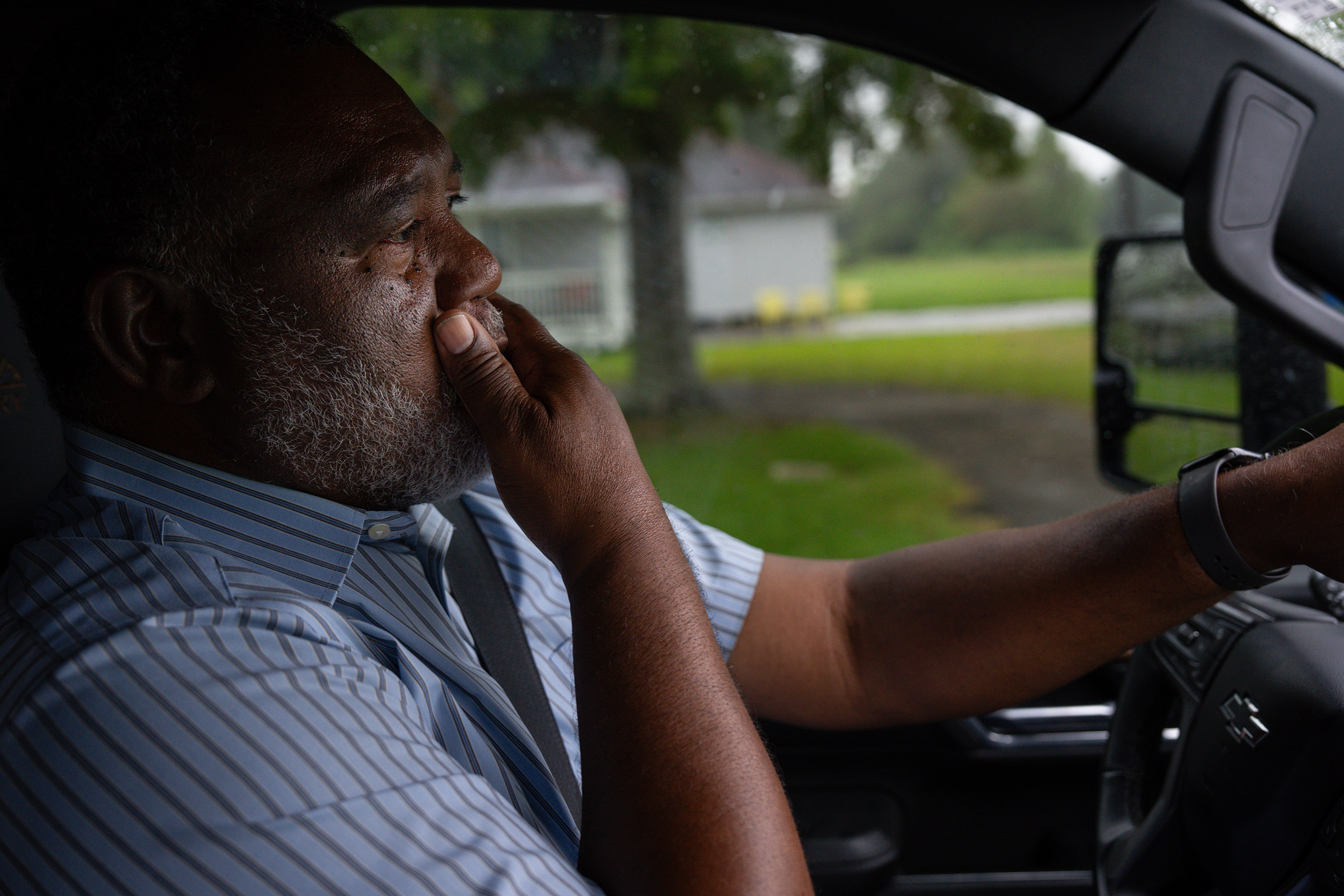
“I think they found an area with less expected resistance,” said James Strambler, a former IBM technician.
After the hearing, a technical examiner and judge recommended moving the permit to the commission for a vote.
State Gains Power
Texas’ quest for carbon storage well permitting authority spans over a decade.
In 2009, Texas lawmakers authorized the railroad commission to design a regulatory framework aligning with federal law. In 2022, the state applied formally to the Environmental Protection Agency.
At a July 2025 EPA hearing, the Texas Oil and Gas Association argued carbon capture would boost the state’s economy.
Permitting carbon storage wells was “essential for our state’s economic future and energy leadership,” said Todd Staples, the group’s president.
Supporters note carbon dioxide fizzes sodas and creates fog. A Texas A&M study found leaks pose a low probability, manageable with monitoring.
Advocates highlight Texas’ long history of injecting CO2 for oil recovery and greenhouse gas storage, a process ExxonMobil has pursued for decades.
“This has been in place for over 50 years,” said Scott Castleman, Gulf Coast Carbon Capture and Storage Alliance spokesman. “There’s more discussion and opportunity for industry scaling, leading to new projects and interest.”
Community trust is crucial as the industry grows, said Sophia Cunningham from the Greater Houston Partnership. Engaging communities early and providing input opportunities are best practices.
“Reducing emissions from industrial activities is good,” Cunningham said. “But not every community member will want that.”
Residents should ask about helplines for issues or truck driver compliance with road weight limits, said Susan Hovorka from the University of Texas at Austin. Research and experience support the technology’s safety.
“There’s some peril, and it’s not foolish to ask,” Hovorka said, “But their anxiety might be higher than practical and realistic.”
Serious incidents have occurred in the U.S.
In Mississippi, a CO2 pipeline ruptured in 2020 after a landslide, releasing a vapor cloud. A government report noted first responders weren’t informed of safety risks, leaving them to “guess.” Many people were hospitalized.
Elsewhere, injected fluid leaked into “unauthorized zones” in an Illinois facility, unknown to most residents until a news article.
Louisiana Gov. Jeff Landry paused new application reviews to ensure compliance with safety regulations and efficiency.
Among states with permitting authority, Arizona hasn’t approved any wells. North Dakota has eight active wells across three projects, and Wyoming has five wells in one project.
“The benefit isn’t there,” said Naomi Yoder, an environmental researcher. “So it’s not worth the risk, and risk exists. You can’t sequester enough CO2 to justify it.”
Can Texas Improve?
In a Texas state hearing, Darby emphasized industry support as ExxonMobil’s Cheek permit neared approval. Virginia Palacios from Commission Shift urged ensuring companies fund emergency responder equipment and training.
Railroad Commissioner Wayne Christian has vehemently opposed such projects, claiming CO2 benefits plants. He disputes science linking fossil fuel combustion to atmospheric CO2 rise and global temperature increases.
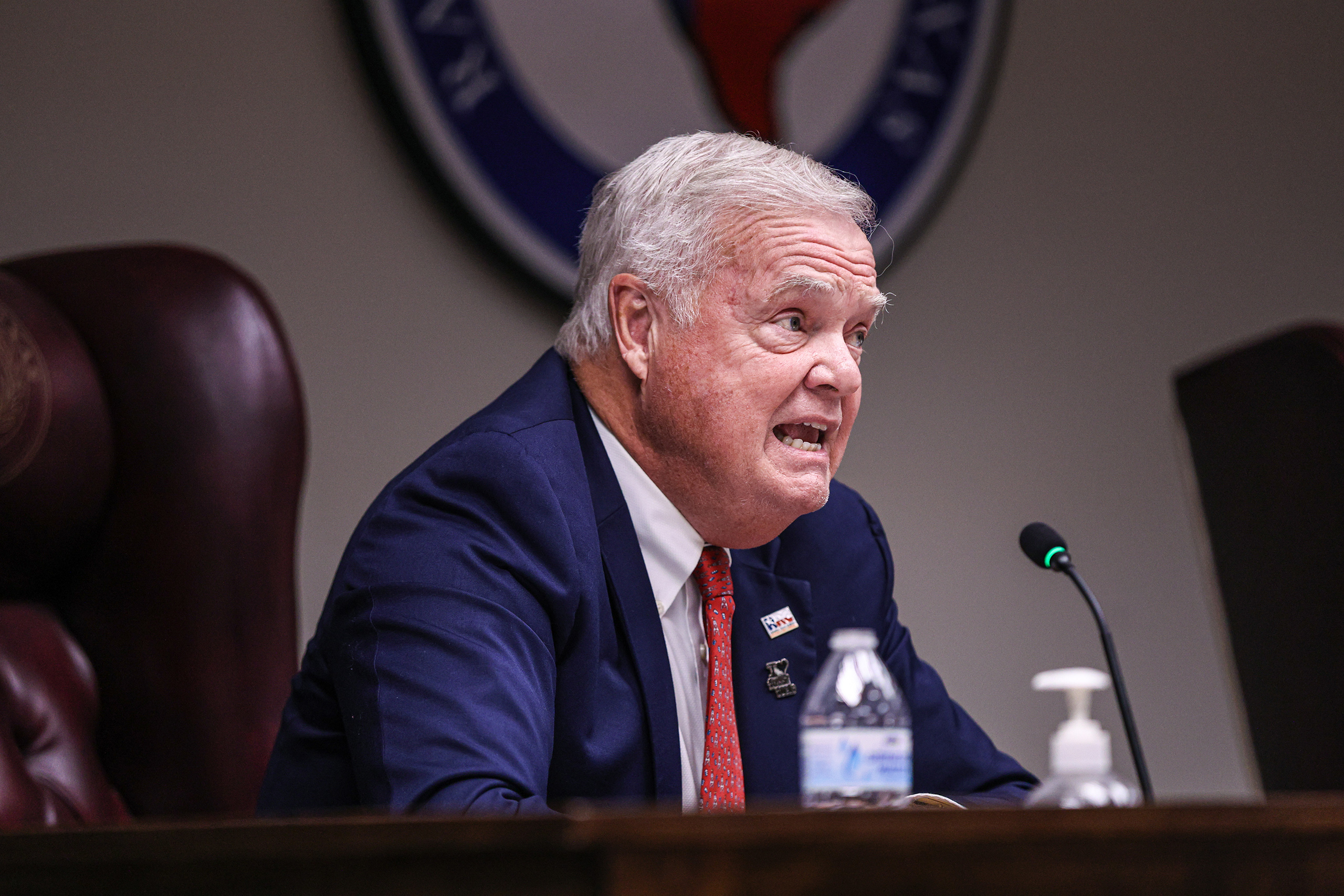
He voted against ExxonMobil’s permit, citing safety concerns.
Newly elected Railroad Commissioner Jon Rosenthal supports state regulation of the wells.
Some projects have stalled. Oxy’s carbon storage project, the only other Texas-approved project, is advancing slowly.
ExxonMobil’s “Sunflower” project near Nome is progressing, with public comments being collected. Like the Cheek “Rose” project, it’s named after a flower.
In late October, advocates knocked on residents’ doors to invite them to a meeting about self-advocacy. Only one local attended, but several from Cheek shared advice over dinner.
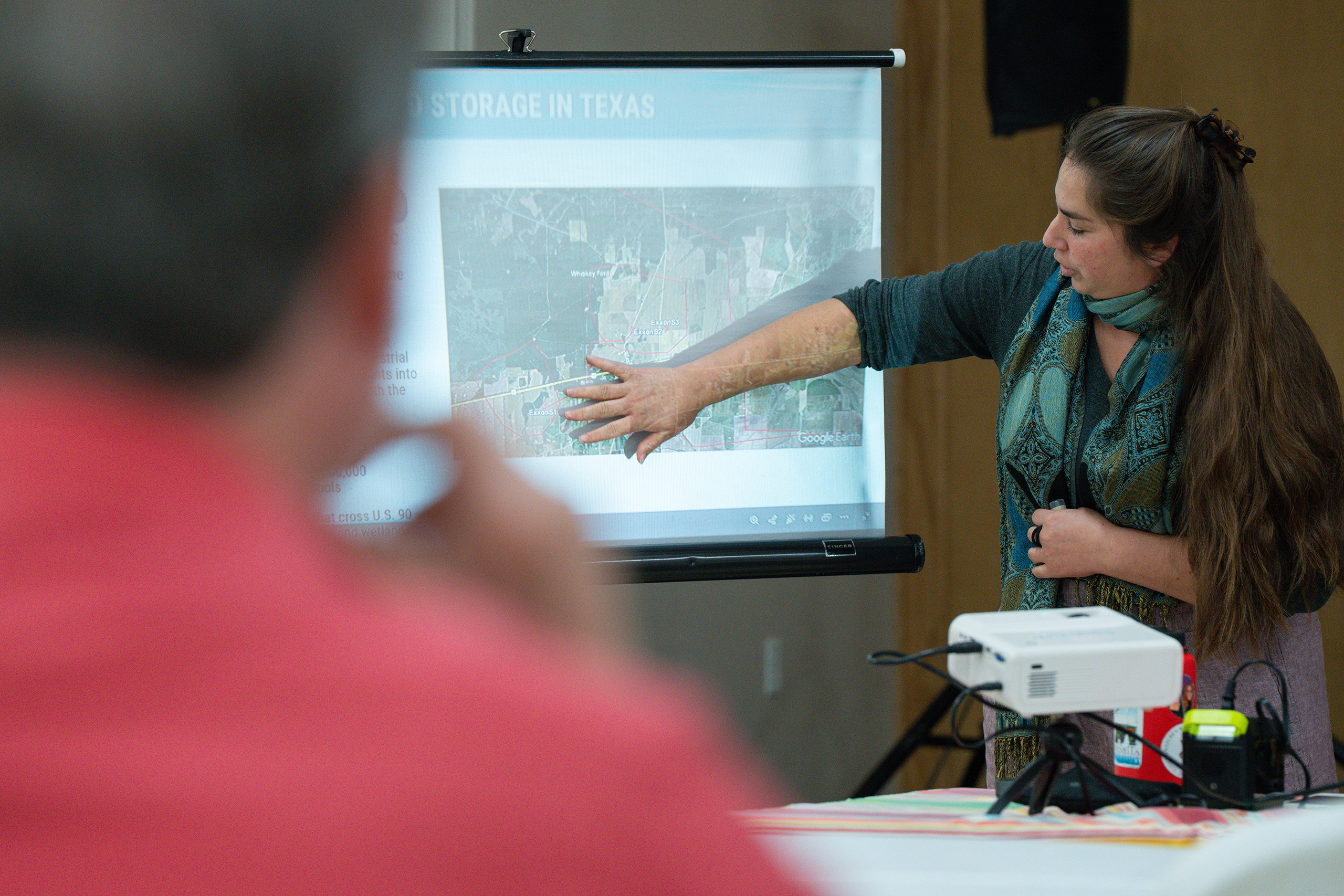
Meeting hosts characterized the technology as financially beneficial for industry and the Railroad Commission but risky for drinking water. CO2 can cause suffocation, presenter Alexis Iwasiw warned.
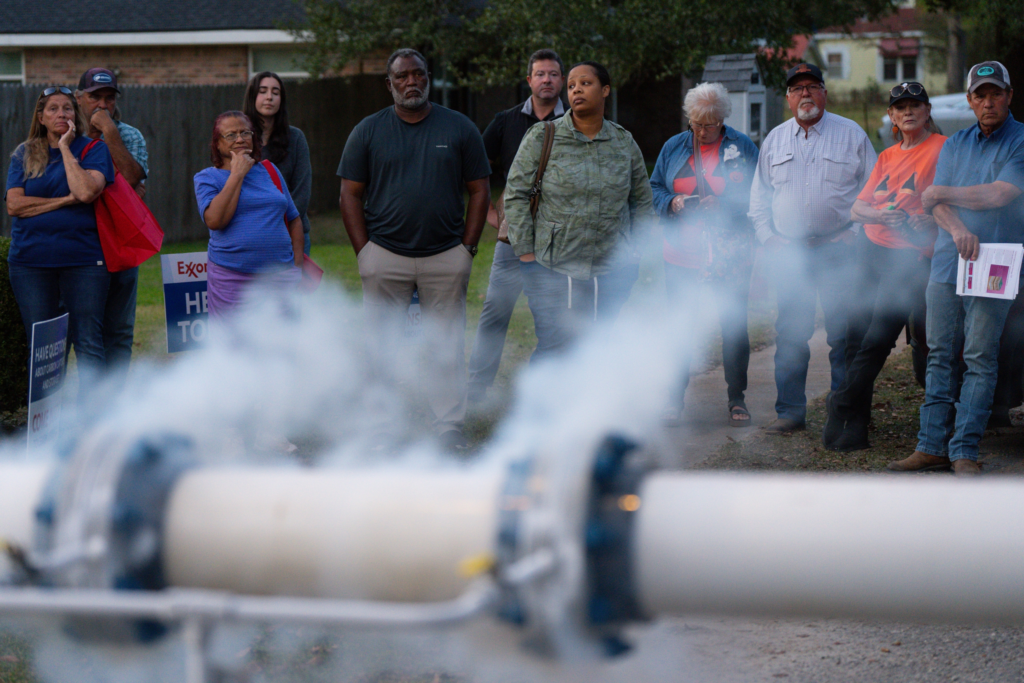
The next night, ExxonMobil hosted an open house at Nome City Hall, offering refreshments and safety pamphlets. They demonstrated CO2’s safety with a mock release.
Mike Doguet, a 72-year-old local, praised the company’s communication, especially compared to Cheek. ExxonMobil is funding community projects, including firefighting equipment.
One Sunflower injection well is across from Doguet’s home. He is optimistic about its potential benefits for the environment and economy.
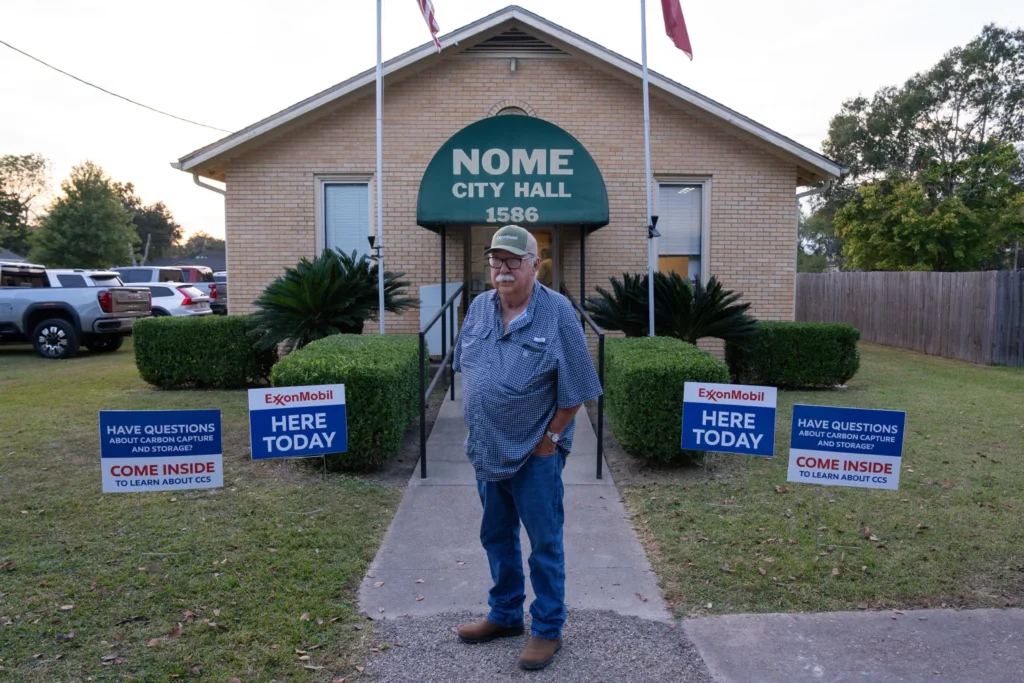
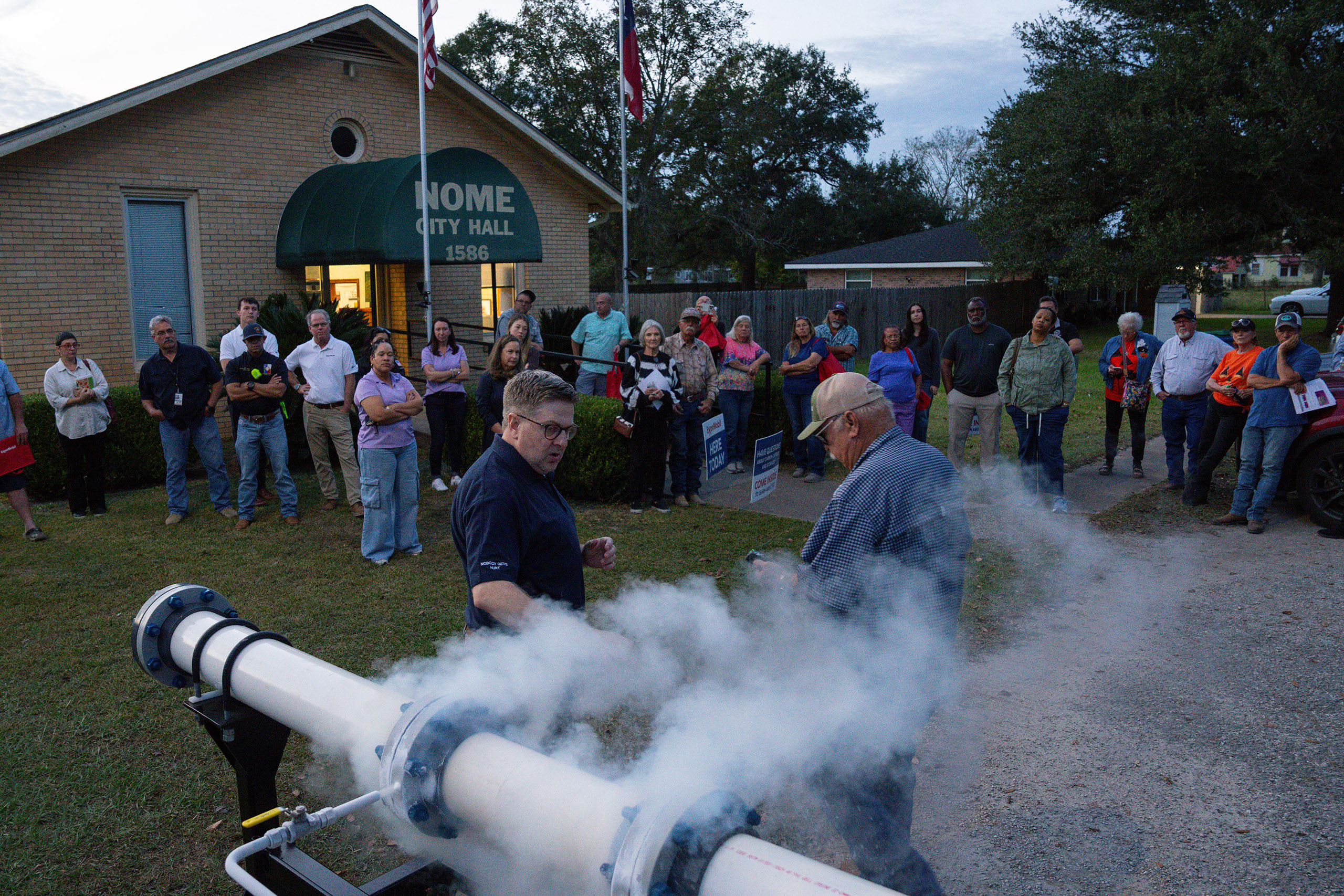
During the presentation, a Cheek resident challenged ExxonMobil employees with questions. An employee emphasized their commitment to pipeline safety.
Lawrence Riley, a former ExxonMobil employee and Nome resident, vouched for pipeline safety, saying he’d never experienced an emergency in decades.
Wearing an ExxonMobil hat, Mayor Kerry Abney walked through the CO2 cloud, expressing support for the project. He noted its economic benefits, including increased sales tax from worker spending.
As Abney described it: “Santa Claus came.”
The Cheek resident remained skeptical.
Carlos Nogueras Ramos and Zach Leggio contributed reporting.
Disclosure: The University of Texas at Austin has supported The Texas Tribune. Environmental Defense Fund, Greater Houston Partnership, and IBM are past donors. Financial supporters play no role in our journalism. Find a complete list here.
This article first appeared on The Texas Tribune
About This Story
This story, like all our news, is free to read. Inside Climate News is a nonprofit. We don’t charge subscription fees or use paywalls. Our climate and environmental news is freely available to you.
We share our news with other media nationwide, many of which can’t afford their own environmental journalism. We’ve established bureaus to report local stories, collaborate with local newsrooms, and co-publish articles for wider sharing.
ICN launched in 2007. We won a Pulitzer Prize for National Reporting in 2013. We run the nation’s oldest and largest dedicated climate newsroom. We tell the story, hold polluters accountable, expose injustice, debunk misinformation, scrutinize solutions, and inspire action.
Reader donations fund all we do. If you don’t already, please support our work, planet crisis reporting, and help us reach more readers.
Make a tax-deductible donation. Every one makes a difference.
Thank you,
Original Story at insideclimatenews.org