Hidden Beneath the Waves: The Vital Role of Eel Grass in San Pablo Bay
As the waters of San Pablo Bay recede, patches of eel grass emerge, unveiling a vital ecosystem beneath the waves. This long, slender grass serves as a sanctuary for a variety of marine life, yet much about its inhabitants remains a puzzle to scientists.
For years, Kathy Boyer from the Estuary and Ocean Science Center has been delving into the mysteries of eel grass. “We know that fish use these beds,” Boyer mentions, yet the specifics still elude researchers.
Students under Boyer’s guidance have been conducting field studies along the Richmond shoreline to uncover more about these underwater havens. They frequently use seine nets to collect and examine marine creatures like smelt, gobies, and even the occasional leopard shark, documenting their findings before returning the animals to their habitat.
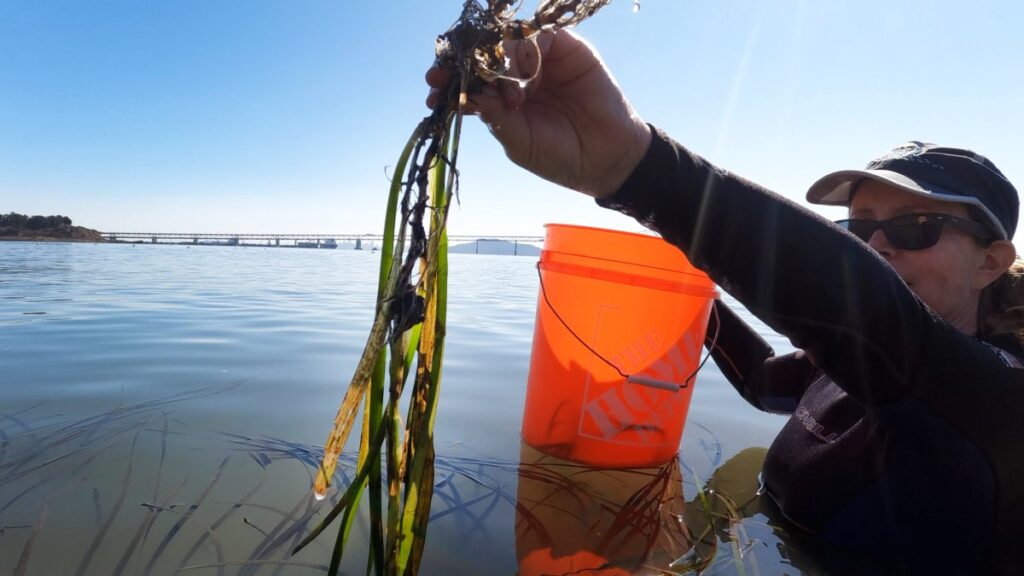
Joe Rosato Jr./NBC Bay Area
Researcher Kathy Boyer holds strands of eel grass off the coast of Richmond in the San Pablo Bay.
Boyer explains the importance of these beds, noting they offer protection from predators and an abundant food supply. Beyond serving as a habitat, eel grass also plays a crucial role in stabilizing shorelines and reducing ocean acidification, although it is not immune to the effects of climate change.
Daniel Orr from Audubon California uses computer models to demonstrate potential future scenarios for eel grass. Current models show thriving green beds, but with sea level rise and increasing water temperatures, these areas could face severe habitat loss.
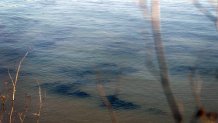
Joe Rosato Jr./NBC Bay Area
Beds of eel grass float with the tides off the coast of Richmond in the San Pablo Bay.
Orr highlights areas where a significant loss of habitat could occur, stating, “These redder areas are where you have a big loss of habitat, maybe a 95% loss of habitat.” Although a total loss is unlikely, the gradual reduction in eel grass is a pressing concern.
The loss of eel grass could lead to a decline in both commercially and ecologically important species. However, certain areas like Richardson Bay near Tiburon might continue to thrive despite these challenges.
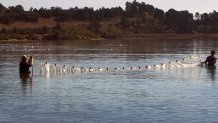
Joe Rosato Jr./NBC Bay Area
Researchers pull a seine net through eel grass beds in the San Pablo Bay to see which marine species use the beds.
Efforts to counteract potential losses are underway. Since 2014, Boyer’s team has been actively restoring eel grass, planting new beds around the bay. “We’re doing somewhere between five and 10 acres of eel grass restoration per year in San Francisco Bay now,” Boyer notes.
Despite the critical role of eel grass, it often remains unnoticed by the public. Boyer acknowledges this challenge, stating, “It is hard for people to recognize its value because they have trouble seeing it. It’s usually under the water.”
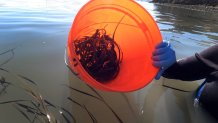
Joe Rosato Jr./NBC Bay Area
Researcher Kathy Boyer holds up a bucket of eel grass collected in the San Pablo Bay.
As Boyer’s team continues their research, they aim to elevate public awareness about the significance of eel grass. Understanding the value of these beds is crucial for their protection and the preservation of the diverse marine life they support.
Original Story at www.nbcbayarea.com