Scientists Rally Against DOE’s Controversial Climate Report
The U.S. Department of Energy’s recent release has sparked significant debate in the scientific community. The 141-page document, which reassesses the impact of greenhouse gas emissions, challenges established climate change science, raising questions about its potential implications.
Energy Secretary Chris Wright, in his introduction, claims that media outlets often misrepresent the science behind climate change. He acknowledges the reality of climate change but argues that “global energy poverty” is a more pressing concern. This perspective has been met with skepticism from the scientific community.
Following the report’s publication, the Environmental Protection Agency (EPA) proposed rescinding the 2009 Greenhouse Gas Endangerment Finding, which provided a regulatory framework for vehicle and engine emissions. Critics fear this move could reverse years of progress in climate policy.
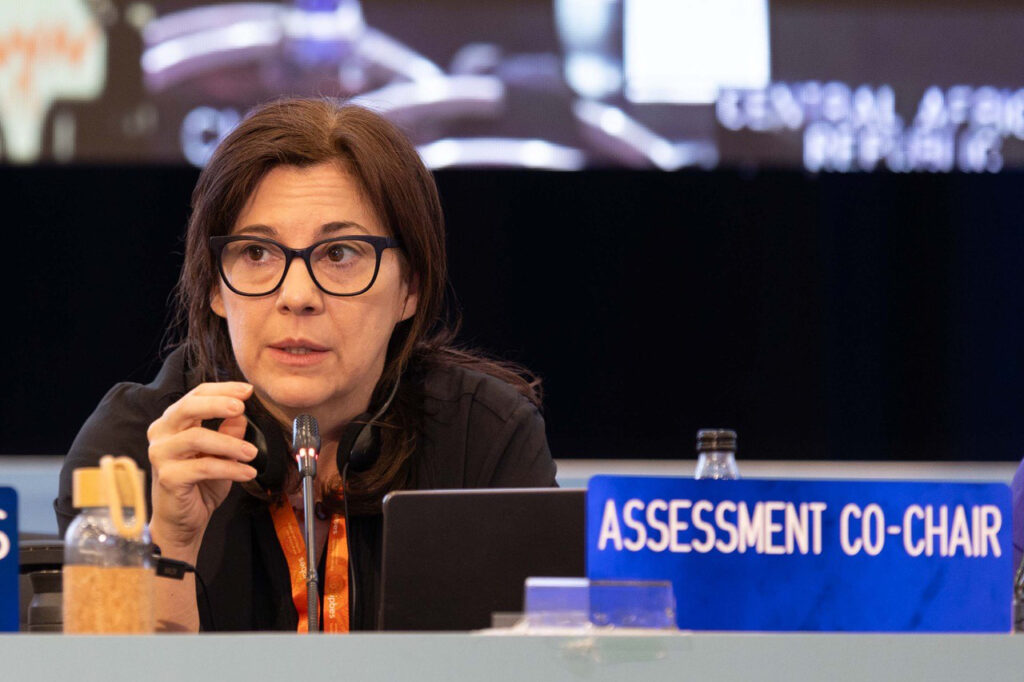
Among the report’s challengers is Pamela McElwee, a noted Rutgers University professor. She, along with a coalition of over 85 scientists led by Andrew Dressler of Texas A&M University, produced a comprehensive 459-page rebuttal to the DOE’s findings. They assert that the report’s conclusions rely on selective data and misinterpretations of peer-reviewed research.
McElwee criticizes the DOE report for its scientific inaccuracies, stating, “There were missing citations. There were incorrect citations. It’s just flawed as a scientific document.” She emphasizes the importance of countering the report, especially given its potential use in shaping policy changes.
McElwee’s academic journey began in Kansas, followed by advanced studies in forestry, plant sciences, and anthropology at Oxford and Yale. Her work spans climate policy and conservation, with a focus on how communities adapt to environmental changes. She argues that the DOE report neglects the critical issue of adaptation to climate change.
Her concerns are echoed by Dressler, who compares the administration’s tactics to those of the tobacco industry, famously documented in “Merchants of Doubt.” He suggests the DOE’s goal is to create uncertainty to avoid regulating carbon emissions.
The DOE report, penned by a small group of authors, including the controversial Judith Curry, has faced scrutiny for its lack of peer review and numerous citation errors. McElwee highlights one such error, where a cited 2023 paper was actually a different study from 2014, underscoring the report’s inaccuracies.
McElwee and her colleagues have submitted their critique through the DOE’s comment portal. Despite challenges, she remains committed to educating students and engaging in public discourse, stating, “This was one thing that I stepped into, and I’m sure there’ll be more.”
The Department of Energy has not commented on the criticisms, but the debate continues over the report’s potential impact on U.S. climate policy.
Original Story at insideclimatenews.org