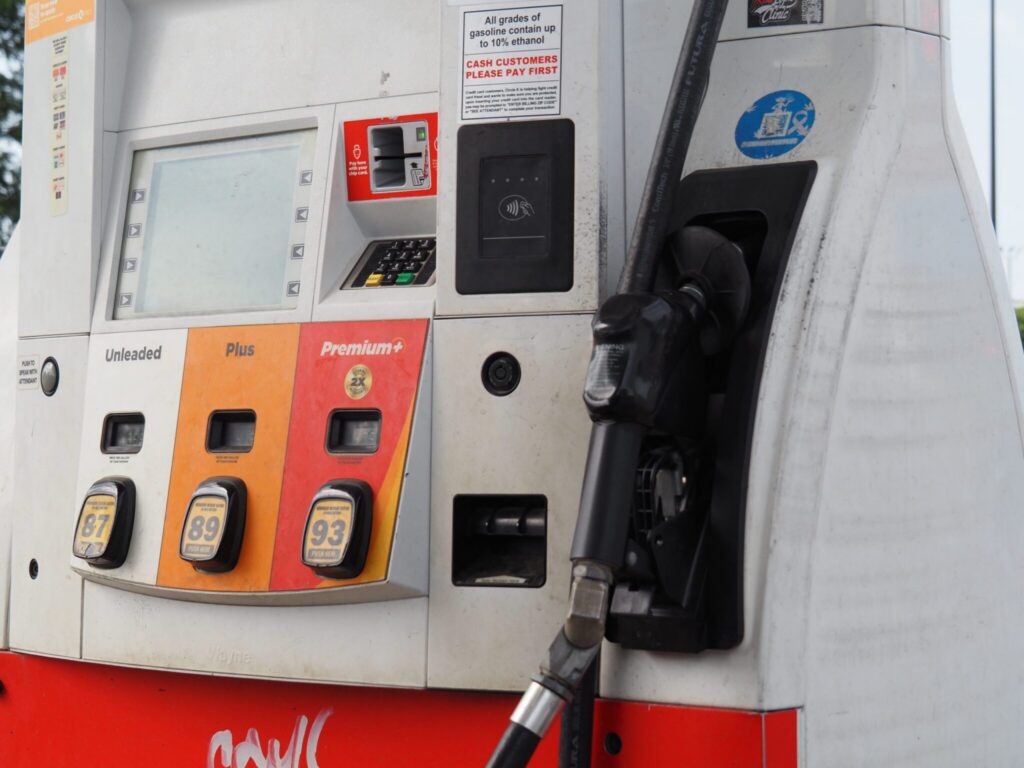
For millions of Americans heading home for Thanksgiving, the price at the pump is finally offering a little relief — and that matters when every dollar counts. Gas prices have been sliding steadily for about a month, and analysts say the trend could hold through the holiday weekend.
The national average for a gallon of regular gasoline is expected to hit $3.62 on Thanksgiving Day, according to GasBuddy, which monitors fuel prices across the country. As of Friday, AAA reported the average was already at $3.69 — down 18 cents from just a week ago and a full 58 cents lower than a month earlier.
That’s real money back in family budgets, especially for the tens of millions of Americans who plan to drive to their holiday destinations. An AAA analysis noted that
“for most holiday travelers, driving remains the cheapest and easiest way to get around”
this Thanksgiving, with roughly 90% of holiday travelers expected to hit the road.
Prices Are Falling Across the Country
No matter which state you live in, you’ve likely noticed some relief at the pump. Prices fell in all 50 states over the past week. According to GasBuddy, a dozen states saw averages drop more than 25 cents per gallon. Montana led the way with a drop of 38.8 cents, followed by Ohio at 33.3 cents, Michigan at 32.1 cents, Colorado at 29.2 cents, and New Mexico at 28.4 cents.
The number of stations charging $4 or more per gallon is also shrinking. Patrick De Haan, head of petroleum analysis at GasBuddy, found that 43 states have seen regular gas prices fall below that threshold.
Still, not everyone is sharing equally in the relief. Drivers in Hawaii are paying the most in the nation — $5.60 a gallon for regular — due to the logistical challenges of getting fuel to the islands. California follows closely at $5.50 a gallon. On the other end, North Carolina has the lowest average at $3.03 per gallon.
Why Are Prices Dropping?
Oil prices have fallen roughly $25 per barrel over the past month, and that ripple effect is showing up at gas stations nationwide. Every $1 drop in the price of a barrel of oil translates to about 2.5 cents less per gallon at the pump.
A major factor is the shifting outlook around the U.S.-Iran war. Before the conflict, about 20% of the world’s oil supply moved through the Strait of Hormuz, the narrow waterway between Oman and Iran. Despite occasional skirmishes, most of that oil has continued flowing. Grace Zwemmer, an economist at Oxford Economics, explained:
“Markets bet on a de-escalation between the U.S. and Iran following the midterm elections.”
The November report from the International Energy Agency described
“tentative signs of rebalancing, with global oil supplies surpassing demand for the first time since the outbreak of the war in Iran.”
The IEA predicts the global oil market could move into a surplus this quarter, with a more significant buildup expected in 2027.
The Energy Information Administration projects oil prices will average around $84 per barrel next year — roughly where they are now — with retail gas prices averaging $3.56 a gallon. Goldman Sachs echoed that view, saying in a recent analysis that
“oil is forecast to ease gradually in 2027 as suppliers in the Middle East adapt to disruption from the war in Iran.”
Seasonal factors are also playing a role. Americans drive less in colder months, which reduces demand. And as De Haan explained in an X post,
“After Sept 15, stations can sell winter blend, which is cheaper to make. Summer gas has to meet tighter evaporation rules, and that costs refiners more.”
De Haan also noted that an oversupply of oil is helping keep a lid on prices:
“Expectations of a coming supply surplus outweighed fresh security incidents around the Strait of Hormuz.”
Families Are Still Feeling the Strain
Even with prices falling, many Americans remain financially stretched. The cost of living
“continues to be at the forefront of consumers’ minds across the population,”
said Joanne Hsu, director of the University of Michigan Survey of Consumers.
The survey’s November findings show that about 57% of consumers
“spontaneously mentioned that their living standards have been eroded by high prices”
— the highest level since May, and well above the 46% who felt that way in February, before the war began.
That cautious mindset is showing up in travel plans too. AAA projects that 72.9 million Americans will drive somewhere over the Thanksgiving holiday — about 200,000 fewer than last year.
Even so, most families aren’t staying home. As De Haan put it,
“Americans aren’t letting the pump keep them from the table,”
but
“that doesn’t mean drivers aren’t feeling it.”
It’s worth noting that while $3.62 would be a welcome drop from recent highs, it would actually set a Thanksgiving record — the previous high for the holiday was $3.56 a gallon in 2022. And as the IEA cautioned in its latest analysis, uncertainty hasn’t gone away:
“As always, downside risks to the forecast persist, as attacks on shipping undermine maritime security, which is pivotal to a sustained recovery.”
Oil markets can shift quickly, and a year ago, few predicted the price spike that hit American families in 2026.