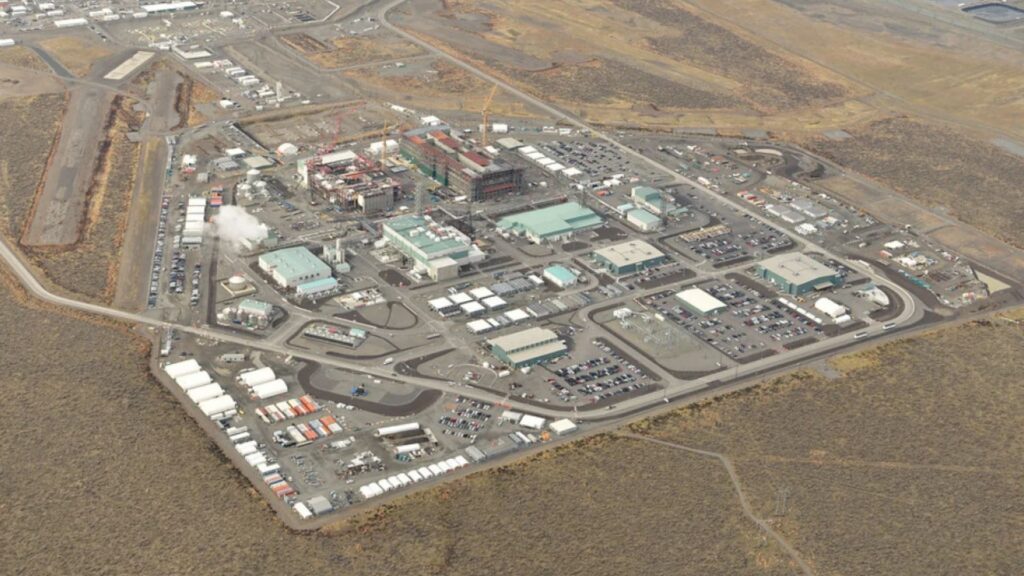
A transformation is underway at a site that once played a pivotal role in the United States’ nuclear history. The Hanford site, known for its wartime production, is set for a significant industrial shift aimed at embracing clean energy and advanced technologies.
The U.S. Department of Energy’s Office of Environmental Management (DOE-EM) has initiated a bidding process to lease up to 3,700 acres at Hanford to private enterprises. This initiative, part of the American Energy Hubs program, seeks to repurpose land historically associated with nuclear weapons for clean power, computing, and materials innovation.
Strategic advantage for power-intensive operations
The leasing process begins with an initial offering of a 1,876-acre area, named Tract 1, with the possibility of expanding to a 1,249-acre Tract 2 based on demand. Both tracts are strategically located along the Columbia River in southeastern Washington, providing significant advantages for power-dependent industries.
The proposed development area is adjacent to the Cascade Advanced Energy Facility, a project led by Amazon, X-energy, and Energy Northwest. This facility aims to utilize up to 12 Xe-100 small modular reactors, which are high-temperature and gas-cooled.
Establishing commercial infrastructure near these next-gen nuclear facilities offers a compelling advantage, particularly for data centers and heavy manufacturing operations that require substantial energy resources. More about these nuclear facilities can be found here.
Resurrecting a dormant site
Modern industrial operations, such as data centers and factories, demand vast amounts of energy. Regulatory measures have been introduced, requiring bidders to adhere to a “build, bring, or buy” energy rule to ensure that local power supplies are not overburdened. Developers must independently manage their energy sources and absorb all related costs.
This approach aligns with Washington’s Ratepayer Protection Pledge, which seeks to prevent energy-intensive industries from inflating utility costs for neighboring communities. Further details on this initiative can be explored here.
Historically, Hanford was responsible for producing two-thirds of the plutonium for U.S. nuclear weapons from 1943 to 1989. Post-Cold War, the site shifted focus to environmental cleanup. With significant remediation progress, local officials now deem the area suitable for commercial development.
The latest land offerings follow a February agreement with General Matter, which leased the 190,000-square-foot Fuels and Materials Examination Facility at Hanford to develop nuclear fuel technologies. Proposals for the new tracts will be assessed on technical, financial, environmental, and collaborative criteria.
Hanford Site Manager Ray Geimer stated, “Exploring these opportunities is the next logical step for a site that is advancing cleanup and for a community that has always been all in on all-of-the-above American energy and innovation.” More insights on this statement can be found here.
Original Story at interestingengineering.com