For millions of American families, the cost of filling up the gas tank or heating the home this winter has become a source of serious financial stress — and many voters who backed Democrats in the recent midterm elections are hoping their new congressional majority will deliver relief. But experts and lawmakers themselves are warning that bringing energy prices down quickly is far more complicated than any single act of Congress can solve.
Democrats rode a historic blue wave to comfortable majorities in both the House and Senate. Yet the promises they made on the campaign trail about making everyday life more affordable are already running into a hard economic reality: energy prices are shaped by global forces that no legislation can quickly tame.
“You can’t legislate your way out of high gasoline prices,”
said Patrick De Haan, head of petroleum analysis at GasBuddy, which tracks fuel costs nationwide.
What Americans Are Paying Right Now
The numbers are striking for anyone who drives a car, runs a small business, or heats a home. Since the United States attacked Iran on Feb. 28, fuel prices have climbed sharply. As of Tuesday, a gallon of regular gasoline averaged $3.98, AAA reported — well above the $3.07 average from just a year ago. Diesel has jumped even more dramatically, hitting $6.16 a gallon compared to $3.73 a year earlier.
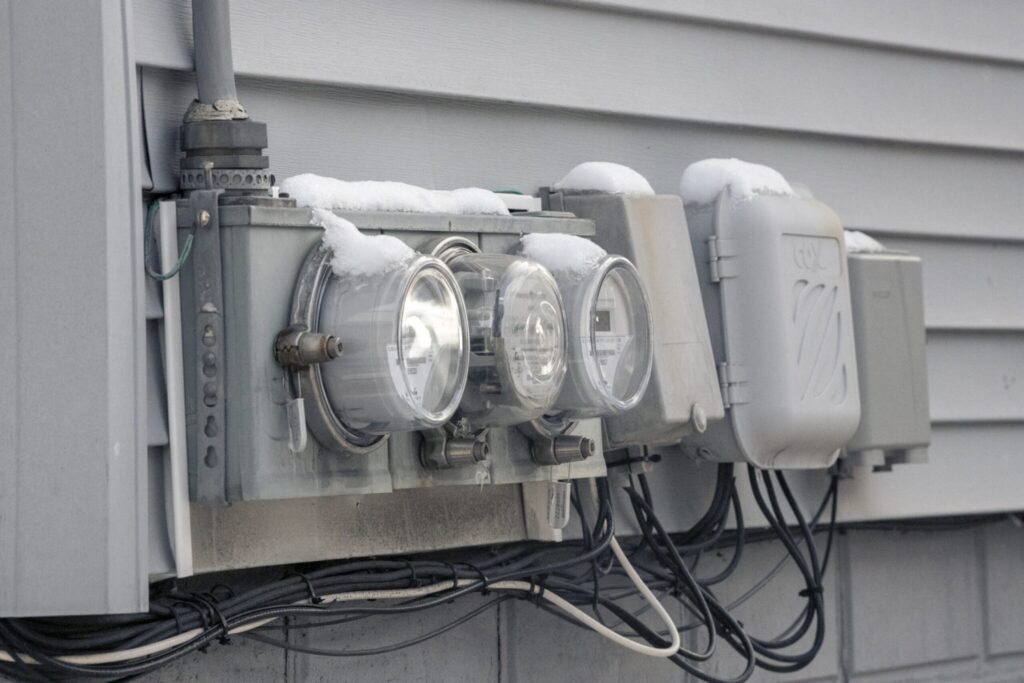
Home heating oil averaged a staggering $6.14 a gallon last week, up from $3.62 a year ago, according to the U.S. Energy Information Administration. Meanwhile, electricity costs rose 3.8% and natural gas was up 4.4% over the 12 months ending in September, according to the federal Bureau of Labor Statistics. For families already stretched thin by years of inflation, these numbers translate directly into difficult choices at the kitchen table.
What Congress Can — and Can’t — Do
Republicans hold the congressional majority through the end of this year, with Democrats taking over in January. But whichever party is in charge, the government’s short-term toolkit for cutting consumer energy prices is surprisingly limited. Some Democratic lawmakers are already being candid with voters about this.
“I’m not telling people I’m going to be able to lower X by X number of cents, but I’m telling them they’re going to have somebody who’s going to fight like hell for them,”
said Sen. Ron Wyden, an Oregon Democrat set to chair the Senate Finance Committee next year.
The most commonly discussed quick fix is suspending the federal gas tax. Jeff Lenard, a vice president of the National Association of Convenience Stores, called it
“the most obvious quick fix.”
But he was quick to add a caveat: eliminating the gas tax
“would create a budget hole elsewhere for the federal government”
— and would address only about 5% of the current cost of fuel.
The federal gasoline tax stands at 18.4 cents per gallon, with diesel taxed at 24.4 cents. Lawmakers from both parties have pushed bills to suspend these taxes. Rep. Jeff Van Drew, R-N.J., has proposed an 18-month tax holiday, while Rep. Brendan Boyle, D-Pa., has called for suspending the tax whenever the national average price tops $4 a gallon. Sen. Josh Hawley, R-Mo., wants a 90-day suspension.
But the nonpartisan Congressional Research Service threw cold water on these proposals last month, warning that suspending the federal tax
“may not reduce consumer prices at all. Gasoline suppliers, distributors, refiners, and blenders could choose to reduce prices by more or less than 18.4 cents per gallon or, in theory, not reduce prices at all.”
Several states have already tried gas tax holidays this year — including Georgia, Illinois, Indiana, Kentucky, North Carolina, Ohio, and Utah — with mixed results. The Tax Foundation found that state taxes and fees vary enormously, from California’s 73.6 cents a gallon at the top to just 9 cents a gallon in Alaska.
The Strategic Petroleum Reserve: A Depleted Safety Net
The Strategic Petroleum Reserve was created in 1975 to shield American consumers from exactly these kinds of price shocks. Oil is stored in underground salt caverns along the Gulf Coast in Texas and Louisiana. Fifteen years ago, those caverns held about 726 million barrels. Today, the reserve sits at just 282 million barrels — its lowest level in 44 years.
Both President Trump and President Biden have tapped the reserve in recent years. Trump authorized releases during the Iran war, while Biden ordered major drawdowns after Russia invaded Ukraine in 2022. Those releases helped ease some pain, according to an analysis from the Bipartisan Policy Center. But it also concluded that
“the events of the last few months have also demonstrated the limitations of the SPR. The reserve’s lower stock levels in the run-up to the Iran conflict limited the volumes available for release.”
In other words, a critical safety net for American families has been significantly drawn down — right when it’s needed most.
Other Levers — and Their Limits
Trump has taken some additional steps, including easing restrictions on dyed diesel — the type commonly used in agriculture — and striking a deal to bring more diesel from Russia into world markets. Neither move is expected to significantly change what Americans pay at the pump or for home heating.
“You can pull small levers, but the president has pulled most of those levers,”
De Haan said.
Regulating electricity rates and home heating oil prices falls mostly to state and local agencies, leaving the federal government with limited direct authority. Charles Hua, founder and executive director of PowerLines, a nonpartisan consumer education organization, noted that
“federal policymakers including Congress and the president can still have an impact over utility bills”
by passing
“policies that can modernize grid planning and utility business models, using their platform to elevate these issues, and engaging with state and regional actors on grid decisions that can impact utility bills.”
The Iran War: The Biggest Variable
Perhaps the most significant factor driving energy prices higher — and the one Congress has the least direct control over — is the ongoing U.S. war with Iran. Before the conflict began, roughly 20% of the world’s oil passed through the Strait of Hormuz, a narrow waterway between Oman and Iran. That route has been closed or the site of attacks since the war started.
Ending the war could be the fastest path to meaningful price relief for American families. Democratic congressional leaders are actively debating whether to cut off or sharply limit war funding — potentially as early as the current lame-duck session.
Senate Democratic Leader Chuck Schumer of New York was direct about the challenges ahead:
“Will everything pass? Will Trump sign all of it into law? Knowing Trump’s and Republicans’ intransigence, of course not.”
Sen. Elizabeth Warren, a Massachusetts Democrat, was more forceful at the 2026 Popular Mandate conference:
“And let’s not forget one of our most powerful tools: Democrats have power on spending bills that require our votes, and we should use it. No more funding for a forever war with Iran.”
Still, even a negotiated end to the war would not automatically translate into lower prices at the pump. Oil is a globally traded commodity, subject to constant fluctuations. When Russia invaded Ukraine in 2022, prices spiked to levels comparable to — and sometimes exceeding — what Americans are paying today. That conflict continues, keeping tensions in the Middle East elevated and raising questions about the security of Saudi Arabia’s oil fields.
For everyday Americans hoping for fast relief this winter, De Haan offered a sobering assessment:
“There’s a lot of different things going on at the same time. There is no magic wand.”