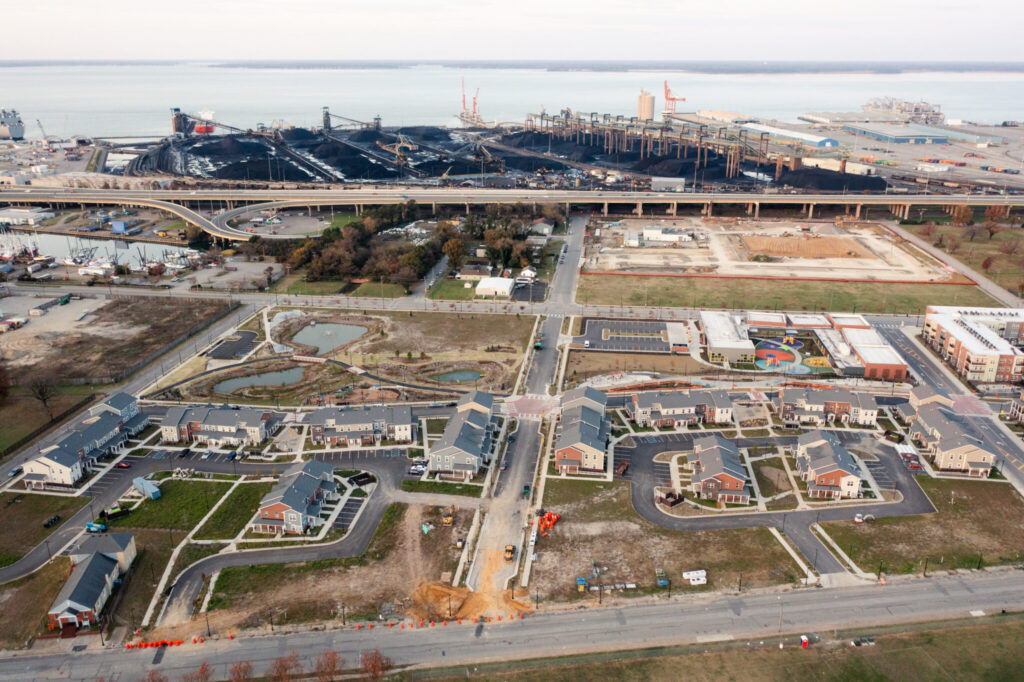
Coal dust from shipping terminals in Newport News has long settled over nearby neighborhoods, coating homes, cars, and lungs with a gritty residue that residents say makes daily life miserable. Now, a new study has identified concrete steps that could reduce that pollution — but whether the companies responsible will be made to pay for them is an entirely different question.
The findings put a spotlight on a years-long environmental dispute in one of Virginia’s most industrially active port cities, where bulk coal terminals operate in close proximity to residential communities. According to reporting by Virginia Mercury, a study has outlined feasible remedies for controlling coal dust emissions at the Newport News terminals — yet terminal operators have shown resistance to shouldering the financial burden those fixes would require.
A Problem Residents Have Lived With for Years
For communities living near Hampton Roads coal terminals, the issue is not abstract. Windblown coal particulates travel from open stockpiles and conveyor systems into surrounding neighborhoods, raising concerns about air quality and long-term health effects. The problem drew enough attention that, as Sarah Vogelsong reported in 2022, Virginia committed to begin monitoring air pollution around Hampton Roads coal terminals — an acknowledgment by state officials that the concern warranted formal measurement.
That monitoring effort laid groundwork for the current study, which goes further by proposing specific interventions. The core tension now is a familiar one in environmental policy: a technical solution exists, but the question of who pays for it remains unresolved.
What the Study Found
The study examined methods for suppressing and containing coal dust at terminal facilities in Newport News. Among the approaches identified were enclosures for coal stockpiles, improved conveyor belt covers, chemical dust suppressants applied to coal surfaces, and enhanced site management practices. Each of these carries a cost — and that cost is at the center of the dispute between regulators, community advocates, and terminal operators.
Terminal companies have historically argued that compliance costs could affect their operational competitiveness, particularly as the coal industry itself faces long-term market pressures. Regulators and environmental advocates counter that the health and quality-of-life impacts on nearby residents represent a public harm that cannot be deferred indefinitely in the name of industry economics.
The Fight Over Who Pays
Virginia’s regulatory environment gives state agencies some authority over air quality controls, but enforcing specific dust mitigation requirements at privately operated terminals involves navigating complex jurisdictional and legal terrain. Environmental groups and affected residents have pushed for stronger mandates, while terminal operators have engaged in legal and regulatory processes to contest or delay requirements that would increase their operating costs.
The broader context matters here. Virginia has been managing competing priorities around its port economy, environmental standards, and community health — a balancing act that plays out differently depending on which agency is making decisions and under what statutory authority. Coverage of related Virginia environmental and infrastructure policy continues at Virginia Mercury, including on issues such as transmission line routing disputes and ongoing drought emergencies in other parts of the state — all reflecting the range of environmental pressures Virginia communities are facing simultaneously.
For Newport News residents, the study’s release represents both progress and frustration. Progress, because it confirms that solutions are technically achievable. Frustration, because a viable remedy sitting in a report does nothing to clear the air outside their windows until someone is compelled — or agrees — to implement it.
Virginia residents who want to engage with elected officials on issues like this can use civic tools to register to vote, find their polling place, or look up who represents them in the General Assembly.