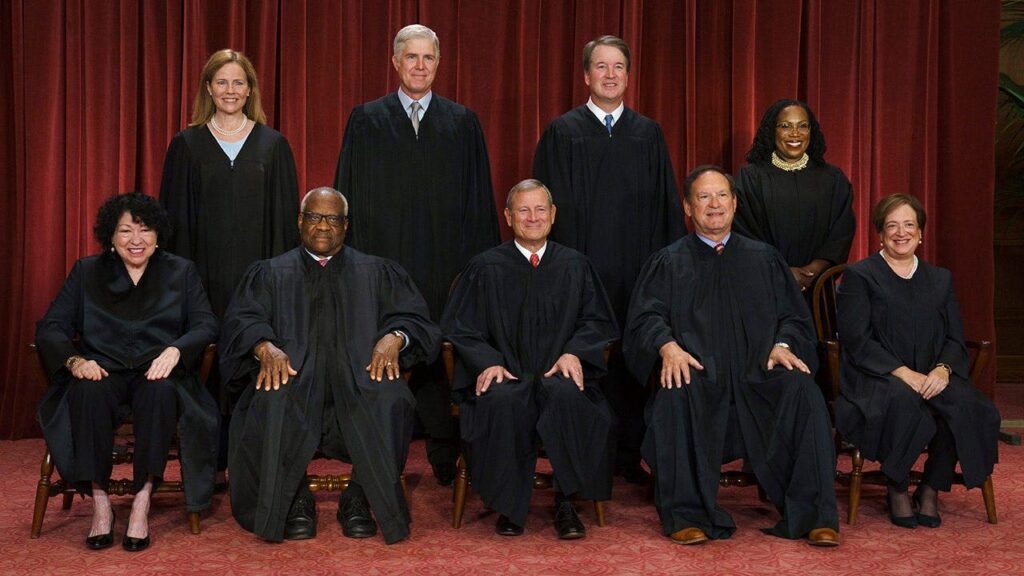
Supreme Court Case on Climate Lawsuits Sparks Economic Concerns
A pivotal Supreme Court case addressing climate change lawsuits against oil companies is stirring economic worries. Experts suggest that rulings in favor of cities and states could financially cripple the fossil fuel industry, potentially leading to increased fuel prices for Americans.
Jason Isaac, CEO of the American Energy Institute, cautioned about the implications of the case, stating, “You would see mass exodus and that would create more scarcity with fuel, more so than we’re seeing already today, higher prices.” He emphasized that the central issue is controlling the use of hydrocarbons.
The case in question, Suncor v. Boulder, involves the Supreme Court deliberating whether federal law precludes municipalities from suing oil firms under state law for climate damage due to emissions crossing state lines.
During the hearings, Justice Clarence Thomas questioned Boulder’s attorney, Kevin Russell, about the lawsuit’s potential to extend beyond oil companies to other sectors, like large retailers. Russell conceded that “nothing in our theory prevents that,” but mentioned state tort law might impose boundaries.
WAVE OF OVERLOOKED ‘LEFT-WING’ LAWSUITS COULD COME WITH AN UNEXPECTED PRICE TAG FOR AMERICANS
The original lawsuit, initiated by Boulder, Colorado, targets ExxonMobil and Suncor Energy, accusing them of knowingly contributing to climate change and misleading the public about fossil fuels’ risks. The municipalities aim to recover costs related to climate-related damages. Similar cases are pending in other jurisdictions, including Portland and Baltimore.
The lawsuit highlights a 1977 internal memo from ExxonMobil, acknowledging the scientific consensus on fossil fuels contributing to increased CO2 emissions. David Bookbinder, formerly Boulder’s counsel, described the lawsuit as an “indirect carbon tax” effort at a Federalist Society forum.
Boulder’s stance is that their case isn’t about national climate policy regulation but rather holding companies accountable under state law for damages within Colorado’s borders. “Since the founding, states have had the power to provide tort remedies for injuries occurring within their borders even when the conduct causing those injuries occurred elsewhere,” Russell told the justices.
CATHOLIC SCHOOLS, BANNED RIFLES AND ‘CLIMATE LAWFARE’: BLOCKBUSTER FIGHTS AWAIT SUPREME COURT
O.H. Skinner, executive director of the Alliance for Consumers, argues that the lawsuits aim to achieve through the judiciary what climate advocates haven’t secured through Congress. He stated, “It’s an effort to get a backdoor carbon tax, because carbon taxes have never passed in Congress, or to bankrupt the energy industry.”
Justice Samuel Alito has recused himself from the case without providing a reason. Isaac warned that a ruling for Boulder could open “Pandora’s box,” encouraging numerous similar lawsuits nationwide, potentially raising costs for consumers.
Skinner noted that the liability could extend beyond oil producers to other sectors, as “from Boulder’s perspective, anybody who’s contributed to climate change would reliable, any sort of company, big or small.” Isaac contrasted this with tobacco or opioid lawsuits, emphasizing the global nature of greenhouse gas emissions.
ExxonMobil and Suncor argue that because emissions travel globally, state law in Colorado shouldn’t hold companies accountable for emissions produced elsewhere. They contend such matters should be under federal jurisdiction.
Meanwhile, some states like Utah have prohibited such state tort lawsuits. Utah Attorney General Derek Brown remarked that a ruling against energy companies could drive up gas prices nationwide, suggesting that such decisions should be Congress’s domain.
Original Story at www.foxnews.com