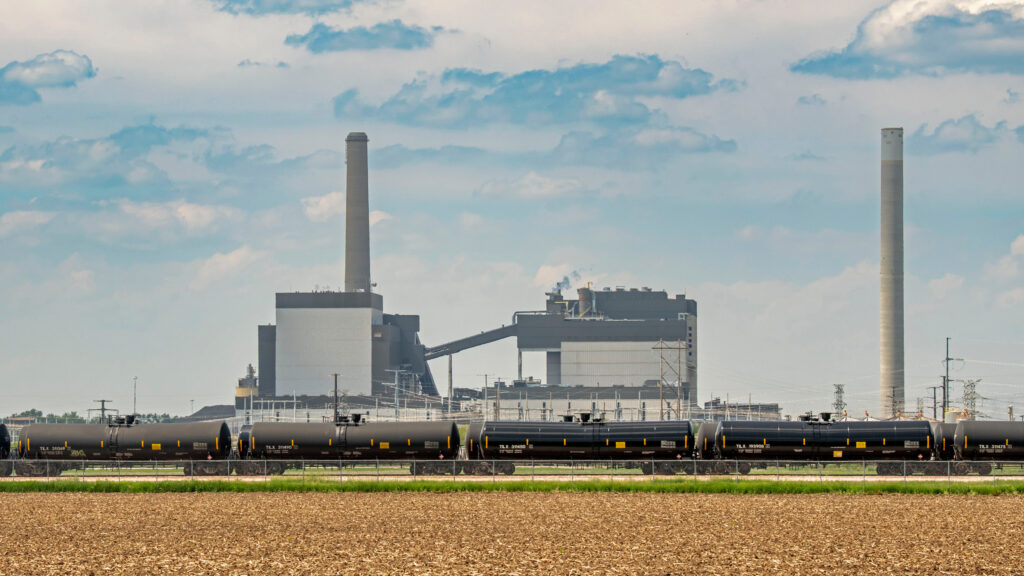
Before Iowa became the most wind-powered state in the U.S., it primarily relied on coal for electricity. Since 2000, coal’s role has declined as wind turbines now generate nearly two-thirds of the state’s power.
However, the rise of artificial intelligence has increased electricity demand, while the growth of wind and solar power has lagged, prompting a return to coal.
Between 2024 and 2025, Iowa’s two largest utilities boosted coal power generation for the first time in years, according to the Iowa Environmental Council’s annual report, based on Federal Energy Regulatory Commission data.
In 2024, MidAmerican Energy Co. saw coal comprise 21% of its energy mix, rising to 27% in 2025. Similarly, Interstate Power and Light’s coal usage increased from 12% to 20% during this period.
“It’s confusing, frankly,” said Steve Guyer, senior energy policy counsel for the Iowa Environmental Council, commenting on the coal increase. Emission data from Iowa’s six coal plants suggests this trend continued in 2026.
Iowa’s aging coal fleet includes nine utility-scale plants that emit nitrogen and sulfur oxides, toxic metals like mercury, and fine particulates exacerbating respiratory and heart conditions, noted Peter Thorne, a University of Iowa professor.
Joshua Mandelbaum, senior attorney with the Environmental Law and Policy Center, explained that coal plants have operated at low capacity but are now filling the gap due to rising demand and slow renewable energy development.
Electricity generation in Iowa increased from 70.5 million megawatt-hours in 2024 to over 74 million in 2025, driven by data center and manufacturing expansions, as reported by the Iowa Nuclear Energy Task Force.
The surge in demand coincides with challenges for large-scale renewables, including the end of federal tax credits, local opposition, and increased material costs, said Mandelbaum.
The Iowa Environmental Council highlighted air quality impacts from increased coal combustion. From 2024 to 2025, sulfur dioxide and nitrogen oxide emissions rose over 50%, affecting particulate matter levels.
Air pollution is a growing cancer risk factor, and Iowa has the second-highest rate of new cancer cases nationally, Guyer noted.
In response, Alliant Energy stated it remains committed to balancing reliability, affordability, and sustainability, aiming for net-zero emissions by 2050. MidAmerican shares a similar goal.
Geoff Greenwood, MidAmerican’s media relations manager, emphasized the progress since 2005, noting a near doubling of electricity generation and significant reductions in carbon and other emissions.
Greenwood also stressed the importance of coal for reliability, particularly when wind output is low.
Renewable energy’s reliability challenges can be mitigated with advanced energy storage, suggested Thorne. Excess electricity from wind and solar could be used to produce hydrogen or stored as hydroelectric power.
Mandelbaum explained that the uptick in coal usage reflects rising energy demand and delayed transition to cleaner technologies. He remains optimistic that faster development of alternatives will eventually phase out coal.
Original Story at insideclimatenews.org