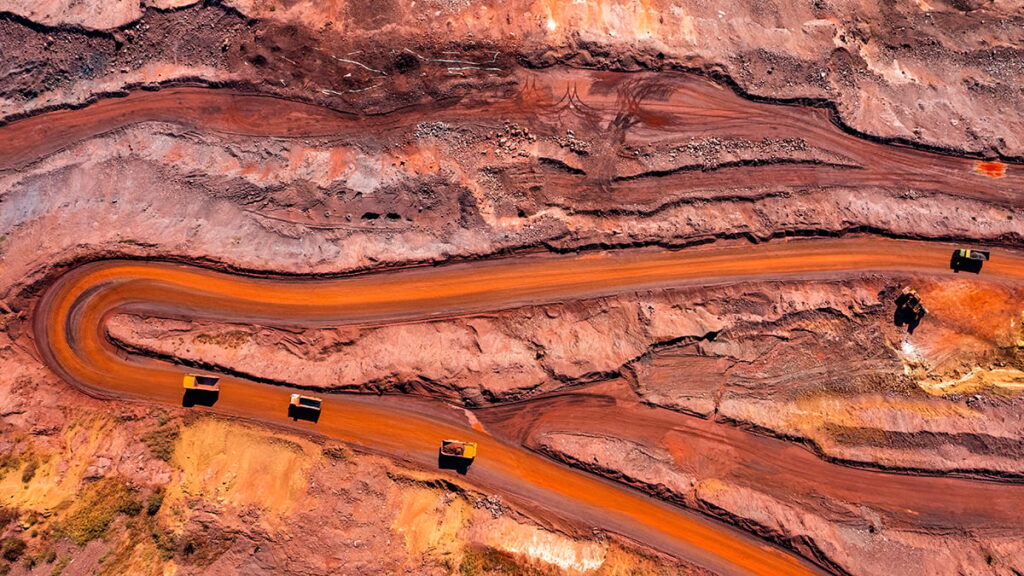
Australia’s vast reserves of iron ore might hold the key to a sustainable energy future, as researchers explore the potential of natural hydrogen production. As the world seeks cleaner energy sources, the promise of hydrogen stands out, yet its production still heavily relies on fossil fuels.
Scientists are optimistic about the possibility of tapping into natural hydrogen reserves. A study led by Edith Cowan University in Australia has focused on the hydrogen-producing capabilities of iron ore, specifically through the interaction of hot water and the magnetite mineral found within it.
Western Australia, rich in iron ore, presents a significant opportunity. The research team, led by chemical engineer Alireza Keshavarz, aimed to estimate the existing and potential hydrogen reserves in the region. “Australia could be sitting on a massive, untapped energy reserve – and the potential is enormous,” Keshavarz stated. He further highlighted the potential for Australia to become a leading exporter of clean energy.
Their findings, published in the International Journal of Hydrogen Energy, offer valuable insights into the geological conditions that influence hydrogen production from magnetite. According to the study, fractured, porous rocks with greater surface area are ideal for hydrogen generation, as water can easily access fresh mineral surfaces.
In laboratory settings, researchers tested the reactions between water and magnetite at high pressures and temperatures of 200 °C (392 °F) over a 60-day period. The experiments demonstrated that magnetite powder produced substantially more hydrogen per gram compared to magnetite slabs, indicating that surface area plays a crucial role in hydrogen output.
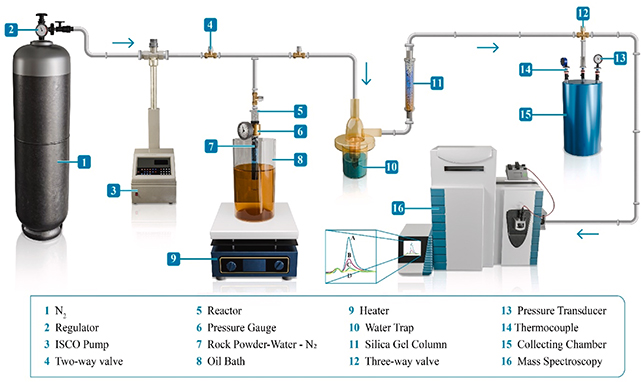
“Our findings show that hydrogen production depends not only on the amount of magnetite present but also on how easily water can access fresh mineral surfaces through fractures, pores and permeable pathways,” explained energy engineer Stefan Iglauer.
Besides hydrogen production, the conversion of magnetite into hematite was observed, which could inhibit further water access, posing a potential challenge at larger scales. This underscores the importance of understanding the real-world geological dynamics to improve future modeling. “This comparison and characterization are important for two reasons,” the researchers noted in their paper. “First, the hydrogen production data from field-collected slabs directly represent the geological composition and geometry exposed to water in natural settings. Second, the interaction between rock surfaces and water during hydrogen generation alters surface characteristics, which has significant implications for rock integrity in gas geo-storage applications.”
The study marks a significant advancement in understanding hydrogen production from natural sources, although challenges in extraction remain. “If we can unlock this resource at scale, it could be transformative for our energy future,” said energy engineer Kaveh Moghanirahimi, pointing out the potential for Western Australia to enhance its energy independence.
The research has been documented in the International Journal of Hydrogen Energy.
Original Story at www.sciencealert.com