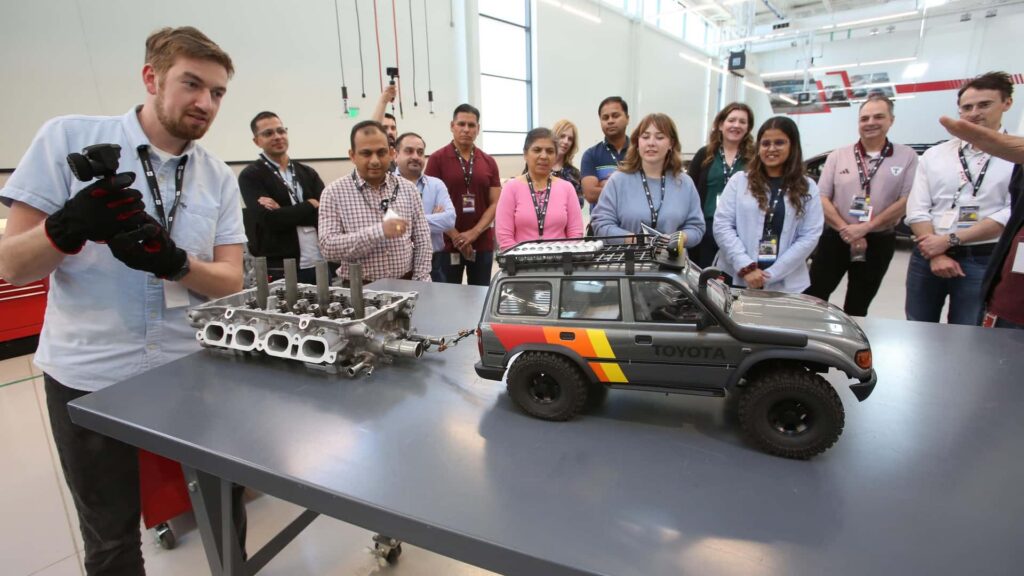
In the world of automotive innovation, the shift towards electrification is both exciting and complex. However, not everyone deeply involved in the car industry understands its nuances. This was made clear during Toyota Motor North America’s “Electrification 101” program, designed to educate its employees on the benefits and challenges of electric vehicles (EVs).
Surprisingly, many employees at legacy automakers lack comprehensive knowledge about electrification, a realization that came to light during the event. This might seem discouraging, but it highlights an opportunity for education and growth within the industry.
The Program
Toyota’s Electrification 101 program is designed to address a knowledge gap among its employees. Despite assumptions that all Toyota staff are car enthusiasts, many join for reasons like stability and company reputation rather than a passion for automobiles. Hence, Toyota’s initiative to educate employees on electrification is crucial.
The program, not just limited to pure EVs, covers a “multi-pathway” approach, emphasizing hybrids and hydrogen fuel cells alongside electric vehicles. In the previous quarter, 56.8% of Toyota’s sales were from electrified vehicles, though only a small fraction were pure EVs.
The Toyota Mirai is one of the few fuel-cell electric vehicles (FCEVs) available in the U.S., running on compressed hydrogen.
The course explained different powertrain types and aimed to dispel myths about EVs. It highlighted the efficiency and cleanliness of electrification, while also promoting a multi-pathway approach as a means to optimize limited battery resources.
For more on EV efficiency, see the article: EVs Aren’t Dirtier Than Gas Cars.
Although Toyota’s program provided a balanced view of various powertrain technologies, it was clear from the presentations that EVs are a focus for the future. The interactive part of the session allowed employees to engage with electric motor technology, further solidifying the impact of electrification.
The Lesson
Electric motors were showcased as a more efficient and simpler alternative to traditional powertrains. The program underscored how integrating electric propulsion can simplify vehicle design and enhance efficiency.
While Toyota is not fully committed to an all-electric lineup yet, the company’s efforts to educate its workforce on electrification suggest a strategic move towards embracing the technology.
Toyota has been rapidly introducing new EV models, like the Highlander EV, in recent months.
The Opportunity
Toyota’s educational efforts aim to shift employee perspectives, enabling them to understand the long-term benefits of electrification. Employees like Brigette Armato, who previously knew little about EVs, are now advocates for electric technology.
“I wish we would gravitate more towards electric vehicles across the lineup,” Armato expressed after attending the class. The enthusiasm for EVs is growing within Toyota, indicating a positive shift towards electrification.
The current Tacoma and 4Runner hybrid models reflect Toyota’s cautious approach to full electrification.
For more information, feel free to contact the author: Mack.Hogan@insideevs.com
Original Story at insideevs.com