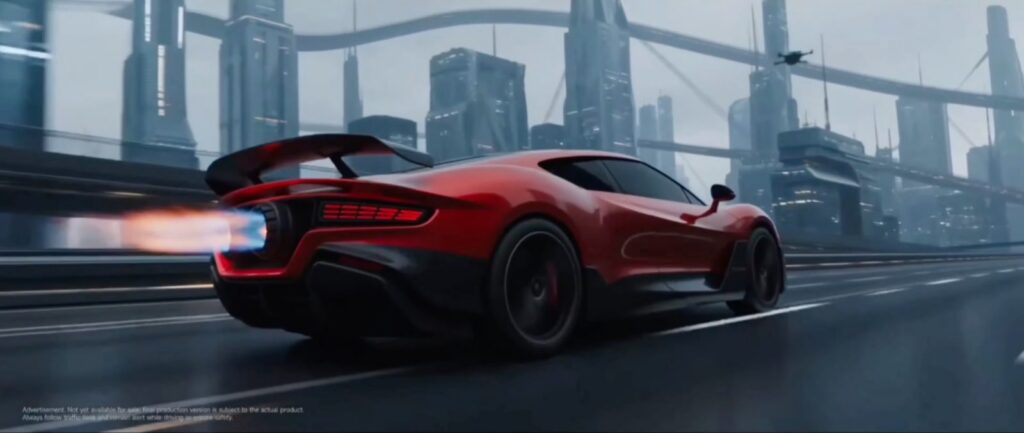
Dreame, a company renowned for its home appliances and vacuum robots, has decided to exit the automotive sector, putting an end to its ambitious plans to develop an electric hypercar, including a variant featuring solid rocket boosters purported to reach 0-60 mph in under a second.
This announcement comes after Dreame’s surprising entry into the electric vehicle (EV) market last year, aiming to produce luxury electric hypercars. The company had made a notable debut at CES with its first hypercar and even hinted at a future SUV to rival the Rolls Royce Cullinan.
The most audacious announcement came in April, when Dreame proposed a rocket-boosted hypercar concept during a San Francisco event. This concept aimed to bypass the traction limits of traditional vehicles by utilizing single-use solid rocket boosters, a feature that drew comparisons to the next-gen Tesla Roadster.
Despite the theoretical soundness of using rocket boosters, practical challenges such as the need for frequent recharging made the idea impractical. Nevertheless, Dreame’s initial plans for a 1,876 hp electric hypercar were intriguing, but these ventures have now been shelved.
Dreame Cancels all its Car Programs
According to CarNewsChina, Dreame has decided to abandon its car programs approximately a year after launching them. At its peak, nearly 1,000 individuals were employed in this department, but the recent months have seen significant layoffs.
A China Economy report suggests that Dreame’s automotive project was more of a strategic marketing and fundraising initiative rather than a serious manufacturing effort. The report indicates that the department’s structure was not conducive to effective R&D expenditure, and it might have faced regulatory issues.
The lure of the EV market has attracted many companies due to the simpler design requirements compared to combustion engine vehicles. Success stories like Tesla and Rivian have inspired others, including Dreame, to venture into this sector. Companies like Xiaomi have proven capable of transitioning into EV production successfully.
However, Dreame’s experience mirrors other failed attempts from non-automotive entities, such as Apple’s elusive Project Titan and the aborted Sony/Honda joint EV venture. Similarly, Dyson’s significant investment into electric vehicles ultimately led nowhere, highlighting the challenges of breaking into this competitive industry.
Dreame’s decision to cease its car projects reflects the difficulty of realizing ambitious concepts in a short timeframe. At least, unlike some long-running yet unproductive endeavors, Dreame has opted for a swift exit from the automotive dreams.
Charge your electric vehicle at home using rooftop solar panels. Find a reliable and competitively priced solar installer near you on EnergySage, for free. They have pre-vetted installers competing for your business, ensuring high-quality solutions and 20-30% savings. It’s free, with no sales calls until you choose an installer. Compare personalized solar quotes online and receive guidance from unbiased Energy Advisers. Get started here. – ad*


FTC: We use income earning auto affiliate links. More.

Original Story at electrek.co