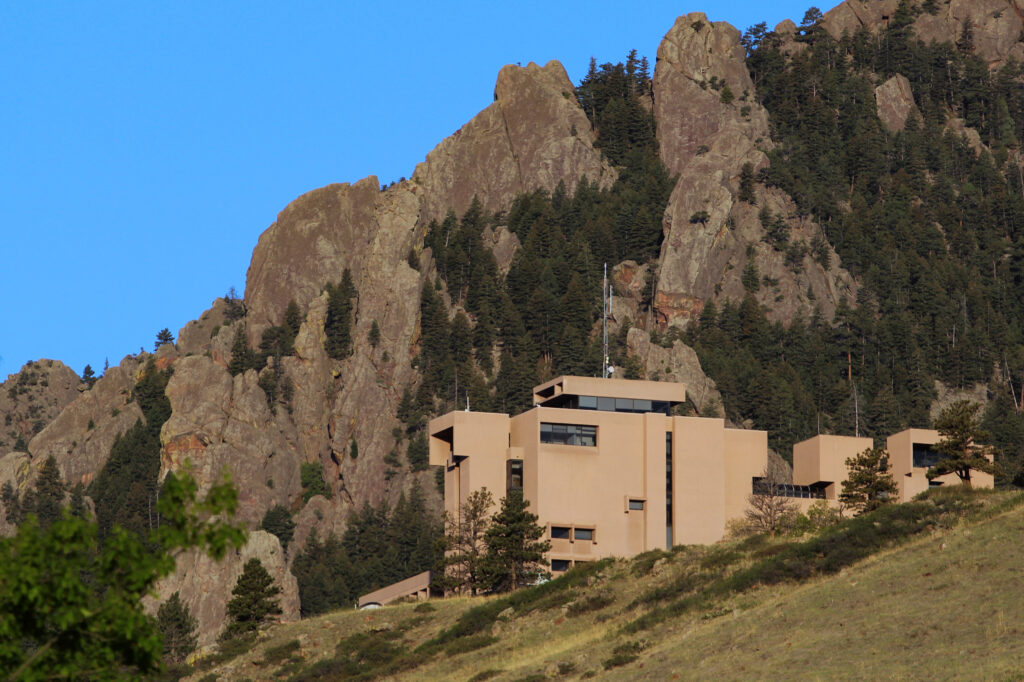
The decision to close the National Center for Atmospheric Research (NCAR) has sparked legal action from one of the country’s major environmental organizations. The Environmental Defense Fund has filed a lawsuit against the Trump administration, claiming the closure is both unlawful and politically motivated.
In December, the administration revealed plans to dismantle the Colorado-based NCAR, a premier institute in climate and weather modeling. This move, described as part of a broader attack on climate science, is also seen as political retribution against Colorado. The Environmental Defense Fund argues that the closure will hinder essential climate research globally, which is crucial for safeguarding against the impacts of climate change.
“When we check the weather or track the path of a hurricane, we’re leaning on science generated by the National Center for Atmospheric Research,” said Erin Murphy, lead counsel for clean air and energy markets at the Environmental Defense Fund. “The federal government’s investment in climate science plays a critical role in our ability to understand and prepare for more frequent and intense extreme weather events caused by climate pollution. The Trump administration is attempting to eliminate NCAR’s vital climate science research and close its Mesa Laboratory at a time when Americans everywhere are suffering from the impacts of climate change, including more intense heat and fires, more dangerous floods and storms, and skyrocketing insurance costs.”
The lawsuit, filed in federal district court in Colorado, alleges that the National Science Foundation and the White House’s Office of Management and Budget violated the Administrative Procedure Act by not providing a factual basis or adequate explanation for their decision.
Additionally, the lawsuit aligns with other legal challenges, including one from the University Corporation for Atmospheric Research and a case by the state of Colorado.
NCAR is renowned for its advanced climate and weather modeling, contributing significantly to reports by the Intergovernmental Panel on Climate Change and aiding in the forecasting of extreme weather events. Scientists emphasize the unparalleled integration of climate and weather science at the center.
The lawsuit highlights that the closure plan originated in the White House in fall 2025. In December, Russell Vought, OMB director, announced the decision to dismantle NCAR, citing it as “one of the largest sources of climate alarmism in the country.” The timing coincided with President Trump’s efforts to support a former Colorado county clerk convicted of election-related crimes.
An email from a Trump aide, dated Dec. 15, aimed to “prioritize Colorado for the purposes of ensuring grants and federal support are in line with administration priorities,” as reported by The Denver Post. The announcement of NCAR’s closure followed shortly after.
The lawsuit describes the closure as “the antithesis of the reasoned decision-making that the Administrative Procedure Act requires,” suggesting it is driven by “ideological animus rather than reason.”
Michael Oppenheimer, from Princeton University, warned that closing NCAR would significantly impact climate science. He highlighted NCAR’s community climate model, which facilitates global scientific collaboration, and its research on climate change impacts.
A White House spokesperson directed inquiries to the National Science Foundation, which declined comment, and the Office of Management and Budget, which did not respond.
The Environmental Defense Fund’s lawsuit also claims the closure violates the National Historic Preservation Act due to plans to close NCAR’s Mesa Lab, regarded as a significant historic site for scientific discovery and modern architecture.
Currently, NCAR remains operational, with a judge’s injunction in June temporarily halting the transfer of its supercomputer to another site.
Original Story at insideclimatenews.org