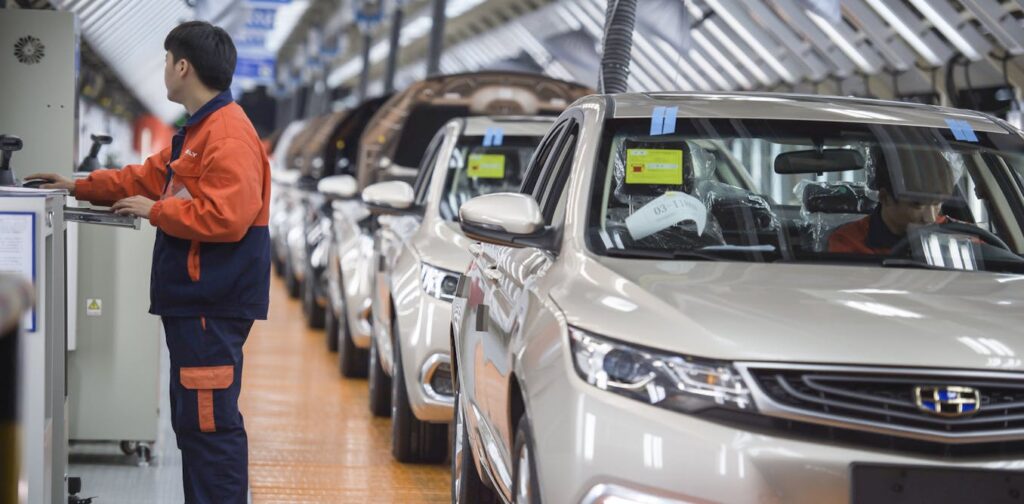
In the competitive arena of electric vehicle (EV) production, China has emerged as a dominant force, akin to a leading nation on the Olympic podium. This Asian powerhouse is at the forefront of not only manufacturing and exporting EVs but also producing the rechargeable batteries essential for these vehicles.
China’s ascent in the EV market is supported by over A$41 billion in government subsidies and tax incentives between 2009 and 2022, aimed at boosting the production of electric cars, taxis, and buses. However, the country’s explosive growth in this sector is not solely due to financial support. China has developed a robust manufacturing ecosystem that encourages domestic competition and innovation among companies.
The Rapid Expansion of China’s EV Industry
China’s strategy to produce more EVs is driven by a desire to reduce dependency on foreign oil from countries such as Iran, Russia, and Venezuela, while also aiming to surpass traditional automotive giants like Germany, Japan, and the United States. This ambition was incorporated into a national strategy for decarbonization in September 2020.
By 2025, EVs comprised over half of the new car sales in China. Chinese-made EVs are also gaining popularity globally, with more than 30% of new cars sold in the United Kingdom being EVs in the same year. Norway saw an even higher adoption, with EVs representing over 95% of total car sales. In contrast, the U.S. EV market lags, with only 10% of new car sales being electric, despite trade barriers against Chinese EVs.
Australia’s adoption has been slower, but by June 2026, EVs accounted for nearly 30% of new car sales, with China surpassing Japan as the leading source of new vehicles. Factors such as affordable EV models, rising fuel costs, an expanding charging network, and the New Vehicle Efficiency Standard have contributed to this shift.
While Tesla remains the top seller of pure electric vehicles in Australia with 28% of the market, Chinese brands like BYD, Geely, and XPeng are becoming mainstream. BYD is a notable competitor, holding a 24% market share, closely trailing Tesla.
Read more:
20 years ago, China bet big on electric vehicles. Now Western carmakers are feeling the pain
The Competitive Edge in the EV Market
The path to success for Chinese EV companies has been marked by intense competition and rapid innovation. During the peak of China’s EV boom, over 500 companies entered the market, spurred by access to cheap capital and local government support. However, as subsidies decreased, approximately 90% of these early entrants were eliminated, leaving only the most adaptable companies to thrive.
Examples of resilience and innovation in this sector include:
Geely/Zeekr: Once a producer of refrigerator parts, Geely pivoted to automotive manufacturing in 1997. By leveraging Volvo’s engineering expertise, Geely enhanced its EV offerings, particularly through its premium brand Zeekr.
Xiaomi: Known for its software origins, Xiaomi entered the EV market in 2024. The company applied its technological expertise from smartphones and smart home devices to develop its electric vehicles.
BYD: Starting as a battery manufacturer, BYD transitioned to EV production in 2003. By 2025, it delivered a record 4.5 million cars globally, thanks to its vertically integrated approach, which includes control over the entire EV supply chain.
China’s regional hubs, such as the Pearl River Delta, facilitate the rapid development from design to production by providing access to specialized expertise in electronics and car manufacturing.
Read more:
China’s ‘innovation machine’: how it works, how it’s changing and why it matters
Challenges Ahead
Despite its growth, China’s EV sector faces challenges such as a saturated market and shrinking profit margins. Domestic demand alone cannot sustain the production levels, as evidenced by a nearly 13% drop in consumer spending on cars in the first half of 2026.
For China, expanding into international markets is not just an opportunity but a necessary step to relieve domestic pressure. The success of Chinese EVs globally will depend on overcoming challenges related to tariffs, data security, battery standards, and consumer trust.
Read more:
Chinese electric vehicles are transforming Australia’s car market. Are we getting a good deal?
Implications for Australia
Australia faces a strategic decision with the rise of China’s EV sector. Lacking a domestic car manufacturing industry, imposing tariffs similar to those of the U.S. or EU is economically unjustifiable. Nevertheless, relying heavily on Chinese EVs carries risks related to energy transition control.
To navigate this shift effectively, countries should strengthen national standards concerning data security, vehicle safety, and battery recycling, alongside expanding public charging networks. Without such measures, there is a risk of importing Chinese-made EVs without the necessary infrastructure or understanding to utilize them effectively.
Read more:
Electric vehicles are built different. Australia needs better data to get the most out of the shift
Original Story at theconversation.com