Unveiling the Secrets of Wild Plants: St. Louis as a Hub of Plant Science
Amid the structured beauty of crops and greenhouses in St. Louis lies a wealth of untapped biological data: the wild plants found in unexpected places like yards and sidewalk cracks. Researchers at Washington University in St. Louis (WashU) are at the forefront of uncovering the mysteries these plants hold.
According to Rachel Penczykowski, an associate professor of biology at WashU, “Wild plants and their pathogens are important on their own because plants form the foundation of ecosystems.” She emphasizes their role in exploring disease dynamics and their potential applications in agriculture.
In her lab, Penczykowski investigates plant-pathogen interactions across various regions and climates. The research aims to understand how environmental variations influence infection risks and pathogen evolution. This work has implications beyond plant science, impacting fields like agriculture, disease ecology, and ecosystem science. A recent special issue on wild plant diseases, curated by Penczykowski and collaborators, has been published in Philosophical Transactions of the Royal Society B.
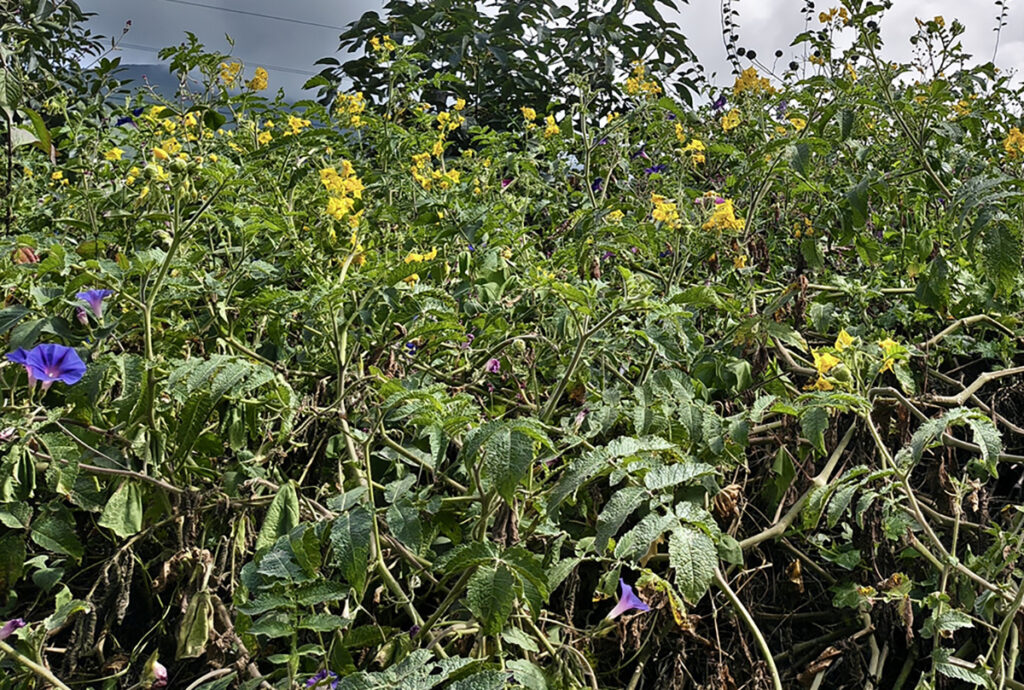
One of the studies featured examines fungal pathogens in wild tomato hosts, offering insights into plant disease resistance and pathogen evolution. Such research could provide solutions when similar pathogens threaten crops. Understanding these evolutionary processes can better prepare us for environmental challenges.
In the broader realm of disease ecology, key questions include the circumstances leading to epidemics and how pathogens transition between natural and human systems. Wild plant research plays a crucial role in addressing these issues, Penczykowski notes.
“What we learn from wild plant-pathogen interactions can inform more sustainable management of crop diseases,” she states.
Penczykowski’s disease ecology class at WashU inspired a meta-analysis on plant pathology and urbanization, led by postdoctoral researcher Kaylee Arnold. Arnold comments on the extensive effort involved in conducting the systematic literature review, which highlighted research gaps in the field.
The special issue also features Penczykowski’s work on soil microbe-plant feedback mechanisms. She explains that plants gather species-specific microbes in their soil, which include both beneficial microbes and specific pathogens that restrict plant proliferation in one area. This mechanism supports biodiversity in ecosystems.
“This is a way to maintain biodiversity in natural ecosystems. If every plant is limited by its own set of pathogens, you get greater diversity of plants,” Penczykowski explains. Her team further tested this feedback mechanism by introducing additional stressors and found compelling evidence supporting their hypothesis.
The community of wild plant disease scientists is relatively small yet diverse, offering unique opportunities for innovation and discovery. “There have been many important discoveries in wild plant systems and there is a lot of room for discovering new things,” Penczykowski remarks. “They’re such exciting study systems.”
Original Story at source.washu.edu