Montreal—The ongoing battle against climate change primarily focuses on reducing emissions, but even after curbing CO2 sources, it will take centuries for Earth’s natural systems to diminish the accumulated greenhouse gas levels. To expedite this process, scientists are exploring ways to enhance these natural mechanisms.
At the 36th annual Goldschmidt conference on geochemistry, researchers, including Stanford University’s Matt Kanan, shared insights on a method called enhanced rock weathering. Kanan emphasized leveraging Earth’s largest source of alkalinity—silicates—to bolster the carbon cycle’s capabilities.
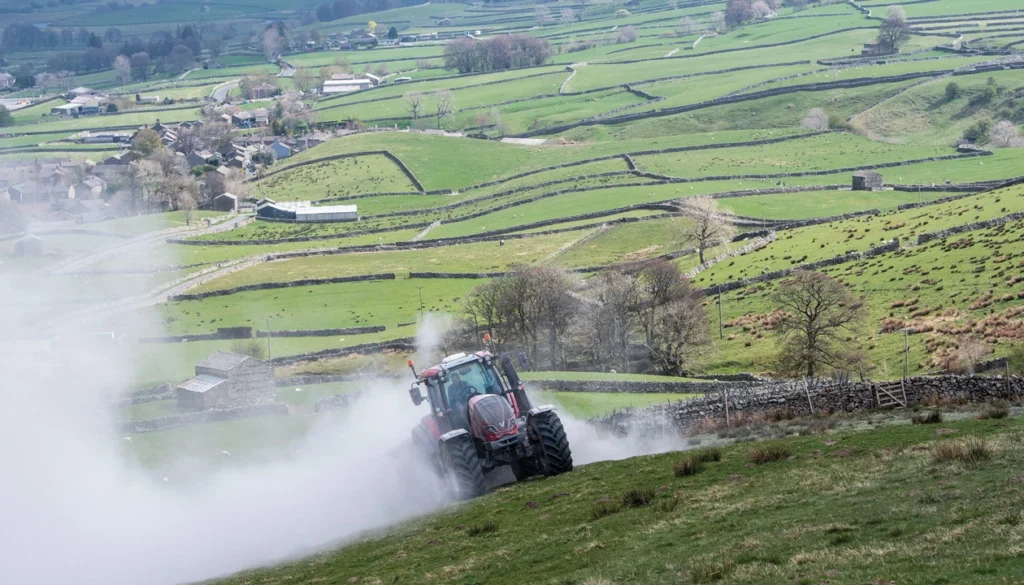
Natural rock weathering is crucial in the carbon cycle, as it neutralizes carbon dioxide dissolved in water and locks it into bicarbonate minerals, which are eventually deposited in the ocean. However, this process is slow, prompting the need for enhanced rock weathering. This method involves grinding alkaline minerals into powder to increase their surface area, thus accelerating the release of carbon-neutralizing cations.
Despite this, the dissolution rate of these rock particles remains sluggish. “There is this large-scale quest going on in the field for rapidly dissolving minerals, and they just don’t exist naturally because they have already dissolved,” stated Abby Lunstrum, a geochemist from the University of Pennsylvania, who opened the session with an overview.
During his presentation, Kanan questioned, “What can I do to make a mineral more reactive?” He concluded that a chemical approach is necessary. In 2025, Kanan innovatively mixed a calcium oxide source with magnesium silicate minerals and applied heat, resulting in the formation of magnesium oxide (periclase) and calcium-rich silicate minerals (Nature 2025, DOI: 10.1038/s41586-024-08499-2). This mix, named Monti, weathered significantly faster than magnesium silicates, revealing a potentially abundant source for enhanced rock weathering.
Kanan’s team, with support from the Carbon Drawdown Initiative, conducted extensive mesocosm studies to evaluate Monti’s effectiveness. These studies simulate field sites and provide data on weathering indicators like alkalinity and dissolved inorganic carbon in water leaching from soil.
Preliminary data from these mesocosms showed a substantial increase in dissolved inorganic carbon, indicating an average removal of 4.18 metric tons of CO2 per hectare over 42 weeks when Monti was used. In comparison, the same amount of limestone only removed 0.49 metric tons of CO2 per hectare, and basalt showed no notable impact.
Looking to expand this approach, Kanan co-founded Mafix, a start-up collaborating with a cement manufacturer to produce Monti for field trials. They are engaging with farmers and agronomists to verify if lab results can be replicated in real-world conditions.
Abby Lunstrum noted that while Kanan’s method significantly accelerates weathering rates, it doesn’t solve the issue of alkalinity loss across landscapes. The focus must remain on ensuring the released alkalinity is effectively retained in the environment, a challenge that still needs addressing by Earth scientists and environmental geochemists.
Original Story at cen.acs.org