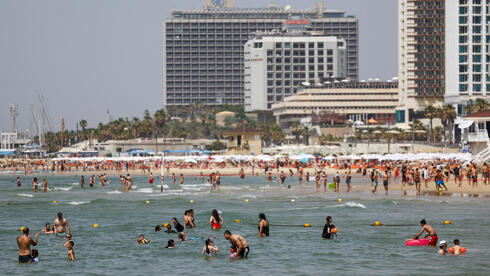
Challenges in Predicting Heatwaves Amid Rising Temperatures in the Middle East
As heatwaves increasingly impact the Middle East and the Mediterranean, researchers are scrutinizing the ability of climate models to predict such events. The critical question they face is whether these models can identify the processes leading to dangerous heat events before they occur.
A recent study from the Hebrew University of Jerusalem provides some insights but also highlights challenges. While the world’s most advanced climate models can replicate heatwaves once they have started, they often struggle with identifying the early atmospheric warning signs.
The study, involving Andre Klif, Prof. Chaim Y. Garfinkel, Prof. Dorita Rostkier-Edelstein, and Dr. Assaf Hochman, appeared in the journal Weather and Climate Extremes. They examined 11 climate models used by the Intergovernmental Panel on Climate Change (IPCC) and compared simulations with atmospheric data from the eastern Mediterranean and Middle East.
Findings showed a significant gap: while models could replicate heatwave conditions, they often fell short in representing the atmospheric processes leading to those conditions.
Heatwaves in the eastern Mediterranean arise from a series of atmospheric processes that start days or even a week before the peak temperatures. Shifts in airflow and high-pressure systems over Europe, Turkey, India, and parts of Africa create pathways that channel hot air towards the region, leading to extreme heatwaves.
Yet, the study discovered that models frequently delayed or weakened these warning signals or failed to reproduce them altogether.
The Ridge Over Turkey and India’s Monsoon
A significant mechanism identified was the strengthening of a high-pressure ridge over Turkey. Models that accurately represented this phenomenon were better at replicating the intensity of observed heatwaves.
Additionally, the connection between the South Asian monsoon and eastern Mediterranean heatwaves was highlighted. Atmospheric changes over India could set the conditions for extreme heat, but none of the studied models successfully reproduced this connection.
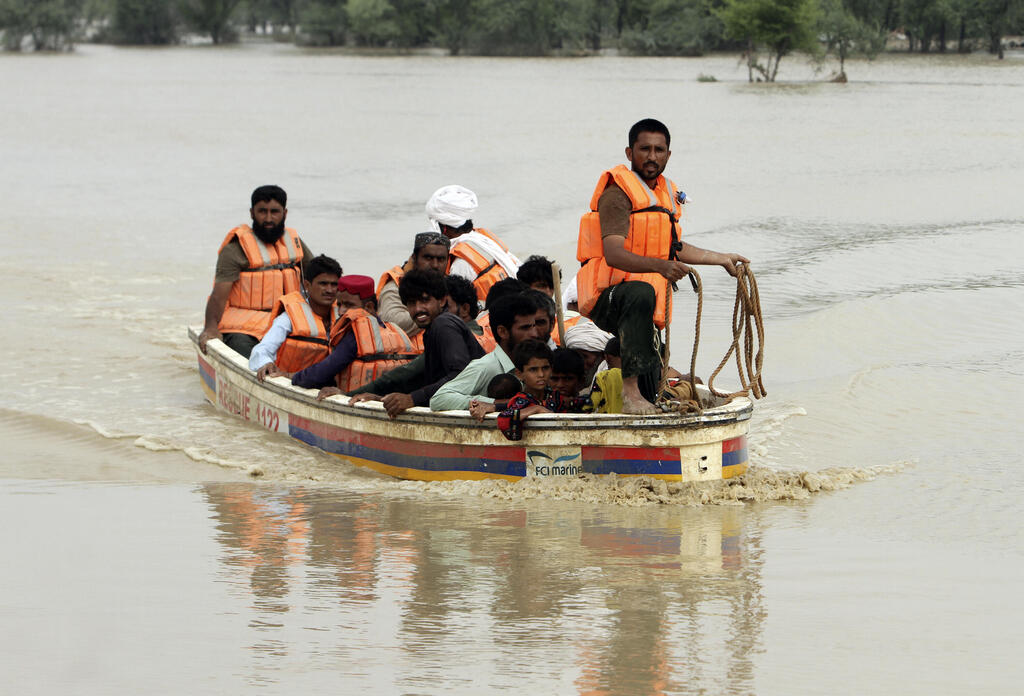
Monsoon flooding in Pakistan
(Photo: AP)
This failure may indicate a broader weakness in how climate models represent interactions between tropical weather systems and temperate atmospheric systems.
While models can generate realistic heatwave statistics, their misrepresentation of the processes leading to these events has implications for future preparedness. Extreme heat is a deadly natural hazard, already straining electricity, water, agriculture, and health systems in the Middle East and Mediterranean.
As climate change increases the frequency of extreme heat events, the ability to detect atmospheric warning signs early will be crucial in adapting to a hotter world.
Original Story at www.ynetnews.com