Rising Temperatures and Shifting Norms: The UK’s Climate Transformation
The UK is experiencing a dramatic shift in climate patterns, with extreme weather events becoming increasingly common. According to the State of the UK Climate report, the year 2025 was recorded as the hottest in history, a trend fueled by rising carbon levels in the atmosphere.
Historical data dating back to 1884 reveals unprecedented temperature spikes, demonstrating the tangible impacts of climate change. A comparison of UK temperatures from 1961-90 and 2016-25 further underscores this upward trend.
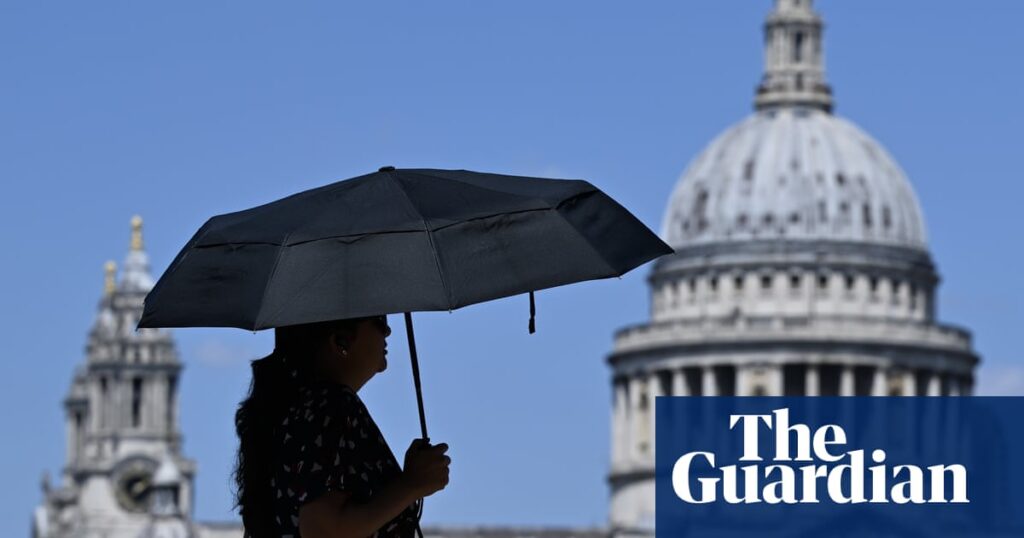
The UK witnessed its warmest spring and summer last year, with England experiencing its driest spring in 100 years. The country is currently enduring its third heatwave in two months, with temperatures matching those of the famously hot summer of 1976.
“What we used to think of as extreme, we increasingly consider as normal,” remarked Mike Kendon, a scientist at the National Climate Information Centre and the report’s lead author. “We are seeing unprecedented changes continuing … and every year adds to this body of evidence.”
The report, published in the International Journal of Climatology, highlights that the last four years rank among the five hottest on record in the UK. Climate breakdown is intensifying temperature extremes, with southern regions experiencing notable increases.
Notably, the average hottest day in areas stretching from Kent to Lincolnshire was 4.5C warmer in the last decade compared to 1961-1990. In Greater London, the number of days surpassing 30C and nights over 18C has more than quadrupled during this period. High temperatures in southeast England illustrate this trend.
The climate shift is evident across the UK, with northern regions experiencing temperatures previously typical of London. Kendon noted, “Our climate is on the move – literally. The trend shows that in the 1980s, annual average temperatures of 11C were virtually unknown in the UK, yet by 2025 almost a fifth of the land surface reached that value.”
Rising temperatures increase the capacity for warm air to hold moisture, leading to heavier rainfall and potential flooding. The report found a 20% increase in the wettest days since 1961-1990, with rainfall intensity up by 5%. A graph illustrating rising rainfall intensity supports these findings.
Despite an overall increase in rainfall, hot and dry summers exacerbate drought conditions. In spring 2025, England and Wales saw less than half the average rainfall compared to 1991-2020, with England’s river flow from March to August 2025 being the second lowest recorded since 1961.
Liz Bentley of the Royal Meteorological Society stated, “The way we experience climate change most is through the weather extremes. Climate change has been described by scientists for many years but is now increasingly being felt by the UK population in their own homes and communities.”
Persistent heat and dryness have heightened wildfire risks, with fire services struggling to manage ongoing blazes. Experts warn that the nation is amid a “firewave”, as the current heatwave approaches 33C.
This heatwave, though milder, has surpassed the one from late June, which disrupted services and claimed approximately 2,700 lives in England and Wales. Kendon warns of the ongoing nature of these changes, saying, “A lot of our infrastructure, housing stock, agriculture and health systems are based on a climate that is no longer represented by recent observations.” He added, “We’re not saying that where we are now is where we’re going to stay.”
Original Story at www.theguardian.com