Enhancing Climate Change Predictions with Advanced Satellite Data Interpretation
Understanding the effects of climate change is heavily reliant on accurate data interpretation, especially from satellites. By refining these interpretations, scientists can produce more reliable climate models, predicting various phenomena such as temperature fluctuations and greenhouse gas emissions. This information is crucial for communities and governments, especially in planning for severe weather events that can disrupt infrastructure, particularly in Arctic regions, alter ecosystems, and increase carbon emissions. The advancements made through this project have potential applications in areas like agricultural soil moisture monitoring, water resource management, and environmental tracking in remote locations.
“Permafrost holds about 1,500 billion tons of carbon, almost double what’s already in our atmosphere,” Rahman remarked. “As the Arctic rapidly warms, this trapped carbon is released as greenhouse gases such as methane and carbon dioxide, which drives global warming even more.”
Monitoring changes in the Arctic’s remote landscapes presents significant challenges. Satellites and drones are pivotal, scanning surfaces with electromagnetic signals from above. Lanagan explained, “When the satellites, or drones, fly over, they can capture information about very remote places where people just can’t be on the ground.”
These instruments emit signals to the surface, analyzing the reflection to determine soil properties like moisture and temperature. This data helps scientists understand the conditions underneath the surface.
Researchers integrate lab experiments, computer models, and Arctic fieldwork to study permafrost changes. These insights allow them to build models that interpret imagery from satellites and aircraft, enabling environmental monitoring without constant on-site presence. Such work is essential for environmental change tracking, infrastructure protection, and operations in polar regions, while also advancing remote sensing technology.
Laboratory Simulation of Arctic Conditions
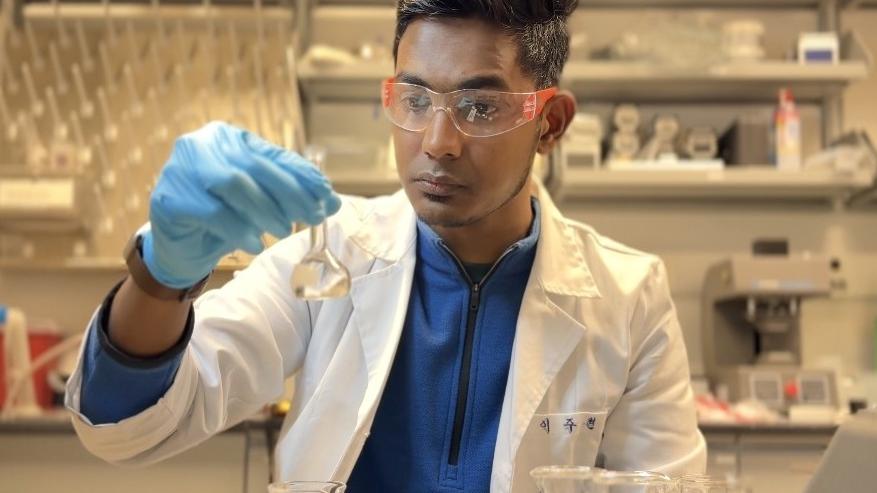
At Penn State, researchers simulate permafrost conditions in the lab, eliminating the need for Arctic travel. Collaborating with St. Louis University, they create soil samples using sand, silt, and clay, varying water content to mimic different permafrost types. These samples undergo freezing cycles to replicate natural temperature changes.
“We are able to cool the soil samples from the room temperature to around negative 10 to negative 15 degrees Celsius,” said Mingjin Lu, who led a Penn State College of Engineering senior capstone team. This equates to approximately 14 to 5 degrees Fahrenheit.
As they vary temperatures, the team measures how samples react to electromagnetic signals. Lu explained, “Really, what the capstone project is doing is providing a way to simulate the permafrost and get the microwave response in a lab setting.” This data supports remote sensing by correlating temperature changes with microwave data.
Developed through Penn State’s engineering capstone program, the system designed for this project freezes and thaws samples while measuring electromagnetic responses. This data helps create models for predicting permafrost changes via satellite imagery.
Lu noted, “We really felt that we are able to contribute to a work that is going to be a larger project and a long-term project, and it will really be a really impactful one.”
Linking Permafrost Structure with Satellite Observations
The internal structure of soil samples, including particle and water arrangements, changes as they freeze and thaw. These structural changes influence electromagnetic wave interactions and the way signals reflect from the permafrost surface.
Lanagan stated, “In material science, we always look at the structure of the material and how it relates to the properties. We’re always correlating structure and properties.”
Researchers employ advanced imaging tools like CT scanning, electron microscopy, and magnetic resonance imaging to study soil structure changes. Engineering science and mechanics senior Agustin Harte focuses on analyzing soil structure variations with water content and composition.
“It’s really important to quantify and really understand how the structure really pertains to the changes in the dielectric properties,” Harte said.
As soil conditions vary, dielectric properties, or permittivity, change, affecting how electromagnetic waves — like satellite signals — interact with the soil. This enables satellites and drones to detect these variations.
By connecting structural and property data, researchers can interpret satellite signals based on underlying surface conditions. Lanagan explained, “So, when satellites fly over, they can do that correlation. That’s what this is, this area is frozen, or this area has a lot of water. Then, we can interpret that to mean the permafrost is still frozen or thawing.”
Original Story at www.psu.edu