Electric vehicles (EVs) are revolutionizing how we think about energy storage and distribution. In Massachusetts, an innovative initiative is underway to harness the potential of EVs not just as modes of transportation, but as integral components of the electricity grid. This effort could pave the way for similar programs across the U.S.
The Massachusetts V2X Initiative
The Massachusetts Clean Energy Center (MassCEC) is spearheading the Vehicle-to-Everything (V2X) Demonstration project, a pioneering initiative to integrate parked EVs into the energy grid. The project, funded at $6.3 million, aims to install 100 bidirectional chargers, offering free installations to a diverse set of participants, including residential, commercial, municipal, and school entities. By September 2026, the project is expected to add 1.5 MW of distributed energy storage capacity across the state. More details about the project can be found here.
Incentives and Challenges
Unlike previous pilot programs, MassCEC’s initiative offers a dual benefit: free bidirectional chargers and monetary compensation through the ConnectedSolutions program. Participants can earn $200 per kW for commercial use and $275 per kW for residential use, based on performance during the grid’s peak demand periods.
Despite these incentives, significant barriers remain. The cost of installing a residential setup ranges from $15,000 to $40,000, which presents a considerable financial hurdle for many potential participants. Additionally, approximately 75% of residential applicants were disqualified due to existing solar installations that conflicted with current net-metering policies.
School Buses Lead the Charge
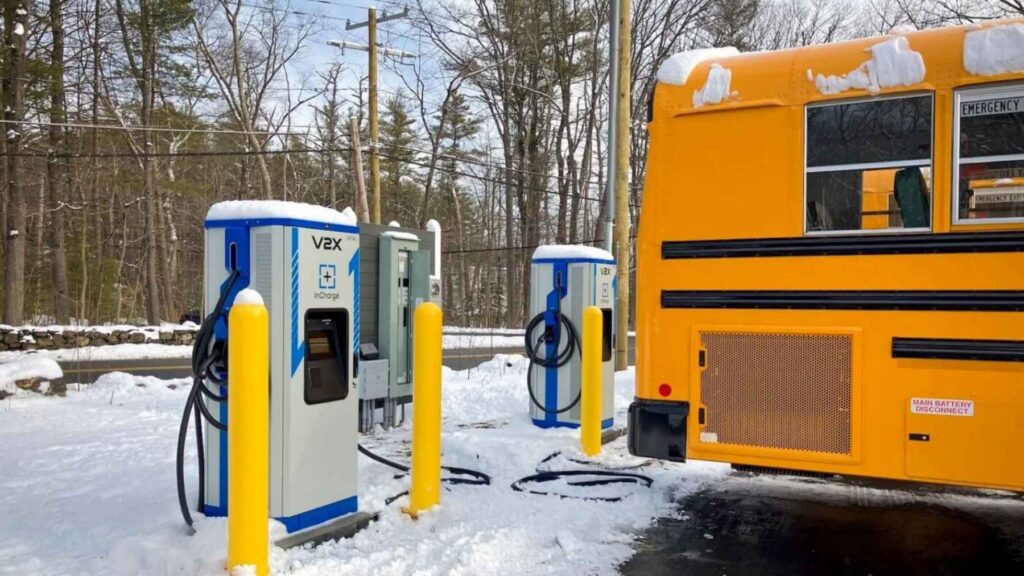
One of the first successful implementations of this initiative is with electric school buses in Acton-Boxborough. These vehicles charge at night when electricity is cheaper and cleaner, and discharge back into the grid during peak hours. This use case highlights the potential for school buses to serve as valuable grid assets, given their large battery capacity and predictable usage patterns.
Regulatory and Technological Hurdles
The program has revealed a critical issue: existing technology struggles to differentiate between solar and battery-generated power, complicating compensation for homeowners with both solar panels and EVs. This has led to significant delays and disqualifications, underscoring the need for updated regulatory frameworks that accommodate the simultaneous use of solar and EV technologies.
On the hardware front, the high costs of bidirectional chargers remain a major obstacle. While the program mitigates these costs for participants, a sustainable financial model is necessary for widespread adoption.
Looking Ahead
Massachusetts aims to have 900,000 EVs on its roads by 2030, a significant increase from the current 90,000. The insights gained from this pilot could guide future policies and technology developments, not just in Massachusetts but across the U.S. States like Maryland and California are already taking steps towards similar initiatives, highlighting a growing interest in V2X technology.
By the summer of 2026, all charging stations are expected to be operational, with comprehensive findings to be published in a V2X Guidebook. This document will address costs, system design, and regulatory challenges, serving as a valuable resource for states looking to implement their own V2X programs.
Original Story at www.autonocion.com