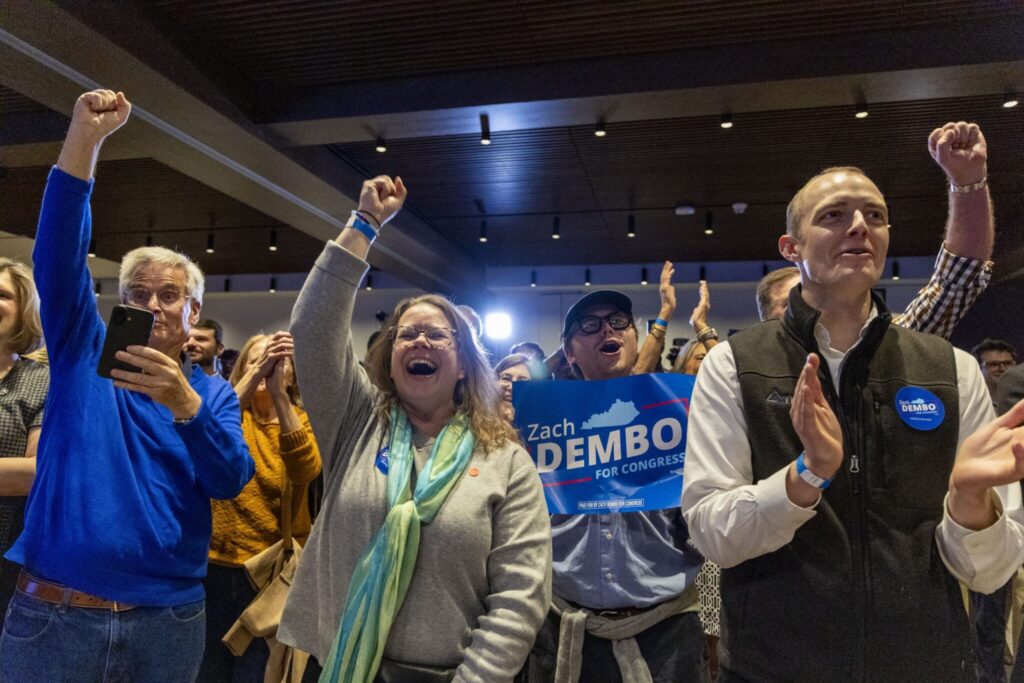
For millions of American families, the results of Tuesday’s midterm elections aren’t just political news — they could directly determine whether a parent can afford insulin, whether a child keeps their Medicaid coverage, or whether a household is pushed toward medical debt. Democrats swept into control of both chambers of Congress following what observers are calling a historic blue wave, and their early agenda signals major shifts in health care policy that could reach into nearly every American home.
According to The Associated Press, Democrats secured 237 House seats — well above the 218 needed for a majority — flipping 29 Republican-held districts in the process. In the Senate, the AP reported Democrats and independents who caucus with them now hold 54 seats after flipping seven GOP positions. That majority gives the party real power to reshape the laws governing who gets health coverage, how much it costs, and what happens when families can’t pay.
Lawmakers wasted no time identifying health care as a centerpiece of their incoming agenda. Rep. Ted Lieu of California spelled out three immediate legislative priorities that would directly affect patients and families across the country.
First, Democrats plan to push legislation reversing cuts to Medicaid included in the GOP’s recently passed mega spending law. Those cuts eliminate roughly $1 trillion in Medicaid funding over the next decade — funding that currently helps low-income children, seniors, people with disabilities, and working families access doctors, hospitals, and prescription medications. Losing that coverage doesn’t just affect individual health — it can destabilize a family’s finances overnight when a medical emergency strikes without insurance.
Second, the party intends to restore enhanced Affordable Care Act tax credits that expired in December 2025. Those credits helped people who buy their own health insurance — often small business owners, freelancers, and workers between jobs — afford monthly premiums through the ACA Marketplace. Without those subsidies, many families face a stark choice: pay for coverage they can barely afford, or go without and hope nothing goes wrong.
Third, Democrats are targeting the sweeping tariffs that have driven up the cost of goods — including medications and medical supplies — for American households. Lieu also said the party would move to end the ongoing conflict with Iran, now in its ninth month, which has contributed to inflation pressuring family budgets.
“We will pass a bill to stop the stupid Trump tariffs jacking up prices on Americans, and we will pass a bill to stop the Iran war,”
Lieu said.
The economic backdrop makes the health care stakes even higher. Climbing inflation and record fuel prices followed Republican candidates throughout the campaign, and voters directly connected rising costs — at grocery stores, at the gas pump, and at the pharmacy — to policies championed by the Trump administration. When household budgets are already strained, an unexpected medical bill or a lost insurance subsidy can be catastrophic.
House Minority Leader Hakeem Jeffries, who is now positioned to become the first Black speaker of the House, framed the election results as a clear signal from voters who are tired of struggling.
“The American people have chosen House Democrats because they want to see a dramatic change in direction, and that’s exactly what House Democrats will deliver beginning on Day One,”
he said at a Wednesday afternoon press conference, where he was joined by other House Democratic leaders pledging to build an affordable America.
Senate Democratic Leader Chuck Schumer echoed that urgency, naming lower costs and fighting corruption as top priorities for the new majority.
“Whenever Trump defies the will of the American people or the law, we will launch investigations, take him to court, and entangle him in legislative razor wire,”
Schumer said. He also signaled that Democrats could use Congress’s budget authority — the so-called “power of the purse” — to influence the direction of the Iran conflict, which has contributed to the economic pressures burdening American families.
When pressed on whether Senate Democrats would work alongside President Trump, Schumer was direct:
“We are going to work hard to drive costs down with the president or without him. Period.”
Labor voices are holding the party accountable on those promises. Shawn Fain, president of the United Auto Workers union — which represents roughly 1 million active and retired members, including 350,000 in Michigan alone — offered a measured take on the wins. The union had endorsed Michigan Democratic Senate candidate Abdul El-Sayed, who won his race Wednesday.
“It’s not a massive win for anybody until these people go to work and deliver results,”
Fain said.
“I believe this election is a mandate for change, but it is up to the Democratic Party now to deliver. And if they don’t deliver, we’ll be the first ones to call them out on it,”
he added.
Progressive lawmakers are sounding a similar warning, insisting that the election results shouldn’t be read as permission to return to politics as usual. Rep. Greg Casar of Texas, who chairs the Congressional Progressive Caucus, said the roughly 100-member group wants meaningful transformation — not incremental change.
“Last night was not a sign that all of Democrats’ problems are solved. The election is not an endorsement of returning to the status quo or tinkering around the edges. This is a message that people in this country are mad as hell, and are giving Democrats a shot to show them we can do something about it,”
Casar said.
Rep. Pramila Jayapal of Washington state acknowledged that despite the sweeping wins, Democrats still have trust to earn with the public.
“I think we’ve got a shot to show that we can deliver on the kind of bold populist change that people ran on and won on,”
she said.
“And I think that is going to be our task going forward for the next two years.”
For families watching their insurance costs climb, worried about whether Medicaid will still cover their child’s specialist visits, or counting the cost of prescriptions against the grocery bill, the next two years of Congress will be consequential. Democrats now hold the power to either protect and expand the safety net or fall short of the moment voters handed them. How they use that power — starting with the Medicaid cuts, ACA subsidies, and cost-of-living legislation — will determine whether this election translates into real relief for real people.