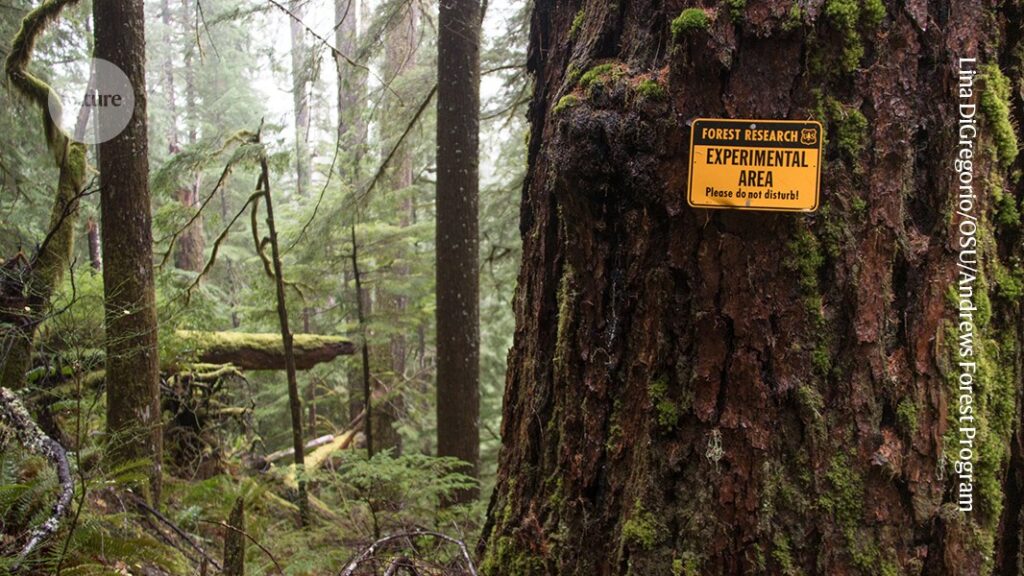
US Forest Research Faces Uncertain Future Amid Funding Challenges
The closure of forest-service research offices across the United States, including one in Portland, Oregon, signifies a major shift in the landscape of ecological research. For a century, these offices have played a critical role in managing wildfire prevention, scientific research, and conservation initiatives, particularly in the Pacific Northwest.
The primary concern extends beyond the potential loss of specific grants; it threatens the very foundation of long-term, place-based research. This sentiment is echoed by socio-ecologists who fear the erosion of institutional memory, field sites, and valuable data built over decades. Essential to this research is the continuity of data, which becomes precarious under episodic and politically sensitive funding conditions.
The current climate forces researchers to confront a harsh reality: not all can be preserved. This isn’t merely a call to seek alternative funding sources but a recognition of changing research conditions in the US. The scaffolding that has supported extensive bodies of knowledge is now unstable, necessitating a shift in priorities and methodologies among environmental scientists.
As resources dwindle, the critical question becomes what to protect. It challenges researchers to focus not on preserving every project but on safeguarding the ability to ask meaningful questions, train future thinkers, and retain existing knowledge. The initial instinct to maintain the pre-crisis research footprint is understandable but unsustainable in the long term, as it risks sidelining the most vulnerable members of the scientific community.
Interestingly, this predicament mirrors challenges long faced by researchers in the arts and humanities, who often work with limited funding. These disciplines thrive through close reading, archival work, collaboration, and imagination, demonstrating that robust intellectual work can flourish even in resource-poor environments.
Adapting to a New Research Landscape
Scientists in traditionally well-funded fields are now urged to adopt similar strategies, employing creativity and collaboration to advance their work. The necessity to innovate and adapt is paramount as the familiar structures of support wane.
For further insights into the current state of ecological research, explore “Ecologists: don’t lose touch with the joy of fieldwork” and ‘I rarely get outside’: scientists ditch fieldwork in the age of AI.
Original Story at www.nature.com