In the race to rival Tesla, automakers have faced numerous challenges, yet Tesla continues to lead the U.S. electric vehicle (EV) market, controlling about half of it. A significant factor in Tesla’s dominance is its extensive Supercharger network, which has now been opened to other brands, albeit with some limitations.
In 2023, Tesla’s Supercharger network became accessible to non-Tesla vehicles, but initially, this required either a cumbersome adapter or finding a Supercharger with Magic Dock features. However, some car manufacturers have started adopting Tesla’s North American Charging Standard (NACS) connector, simplifying access. The Kia EV6, which recently underwent a midlife refresh, is among the first to make this switch.
The Kia EV6: A Closer Look
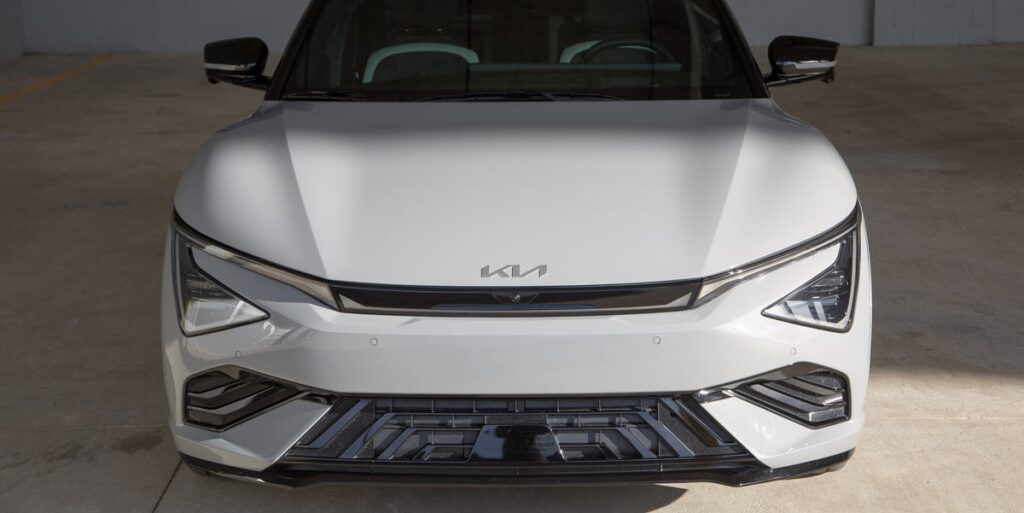
Since its debut in 2021, the Kia EV6 has been a top choice among EVs, sharing its platform with the Hyundai Ioniq 5. This two-row crossover is valued for its efficiency, fast charging capabilities, and impressive range, alongside Kia’s trademark high-value features. Enthusiasts also appreciate its engaging driving experience.
The 2025 model not only introduces updated styling and interior enhancements but also transitions from the CCS charging port to the NACS standard. This change allows direct access to Tesla’s Supercharger network without needing an adapter, although an adapter is now necessary for other third-party DC charging stations.
- Vehicle Tested: 2025 Kia EV6 GT-Line AWD
- Base Price: $60,395
- Price as tested: $60,760
- Location: New York
Driving Experience
Kia positions the EV6 as a crossover, but its size and design align more closely with a hatchback or station wagon. Its handling and performance are akin to sports sedans like the Polestar 2. The steering is sharp, and the suspension is well-tuned, offering a balanced and responsive driving experience.
The dual motors deliver 320 horsepower and 446 lb-ft of torque, offering brisk acceleration and a 0-60 mph time of 4.5 seconds, as tested by Car and Driver. The all-wheel-drive version provides additional power and traction, making it a preferable choice for many over the base model with its smaller battery and lower output.
While the rear-wheel-drive version offers a slightly longer range, the extra power and all-weather capabilities of the all-wheel-drive model make it an attractive option despite the minor range compromise.
Living with the EV6
Kia’s transition to the NACS connector aligns with an industry trend, easing access to Tesla’s charging network. The charging port’s relocation to the driver’s side rear mirrors Tesla’s placement, facilitating easier connections at Superchargers.
For apartment dwellers like the author, lacking home charging options, access to a broad network of fast chargers is crucial. Tesla’s network, now more accessible, reduces the hassle of finding compatible charging stations.
Although the EV6’s charging speed on Tesla’s 480-volt Superchargers is limited compared to 800-volt chargers, future higher-voltage NACS options could address this. For now, the EV6 offers a practical and efficient charging solution, albeit with some trade-offs regarding adapter use.
Final Thoughts
Despite the shift to the NACS standard, the Kia EV6 remains a strong contender in the EV market. Its features, performance, and design continue to appeal to a broad range of drivers. While the new charging port presents some challenges, it also positions the EV6 for future compatibility as charging infrastructure evolves.
Overall, the Kia EV6, with its engaging drive and practical features, remains an excellent choice for those considering an electric vehicle.
Original Story at www.roadandtrack.com