New Energy Vehicles Take Center Stage at Auto Guangzhou 2026
As Auto Guangzhou 2026 takes the spotlight, the automotive industry is witnessing a significant shift towards new energy vehicles (NEVs). Volkswagen, BMW, and Dongfeng Nissan have unveiled a range of innovative NEVs, showcasing their commitment to electrification and highlighting the evolving landscape of vehicle technology.
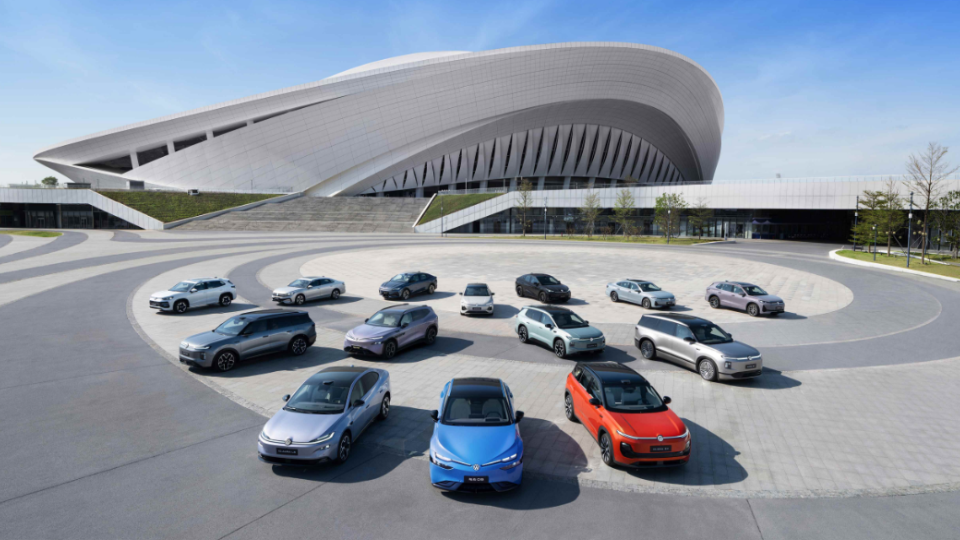
Image source: Volkswagen Group
Volkswagen’s display includes 14 NEVs, a testament to the company’s investment in developing vehicles that cater to the growing demand for electrified options. The introduction of locally developed platforms, electronic architectures, and intelligent driving technologies marks a turning point, as these innovations transition from strategic concepts to tangible products.
According to the China Passenger Car Association (CPCA), NEVs represented 19.7% of retail sales from mainstream joint-venture brands in October 2026, a noticeable increase from the previous year’s 7%. This trend underscores the market’s readiness to embrace electric mobility.
Local R&D Drives Technological Advancements
Volkswagen’s commitment to local research and development has culminated in the launch of the ID. ERA 5X, the first vehicle based on the Compact Main Platform (CMP) developed entirely in China. This all-electric SUV, priced at RMB 99,900, showcases the integration of China Electronic Architecture (CEA) and locally developed driver assistance technology.
In a bid to strengthen local development, Volkswagen invested an additional €2.5 billion in its Hefei innovation hub in 2024. The rapid deployment of the CEA, which took just 18 months from concept to production, exemplifies Volkswagen’s ability to adapt to China’s fast-paced, software-driven automotive market.
Oliver Blume, Chairman of the Board of Management of Volkswagen AG, emphasized the importance of region-specific development: “What we can learn in China is not only the speed. It’s the discipline and precision.”
BMW and Nissan’s Strategies in China
BMW has taken a different approach by adapting its global Neue Klasse platform for the Chinese market. The launch of the Neue Klasse BMW iX3 Long Wheelbase and i3 Long Wheelbase models demonstrates BMW’s strategy of integrating Chinese technology with its vehicle engineering expertise.
Meanwhile, Dongfeng Nissan has expanded its N Series to include the NX7 plug-in hybrid SUV, making it part of a lineup that now includes battery-electric, plug-in hybrid, and range-extended powertrains. This diversification reflects the need to address varying customer requirements across different segments.

Image source: Dongfeng Nissan
Challenges and Opportunities in the NEV Market
The rise of NEVs is juxtaposed with a decline in conventional vehicle sales, posing a challenge for international automakers in China. Despite a 346.9% increase in Volkswagen’s NEV deliveries in October, the overall vehicle sales declined by 38.5% in the third quarter. This highlights the substantial volume that new electrified models need to replace.
Nissan’s experience further illustrates this challenge, as overall sales in China fell by 36.1% despite a 37% increase in N Series sales. The need to build a sustainable NEV business is clear, but sustaining sales momentum in a competitive market remains a complex task.
Future Prospects and Market Dynamics
As more locally developed NEVs enter the market in 2027, the focus will shift to the effectiveness of automakers’ local operations post-launch. The ability to adapt to customer feedback, manage technology updates, and maintain competitive costs will be crucial for success.
Auto Guangzhou 2026 signals progress in the NEV sector, but the real test lies ahead. The challenge for international automakers will be to transform initial demand into sustained sales and establish a viable commercial foundation for their operations in China.
All Rights Reserved. Do not reproduce, copy and use the editorial content without permission. Contact us: autonews@gasgoo.com
Original Story at autonews.gasgoo.com