The Push for Electric Vehicle Chargers in Vallejo: Progress and Challenges
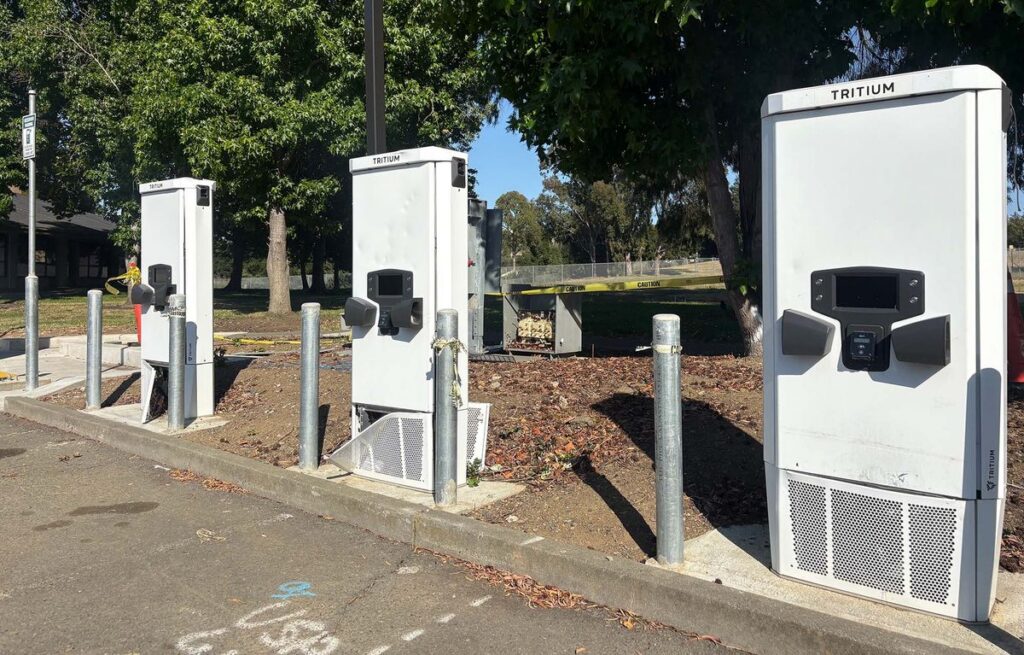
VALLEJO – Efforts to enhance the electric vehicle infrastructure in Vallejo have taken a significant step forward with the introduction of a new ordinance designed to streamline the installation of charging stations. However, concerns persist about the current state of the city’s chargers, many of which remain inactive or vandalized.
This week, the Vallejo City Council unanimously passed an ordinance aimed at expediting the permitting process for electric vehicle chargers. This move aligns with California’s mandate under Assembly Bill 1236, a law from 2015 that requires cities to fast-track the approval of charging station installations.
California has been at the forefront of promoting electric vehicle usage, with ambitious goals to increase the number of EVs from 1.5 million in 2025 to 5 million by 2030. The state aims to have 1 million operational chargers by 2030, a target that demands a significant acceleration in charger deployment.
To meet these objectives, the state plans to streamline city and county permitting processes and implement power grid upgrades to support chargers, especially in rural and underserved areas where private investment may lag.
Despite these efforts, Vallejo officials express concerns about the lack of resources for maintaining existing charging infrastructure. Councilmember Helen-Marie Gordon raised the issue of vandalism, particularly targeting stations for copper, noting that while operators are responsible for maintaining stations, they often neglect them.
Vice Mayor Diosdado Matulac questioned the lack of accountability for inactive chargers and suggested penalizing operators who fail to maintain them. However, City Attorney Veronica Nebb clarified that state law limits the city’s authority to impose such conditions when approving permits.
“I think the issue here is if a state law comes in and says you must approve these permits ministerially,” Nebb explained. “We can’t deny them and we can’t condition them.”
City officials, including Councilmember Charles Palmares, are exploring the possibility of introducing separate regulations for the maintenance of charging stations, though the feasibility of such measures remains uncertain.
As the city strives to comply with state mandates, it grapples with the challenge of keeping existing chargers operational amid vandalism and neglect. Some chargers, initially installed as part of a PG&E pilot program, remain inactive and unaddressed.
Residents seeking to charge their electric vehicles can utilize apps like PlugShare to locate active stations, though several are situated on private property, such as those owned by Hyundai. Moreover, non-Tesla fast chargers face similar issues, with many vandalized or out of service, adding to the frustration of EV owners.
Councilmember Peter Bregenzer expressed his frustration over the situation, stating, “I don’t understand why we have chargers that have no connectivity. I don’t understand why we put chargers in parking lots that are not accessible by the public.”
Original Story at www.vallejosun.com