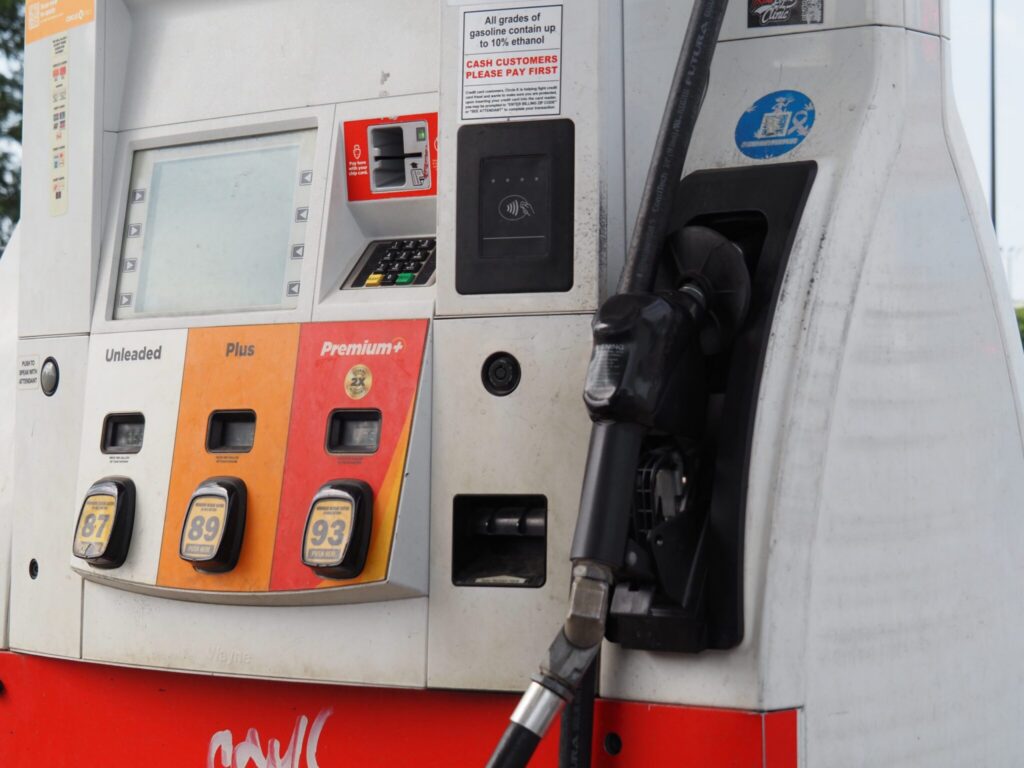
For millions of American families planning a Thanksgiving road trip this year, there’s a reason to feel a little better before you even pull out of the driveway. Gas prices have been falling steadily for weeks — and analysts say the trend could stick around into the new year.
GasBuddy, which tracks fuel prices at stations across the country, is predicting the national average for a gallon of regular gasoline will hit $3.62 on Thanksgiving Day. That would actually set a Thanksgiving record — the previous high was $3.56 a gallon in 2022 — but it still represents real savings compared to what drivers were paying just weeks ago.
AAA reported Friday that the average price for a gallon of regular gas sat at $3.69 — down 18 cents from just one week earlier, and a full 58 cents lower than a month ago. That kind of drop adds up quickly for families filling the tank before a long holiday drive.
An AAA analysis noted that
“for most holiday travelers, driving remains the cheapest and easiest way to get around”
this Thanksgiving. Around 90% of holiday travelers are expected to hit the road rather than fly.
Prices Are Dropping in Every State
No matter where you live, prices are lower than they were a week ago. According to GasBuddy, all 50 states saw pump prices fall over the past week. A dozen states saw averages drop by more than 25 cents a gallon, with the steepest week-over-week declines in Montana (down 38.8 cents), Ohio (down 33.3 cents), Michigan (down 32.1 cents), Colorado (down 29.2 cents), and New Mexico (down 28.4 cents).
Patrick De Haan, head of petroleum analysis at GasBuddy, also found that 43 states now have average prices for regular gasoline below $4 a gallon — a threshold that had felt out of reach for many drivers in recent months.
That said, some states are still feeling the pinch. Hawaii has the highest gasoline prices in the country at $5.60 a gallon, followed by California at $5.50. Infrastructure challenges in those states make fuel more expensive to deliver. On the low end, North Carolina drivers are paying around $3.03 per gallon.
Why Are Gas Prices Falling?
Oil prices have dropped roughly $25 a barrel over the past month, and that’s the biggest driver of relief at the pump. As a general rule, every dollar change in the price of a barrel of oil translates to about 2.5 cents per gallon at the gas station.
A key factor is the ongoing conflict involving the U.S. and Iran. Prior to the war, roughly 20% of the world’s oil supply flowed through the Strait of Hormuz, the narrow waterway between Oman and Iran. Despite some skirmishes, oil has largely continued to move through the strait, easing fears of a severe supply disruption.
Grace Zwemmer, an economist at Oxford Economics, explained that
“markets bet on a de-escalation between the U.S. and Iran following the midterm elections.”
That shift in expectations has helped push prices down.
De Haan added that
“expectations of a coming supply surplus outweighed fresh security incidents around the Strait of Hormuz.”
The November report from the International Energy Agency described the oil market as showing
“tentative signs of rebalancing, with global oil supplies surpassing demand for the first time since the outbreak of the war in Iran.”
The IEA predicted a more substantial global oil surplus could develop through 2027.
The Energy Information Administration projected oil prices will average around $84 per barrel next year, with retail gas prices averaging $3.56 a gallon — assuming that oil flows recover and fuel inventories rebuild. Goldman Sachs echoed that view, stating this week that
“oil is forecast to ease gradually in 2027 as suppliers in the Middle East adapt to disruption from the war in Iran.”
Seasonal Factors and Consumer Caution Are Also at Play
It’s not just geopolitics moving prices. Time of year matters too. Americans typically drive less in colder months, which reduces demand for fuel. There’s also a less obvious factor: winter-blend gasoline.
As De Haan explained in an X post,
“After Sept 15, stations can sell winter blend, which is cheaper to make. Summer gas has to meet tighter evaporation rules, and that costs refiners more.”
That regulatory shift alone can shave a few cents off what you pay at the pump each fall.
American households are also pulling back on spending more broadly. The cost of living
“continues to be at the forefront of consumers’ minds across the population,”
said Joanne Hsu, director of the University of Michigan Survey of Consumers. The survey’s November findings revealed that about 57% of consumers
“spontaneously mentioned that their living standards have been eroded by high prices”
— the highest share since May, and notably higher than the 46% who said the same in February, before the war began.
That financial anxiety is showing up in Thanksgiving travel numbers too. AAA projects 72.9 million Americans will drive somewhere during the holiday — down about 200,000 from last year.
Good News, With Caveats
The outlook is cautiously optimistic, but energy analysts are quick to remind families not to get too comfortable. Oil prices are notoriously difficult to predict — no one forecasted this year’s price spike a year ago.
The IEA flagged in its latest analysis that
“downside risks to the forecast persist, as attacks on shipping undermine maritime security, which is pivotal to a sustained recovery.”
Even with prices declining, families are still paying more than they historically would at the pump. As De Haan put it,
“Americans aren’t letting the pump keep them from the table,”
but
“that doesn’t mean drivers aren’t feeling it.”