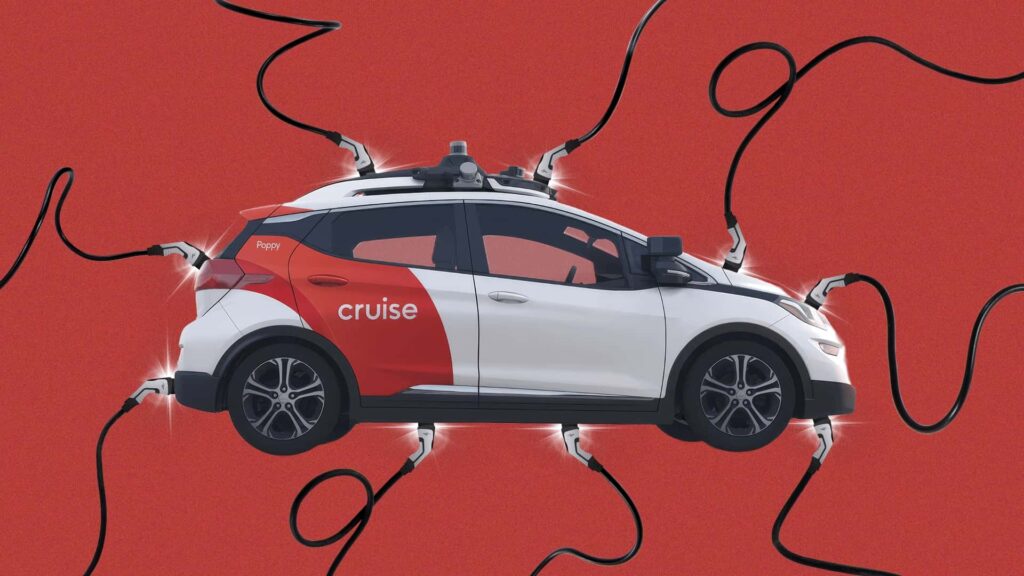
As electric vehicle (EV) technology evolves, new challenges emerge, particularly in how much energy they consume. While many EV owners understand that cold weather and high speeds can reduce driving range, fewer are aware of the significant power demands posed by autonomous driving systems. These systems require substantial energy for data processing, AI training, and operating sophisticated sensors, which could eventually consume more power than the world’s data centers did in 2023, according to an MIT study.
Autonomous Vehicles: The Energy Dilemma
Currently, the number of self-driving taxis is limited, with only about 7,000 operating in the U.S. and China. However, companies like Uber envision a future with millions of robotaxis on the road. Uber CEO Dara Khosrowshahi sees a “trillion-dollar-plus” opportunity, with projections of deploying 700,000 to 3 million robotaxis by 2035.
“Autonomy directly impacts your range and miles-per-charge, and also how often you have to recharge,” said Kay Stepper, Vice-President of ADAS and autonomous driving at Lucid Motors. The energy required for autonomy is growing exponentially, driven by increasing demands for memory and computing power.
A Lucid Gravity Robotaxi. Photo by: Lucid Motors
Robotaxis are designed to operate almost continuously. “As an asset, a robotaxi has the ability to be operated even 23 hours a day, with maybe an hour for DC charging, maintenance, and cleaning,” Stepper noted.
Investment and Innovation
Lucid and Rivian, key partners of Uber, are at the forefront of developing Level 4 autonomous vehicles. Uber plans to invest $500 million in Lucid, with an agreement to purchase at least 35,000 Gravity SUVs and future models for services in several cities starting in San Francisco. Rivian has secured up to $1.25 billion from Uber to launch robotaxis in 25 cities by 2031, beginning with a fleet in San Francisco and Miami in 2028.
Rahul Rithe, Rivian’s director of sensing systems, emphasizes the industry’s push for greater efficiency. The goal is to curb the energy demands of autonomy, which is a significant challenge given the complexity of the required technology.
Technological Evolution
Early autonomous vehicles, such as the Chevy Bolt from General Motors’ Cruise division, consumed between 1.5 to 3 kilowatts just to power the autonomy systems. This consumption is in addition to the regular energy needs for propulsion and other vehicle functions. Similarly, the 2022 Ioniq 5-based AV from Hyundai, developed for Motional, experiences a significant range reduction due to its autonomous systems.

The Hyundai Ioniq 5 robotaxis used by Motional have significantly less range than a normal model. Blame the power-hungry sensors and computers. Photo by: Hyundai
Newer models, however, show improvement. Rivian aims for approximately 1.1-kilowatt consumption for their robotaxis, while Lucid targets similar figures. Waymo’s Jaguar I-Pace taxis use about 1 kilowatt for self-driving capabilities.
Future Prospects and Challenges
The potential energy burden of autonomous vehicles is considerable. An MIT study suggests that if 1 billion AVs operate for an hour each day, using 840 watts for autonomy, they could match the energy consumption of global data centers from 2023. Maintaining emissions within permissible levels would require these vehicles to operate below 1.2 kilowatts of computing power.
According to Sertac Karaman, MIT professor and study co-author, reaching a goal of one kilowatt per vehicle is feasible within a few years, but the computational demands of autonomous transport continue to rise.
As the industry progresses, companies like Lucid and Rivian are advancing AI training, with their models expanding towards 10 billion parameters. The race to develop efficient, energy-conscious autonomous vehicles is on, with a focus on reducing sensor counts and optimizing power consumption.
Rivian says the R2 will offer a lidar sensor and, eventually, eyes-off autonomy. Photo by: Rivian
Rivian’s approach includes a “data flywheel” that leverages real-world driving data to train AI, with the potential for edge cases to be better captured and analyzed.
As the technology evolves, achieving a balance between power consumption and vehicle efficiency remains a critical challenge for automakers. With ambitious plans for autonomy, industry leaders are working to ensure that the future of self-driving cars is both sustainable and efficient.
Original Story at insideevs.com