(CNN) — Electric vehicles in the United States often appear to be struggling against the nation’s preference for traditional gasoline-powered trucks and SUVs. However, the underlying dynamics of the market tell a different story.
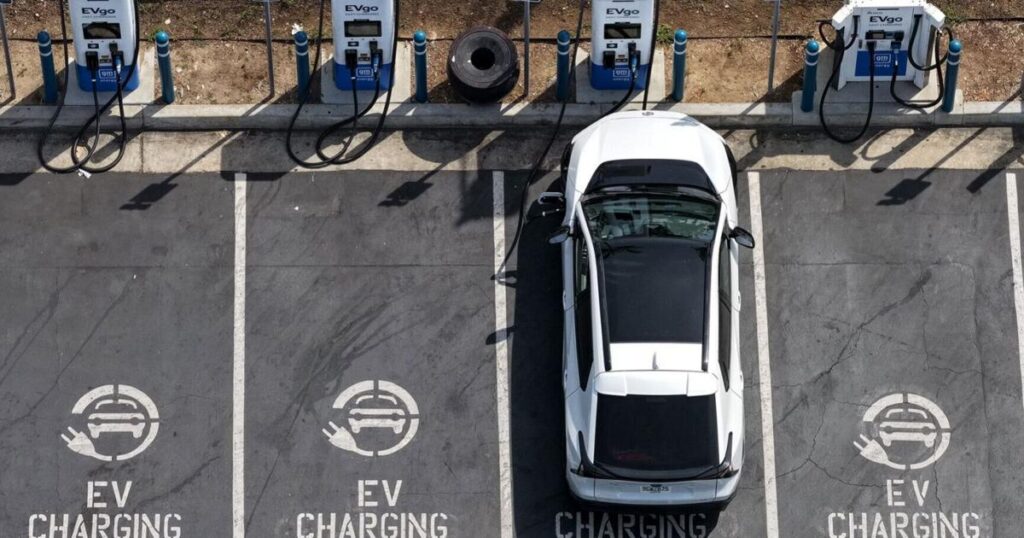
An electric vehicle charges in Monrovia, California.
Although recent increases in gas prices didn’t boost EV sales, and the removal of certain tax incentives last year dampened demand, the situation isn’t as bleak as it might seem. US EV sales decreased by 20% in the second quarter compared to the previous year, according to Cox Automotive. However, the drop in sales was partly due to an initial surge in demand last year that skewed figures.
“While [US] demand has softened following the expiration of federal incentives, automakers cannot simply walk away from electrification,” stated Stephanie Valdez Streaty, director of industry insights for Cox Automotive.
Challenges Facing US EVs
The Trump administration’s rollback of financial incentives, such as the $7,500 tax credit for EV buyers, has posed challenges for the EV industry. The removal of penalties for automakers not adhering to emission standards further reduced incentives to manufacture electric vehicles.
This policy shift led to a rush of purchases before the tax credit expired last October, resulting in a dry spell in sales thereafter. Many automakers, including Tesla, have scaled down their EV production plans, taking substantial financial charges over the last year.
Despite these obstacles, second-quarter sales increased by 15% from the first quarter, and used EV sales hit new records, according to Cox Automotive. This indicates a steady underlying demand, albeit without the previous incentive-driven boost.
Eric Straka from Ann Arbor, Michigan, paid about $32,000 for a Chevrolet Equinox in May. Ann Arbor had a limited rebate program that quickly exhausted its $500,000 budget. Straka is still awaiting his rebate but expressed satisfaction with his purchase, describing it as “smooth and quiet, and by far the best pickup acceleration I’ve ever had in a car,” he told CNN.
Global EV Market Trends
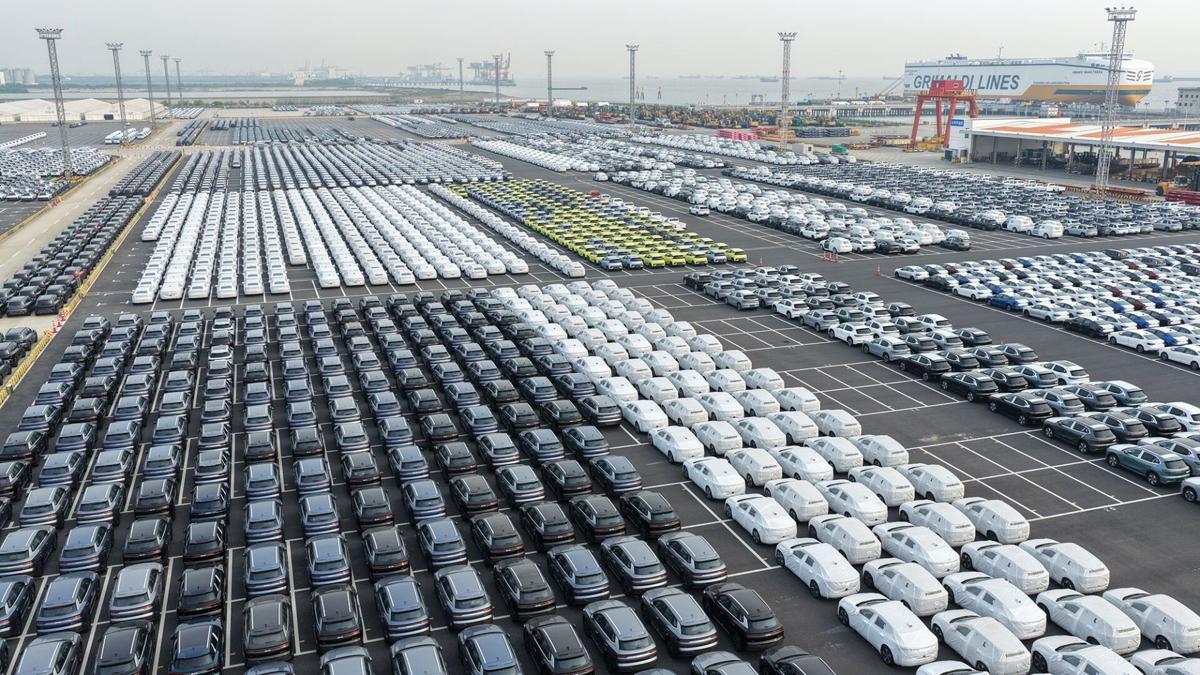
Chinese-made vehicles including BYD cars (L) wait to be transshipped for export at a port in Suzhou, in China’s eastern Jiangsu province on April 27.
Globally, EV sales are on the rise, particularly in China and Europe, where incentives remain in place and fuel prices are higher. The International Energy Agency projects EV sales will continue to grow, propelled by China’s booming market. Chinese automaker BYD has overtaken Tesla as the top EV producer, with 55% of Chinese auto sales consisting of some form of EV.
Chinese EVs and Competitive Pricing
Chinese electric vehicles are significantly cheaper than their American and European counterparts, with over 200 models priced under $25,000, and some as low as $10,000, according to Reuters. In contrast, the average price of a new US EV hovers around $56,377, as noted by Edmunds.
Although Chinese cars face legal challenges for sale in the US, their presence is growing in Europe and other parts of the world. Ford has partnered with Renault to produce a budget-friendly EV for Europe, highlighting the increasing competition in the global market.
“We know we’re in a fight for our lives in our industry,” Ford CEO Jim Farley remarked, acknowledging the challenge posed by more affordable Chinese EVs.
The-CNN-Wire
™ & © 2026 Cable News Network, Inc., a Warner Bros. Discovery Company. All rights reserved.
Original Story at www.wpsdlocal6.com