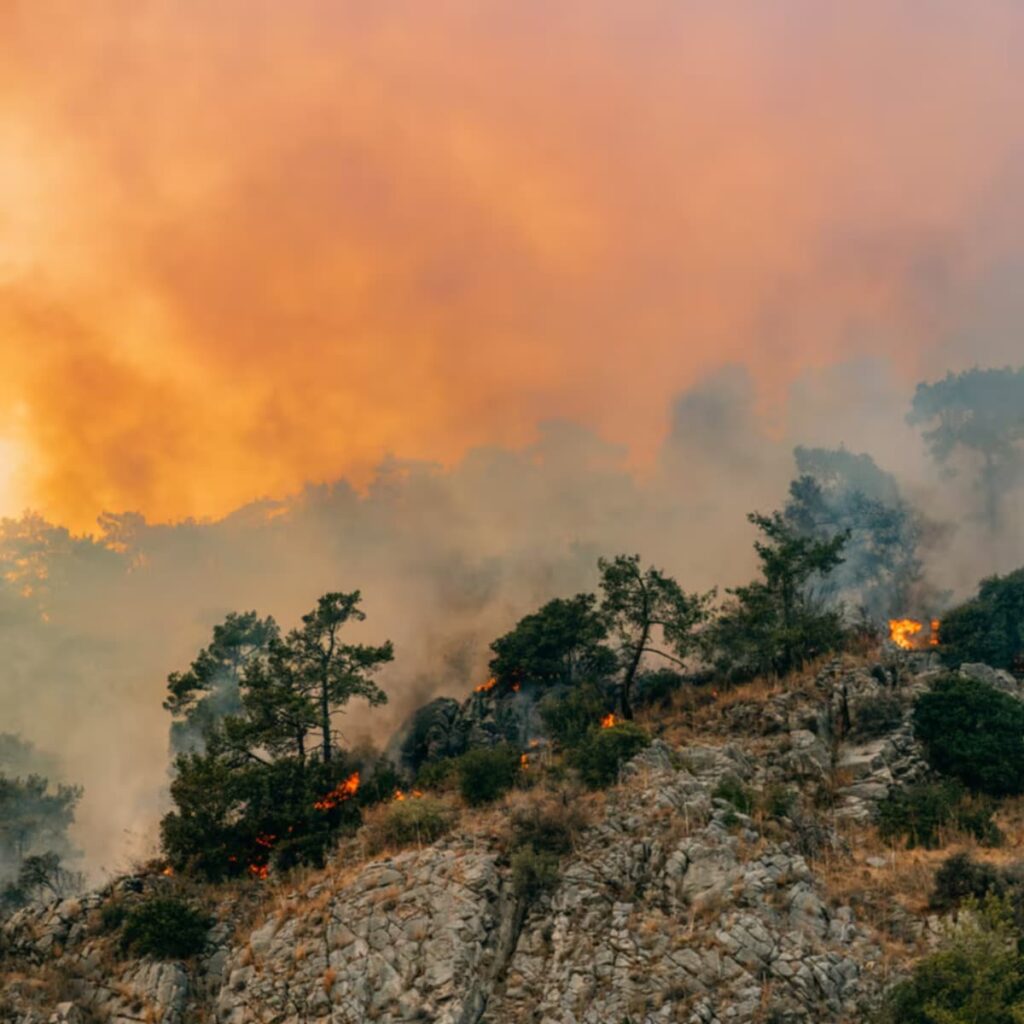
Escalating climate conditions are manifesting as severe weather phenomena, highlighting the urgent need for action on climate change. Researchers emphasize the necessity of substantial reductions in greenhouse gas emissions to prevent uncontrollable global warming.
Heatwaves, among the most severe consequences of climate change, inflict considerable harm by causing thermal stress, increasing mortality rates among humans and animals, challenging ecosystems, reducing agricultural output, complicating power plant cooling processes, and affecting transportation systems. Similarly, extreme rainfall leads to flooding, soil degradation, infrastructure damage, and deteriorating water quality, posing threats to both communities and ecosystems.
“Climate change is fueling a new, dangerous regime of extreme weather.” In his blog, UCS’s @DecletBarreto examines the communities most impacted by this summer’s extreme weather events and what could be in store for the remainder of #DangerSeason.
➡️ https://t.co/B33JffWPSf pic.twitter.com/BTHRDpoIRb
— Union of Concerned Scientists (@UCSUSA) September 8, 2024
Beyond Warming: The Complexity of Extreme Weather
Scientific warnings about the intensification and frequency of extreme weather due to global warming have been long-standing. Now, a joint study by Norway’s Cicero Center for International Climate Research and the University of Reading in the U.K. reveals more intricate dynamics involved.
Published in Nature Geoscience, this research indicates that over the next twenty years, extreme weather is expected to escalate rapidly. This is attributed not only to climate change but also to a mix of human-induced warming, natural climate variability, and air quality improvements. Notably, air pollution has previously dampened some warming effects, suggesting that reductions in pollution could accelerate temperature increases.
Climate projections warn that if emission levels are not curtailed, vast areas in tropical and subtropical zones will experience significant temperature and rainfall extremes, potentially affecting nearly 75% of the global population. However, adhering to the Paris Agreement could reduce this impact to 20%.
Interesting new paper👇
🌍 Between 20-70% of the world’s population could experience UNPRECEDENTED rates of extreme weather in the next 20 years depending on whether we follow a strong mitigation or high-emissions scenario. #ClimateCrisis #ExtremeWeather #InOurHands pic.twitter.com/AgF05xneyS
— Prof. Ryan Katz-Rosene (@ryankatzrosene) September 10, 2024
Bracing for an Intensifying Climate
Researcher Bjørn Samset from the University of Reading cautions, “In the best-case scenario, rapid changes will affect 1.5 billion people. The only way to cope is to prepare now for a future where unprecedented extreme events are far more likely — within the next ten or twenty years.”
The urgent call is for immediate adaptation strategies, including resilient infrastructure, advanced agriculture, and efficient water management, to withstand stronger storms and extreme heat.
Interestingly, the scientific identification of climate change dates back to 1856, credited to a pioneering woman, whose work laid the groundwork for our current understanding of the planet’s warming.
Original Story at www.futura-sciences.com