An Urgent Call for Revitalizing Global Sustainable Development Goals
In a world grappling with unprecedented challenges, the pursuit of the 2030 Agenda for Sustainable Development remains a beacon of hope. Over the past decade, notable strides have been made towards this ambitious vision, yet significant hurdles persist, threatening to derail progress.
Marked improvements have been recorded in various sectors: reductions in child and maternal mortality, increased access to essential services like safe drinking water and electricity, and a decrease in harmful practices such as child marriage. The global shift towards renewable energy has also been remarkable. The voluntary national review process, with 401 country reviews presented so far, underscores the potential for progress where political will is present.
However, recent years have introduced severe setbacks, challenging the global community as it navigates the toughest phase of this journey. The world confronts multiplying conflicts, rising inequalities, and a climate crisis, with the past eleven years being the hottest on record. Developing nations face severe financial difficulties, exacerbated by debt burdens, currency depreciation, and limited fiscal capacity.
The Middle East conflict has further complicated matters, inflating the costs of fuel, fertilizers, and food, while disrupting global trade and tourism. The urgent need for re-established ceasefires and respect for navigational rights in accordance with international law is evident.
Progress and Challenges Across Key Sustainable Development Goals
As the world grapples with these crises, the path to achieving the Sustainable Development Goals (SDGs) becomes increasingly elusive. Only 36% of the 139 assessable targets are on track, with 15% regressing. The mission is clear: accelerate progress through investment in poverty reduction tools, promotion of decent work and gender equality, and strong climate action.
This year’s forum highlights five critical SDGs, starting with clean water and sanitation. Despite progress, 2.2 billion people lack access to safe drinking water, and 3.5 billion lack adequate sanitation. Unsustainable water usage driven by overconsumption and climate change poses a growing threat. Collaborative efforts among governments, businesses, and communities are essential to secure water resources and address these challenges.
In the realm of affordable and clean energy, the transition from fossil fuels to renewables is gathering pace. Yet, investment disparities persist, with Africa receiving a mere 2% of global clean energy investments. Lowering capital costs and responsibly managing critical minerals are vital for supporting countries relying on fossil fuels.
The potential of digital tools and artificial intelligence (AI) to drive development is immense. Ensuring equitable access to digital technology and fostering an environment where AI reduces inequalities is crucial. A proposed $3 billion Global Fund aims to ensure AI benefits all, while recent global dialogues and initiatives emphasize transparency and environmental responsibility in AI development.
Addressing the global housing crisis and building sustainable cities require concerted efforts from all societal sectors. Mobilizing equitable financing and involving marginalized groups in housing and urban planning processes are key to creating smart, resilient urban environments.
Strengthening Global Partnerships and Financial Systems
Governments alone cannot achieve these goals. A united effort from businesses, development banks, civil society, and young people is essential. South-south cooperation and reforms in global financial systems are necessary to bridge the staggering $4 trillion annual SDG financing gap.
Developing countries face exorbitant borrowing costs, often spending more on debt servicing than on developmental initiatives. The Sevilla Commitment offers a path forward, urging better resource mobilization and increased investment from Multilateral Development Banks (MDBs).
Despite the daunting challenges, there is hope. Multilateral cooperation has yielded significant agreements, like the Doha Political Declaration and the High Seas Treaty, demonstrating the power of collaboration. The upcoming SDG Summit presents a vital opportunity to advance this mission, demanding leadership, financing, and solidarity to keep the 2030 Agenda alive.
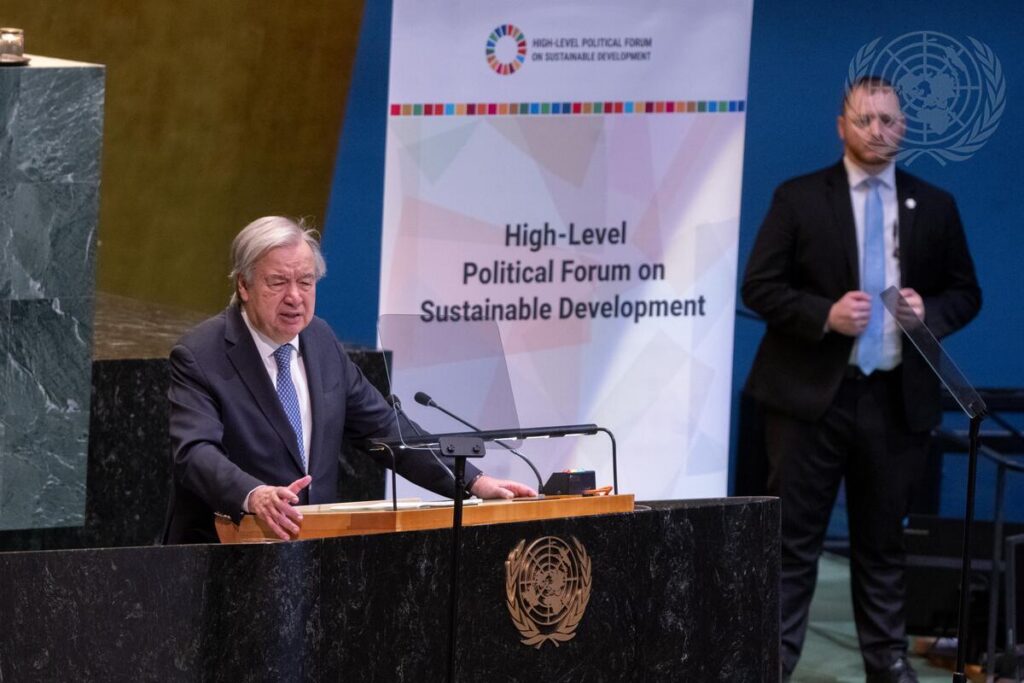
These remarks were delivered by UN Secretary-General António Guterres during the High-Level Political Forum.
Original Story at unsdg.un.org