As global climates shift, the goal of limiting warming to 1.5°C is slipping away, according to a recent United Nations report. Forecasts suggest this threshold will be exceeded as early as 2030, posing significant challenges, particularly for Pacific Island nations threatened by rising sea levels.
Palau’s President Surangel Whipps Jr voiced the urgency, stating:
“It is hard to overstate the depth of emotion for those of us living on the frontline after having fought so hard to put the 1.5 degree limit at the heart of the Paris Agreement […] calls for greater ambition are no longer enough — we need to see an urgent and unprecedented increase in political will and investment in a climate safe future”
Experts suggest that while surpassing the 1.5°C target seems inevitable, it might be a temporary breach. Enhanced global efforts to phase out fossil fuels and cut emissions could potentially cap warming at 1.8°C, with future carbon removal technologies bringing temperatures back to 1.5°C or below in the coming years.
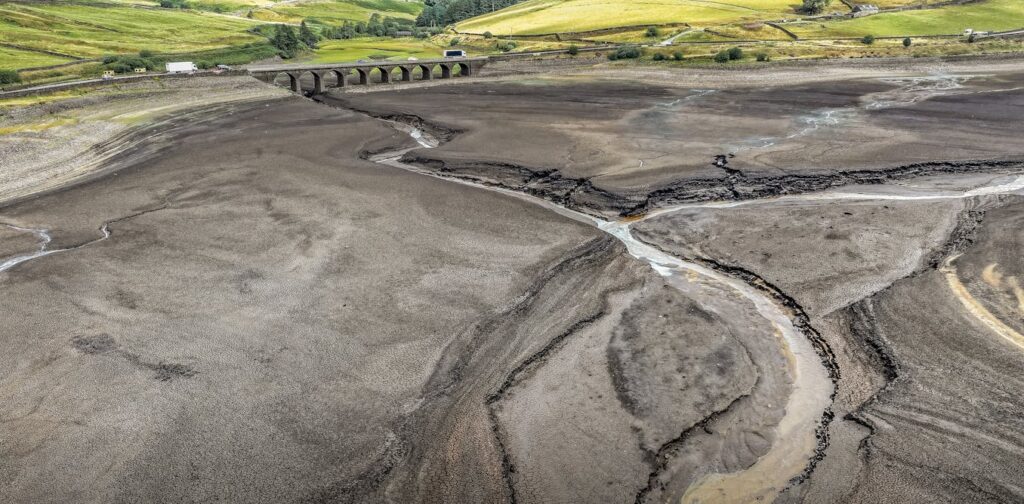
Already, by 2026, the Earth’s temperature is approximately 1.4°C above pre-industrial levels. The impact of climate-driven disasters is intensifying, with the UK facing potential food shortages due to severe droughts. Wildfires are affecting new regions in France and Spain, glaciers are melting, and ocean temperatures have reached record highs. The powerful El Niño event in the Pacific is predicted to cause significant disruptions.
Remaining above 1.5°C promises no positive outcomes. Immediate emission cuts and protective measures for vulnerable populations are crucial to prevent irreversible damage.
Xinhua News Agency/Getty
The Significance of 1.5°C
The 2015 Paris Agreement set a global target to keep temperature increases “well below” 2°C, with a concerted effort to limit warming to 1.5°C based on scientific recommendations that exceeding 2°C would be perilous, while 1.5°C was deemed a safer limit.
Pacific nations emphasized the importance of the 1.5°C target, arguing it was crucial for their survival against threats like sea level rise. In a landmark decision, the International Court of Justice affirmed that 1.5°C should be the primary temperature limit, potentially subjecting governments lacking ambitious climate actions to international legal challenges.
Recently, the UN General Assembly endorsed this ruling, urging nations to remain committed to the 1.5°C objective.
Maintaining Hope and Action
While surpassing 1.5°C is concerning, higher temperatures of 1.6°C or 1.7°C would result in even more severe weather, environmental degradation, and human impact. Staying over 1.5°C could trigger irreversible “tipping points” like the melting of critical ice sheets or the disruption of oceanic currents.
Despite setbacks, the Paris Agreement is making progress. Solar power and electric vehicle adoption have surged, and emissions have been reduced enough to avert the most severe scenarios, such as a 3°C rise. The Climate Action Tracker notes that the agreement has prevented an additional 1°C of warming, steering the planet away from a potential 3.6°C increase by 2100 toward a 2.6°C rise.
However, global emissions have only leveled off and need to decline rapidly. Immediate actions to achieve net-zero emissions by 2050 are necessary.
We must also explore removing carbon from the atmosphere through reforestation and nature restoration, alongside experimental methods like enhanced rock weathering, though these are yet to be scaled up.

acilo/Getty
A Collective Effort
Despite challenges, including the U.S. administration’s focus on fossil fuels, the future holds promise. Solar energy has seen exponential growth, and developing countries are increasingly adopting electric vehicles.
With climate change impacts becoming more evident, global cooperation is essential to reduce emissions and find safe ways to sequester carbon. Strong political leadership, inclusive governance, and financial support for developing countries are critical in these efforts.
In the upcoming COP31 summit in Turkey, Australia will play a key role in discussions on maintaining the 1.5°C target, highlighting its own transition to clean energy and advocating for global electrification and reduced fossil fuel dependency.
Addressing climate change requires viewing it as a super wicked problem that demands immediate and cooperative action. Delaying solutions risks leaving future generations without a path to a stable climate.
Original Story at theconversation.com