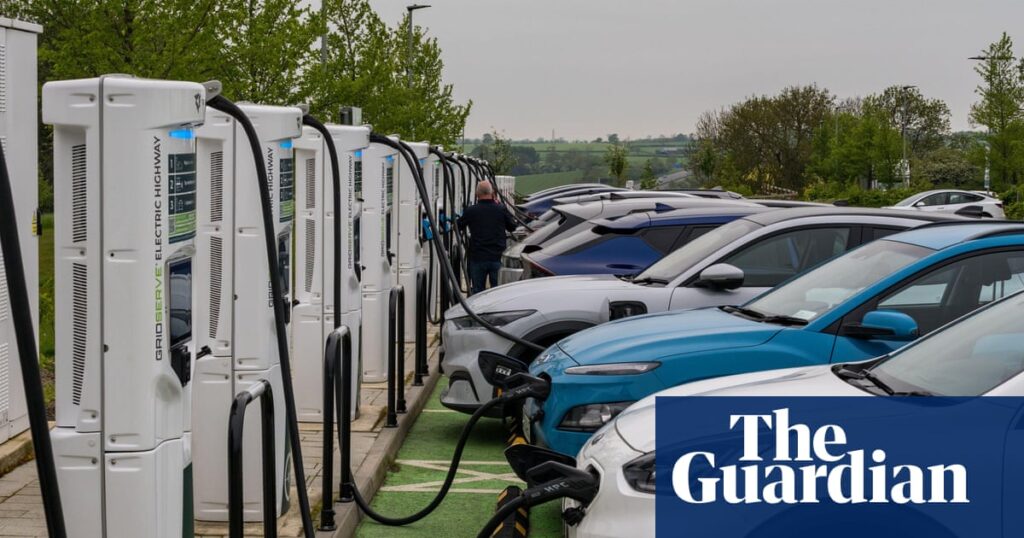
UK Government Challenges VAT Reduction on Public EV Chargers
The UK government is contesting a recent court decision that could lower the VAT on public electric vehicle (EV) chargers. This move follows a ruling that claimed tax authorities have been overcharging electric car users for years.
Last month, Charge My Street, a non-profit organization, successfully argued at a London tax tribunal that VAT on public EV charging should be 5% instead of the current 20%. The decision could lead to significant cost reductions for electric vehicle owners. However, HM Revenue and Customs (HMRC) announced its intention to challenge this ruling.
The appeal is seen by some as a move to maintain a discrepancy that financially disadvantages EV drivers using public chargers, potentially slowing the shift from traditional fuel vehicles.
Operators of charge points have expressed concerns that the government’s decision to appeal could deter the transition from petrol and diesel cars by imposing a financial burden on those unable to charge at home.
Electric car owners have long criticized the VAT disparity at public chargers. While home electricity usage incurs a VAT of just 5%, public charging stations are charged at a higher business rate of 20%.
Efforts to harmonize VAT rates have previously encountered resistance, as governments have been reluctant to lose potential revenue from electricity VAT, which could replace the £24.5 billion annual fuel duties from petrol and diesel sales. The tribunal’s ruling, which favored a 5% VAT rate, surprised and pleased the EV charging sector.
According to Zapmap, a company that maps charging stations, the higher VAT rate generates an additional £85 million annually for the Treasury. This figure is expected to increase to £315 million by 2030 as more electric cars hit the roads.
The government, facing fiscal challenges from the Iran conflict and pressure to cancel a planned fuel duty hike, may find the ruling problematic if upheld. Additionally, there are plans to introduce pay-per-mile taxes on electric vehicles.
Will Maden, director at Charge My Street, highlighted the importance of affordable EV transition: “About 40% of the UK population, they don’t have drives. Transitioning to EVs is a huge problem. Adding 20% makes a huge difference.” He added, “My personal view is I think we should be making the transition to EVs as cheap as we can. This is an environmental issue.”
Although the ruling currently applies only to Charge My Street, a failed appeal may lead other operators to file claims for previously overpaid VAT.
John Lewis, CEO of char.gy, criticized HMRC’s decision to appeal, calling it “deeply disappointing” and counterproductive to promoting public charging. He stated that a VAT cut would be promptly passed to customers.
Lewis remarked, “The government talks about accelerating EV adoption, yet is actively choosing to maintain a tax structure that makes public charging more expensive than it needs to be and undermines the transition.”
The legal case centered on certain interpretations within the VAT Act, which states that electricity is deemed “always for domestic use” if consumption does not exceed 1,000 kilowatt hours (kWh) per month at a single location. Deloitte, an accountancy firm, identified the issue and assisted Charge My Street pro bono.
Judge Harriet Morgan concluded that applying the 20% rate would be a “strained construction” after three days of detailed legal discussions over terms like “a month” and “premises,” as noted by Daniel Barlow, a Deloitte tax partner.
An HMRC spokesperson commented: “We’re appealing this case, as our position is that standard rate VAT applies to electricity supplied through public EV charging infrastructure.”
Original Story at www.theguardian.com