
Toyota has been dynamically adjusting its strategy in China’s rapidly evolving electric vehicle market. After grappling with a sales decline, the company is now poised to introduce a cutting-edge flagship model to the Chinese market.
Adapting to China’s Competitive EV Landscape
Global automakers face challenges in China, but Toyota has been significantly impacted. The company experienced a 7% drop in sales in 2024, attributing it to the shift towards new energy vehicles and aggressive market competition. Historically, Toyota has lagged in the electric vehicle transition, maintaining a diverse vehicle strategy that includes hybrids and traditional engines.
To remain competitive in China, Toyota initiated its China R&D 2.0 strategy, collaborating with major tech firms such as Huawei, Xiaomi, and Momenta. This move aims to enhance its competitive edge against local players like BYD. The strategy appears effective, with a 3.5% increase in sales through October 2025, largely driven by the demand for its bZ3X model.

Toyota’s EV Innovations Drive Sales Growth
Toyota’s joint venture, GAC-Toyota, reported that the bZ3X model achieved sales exceeding 10,000 units for two consecutive months. Priced at approximately $15,000, this electric SUV is positioned as an affordable option in the market.
Similar in size to the RAV4, the bZ3X is packed with modern features such as advanced driver assistance systems, a smart voice assistant, and intelligent storage solutions. Toyota is gearing up to unveil the bZ7, a flagship EV that promises advanced intelligence and features designed to appeal to tech-savvy consumers.
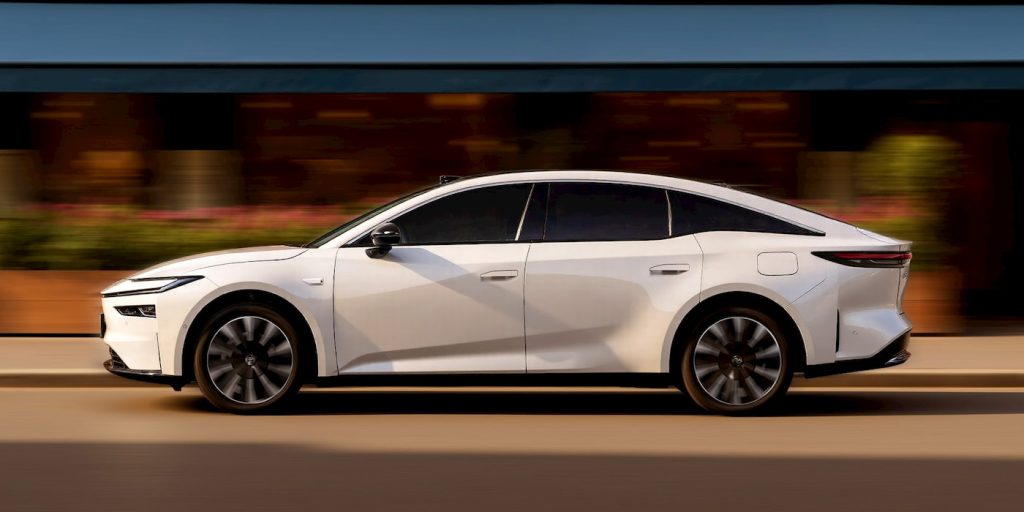
The bZ7, which gained attention at the Guangzhou International Motor Show, is equipped with a minimalist interior featuring a floating infotainment screen and a head-up display. It marks Toyota’s debut with Huawei’s HarmonyOS, managing everything from navigation to climate control. The inclusion of Momenta 5.0 introduces nearly 50 new ADAS functionalities.
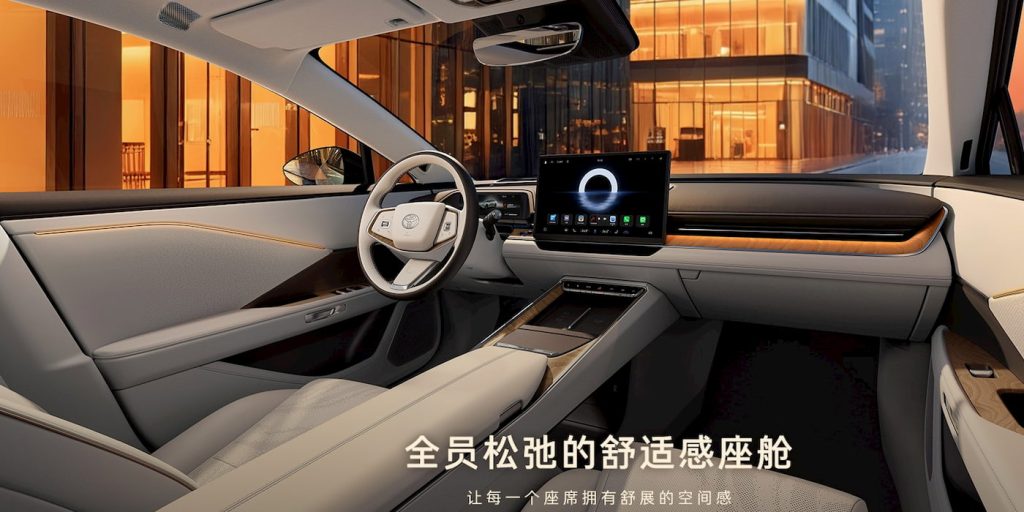
Incorporating Xiaomi’s “Human x Car x Home” ecosystem, the bZ7 enables drivers to control smart home devices via the vehicle’s interface. Comparable in size to the Tesla Model S, the bZ7 offers a substantial driving range with its 71.35 kWh and 88.13 kWh battery options, extending up to 710 km.
Pricing and additional details will be disclosed as the 2026 launch nears. The bZ7 is priced around 200,000 RMB (approximately $28,000) and is positioned as a luxury electric sedan aimed at achieving high production and sales targets.
As Toyota strengthens its foothold in the EV sector, the question remains: Can it compete with established players like BYD and Tesla? Share your thoughts in the comments.

FTC: We use income earning auto affiliate links. More.
Original Story at electrek.co