The Shifting Landscape of Electric Vehicles in America
In the rapidly evolving world of electric vehicles (EVs), the trends of 2025 reveal a fascinating shift. While Tesla remains a dominant force in the market, other automakers are making significant strides in capturing consumer interest. Let’s explore the latest developments in the American EV market.
Despite predictions of a market decline following the removal of the $7,500 federal tax credit on September 30, the American EV industry hasn’t collapsed. Although the fourth quarter experienced a 36% drop in overall EV sales compared to 2024, the market only saw a 2% decrease for the year according to Cox Automotive estimates. This indicates a resilience in consumer interest.
Tesla, known for its market dominance, experienced a 7% decline in sales. While the Model Y alone outsold the top 10 non-Tesla EVs combined, it reflects a gradual shift in consumer preferences.
Traditional automakers such as Chevrolet, Ford, and Hyundai have emerged as strong contenders in the EV market. These companies have displayed growth with models like the Honda Prologue and Chevrolet Equinox EV, which saw a surge in sales.
Leading Non-Tesla EVs of 2025
Data from Cox Automotive
Chevrolet Equinox EV: 57,945
The Chevrolet Equinox EV, marketed as “America’s most affordable 315+ mile range EV,” doubled its sales from 2024, with 57,945 units sold. Its competitive pricing starting at $36,795 attracted many buyers.
Ford Mustang Mach-E: 51,620
Maintaining its popularity, the Ford Mustang Mach-E sold 51,620 units, with minimal changes to its design. This represents a slight decrease of 0.2% from 2024.
Hyundai Ioniq 5: 47,039
The Hyundai Ioniq 5 achieved a 5.9% increase in sales despite a challenging fourth quarter, reaching 47,039 units sold.
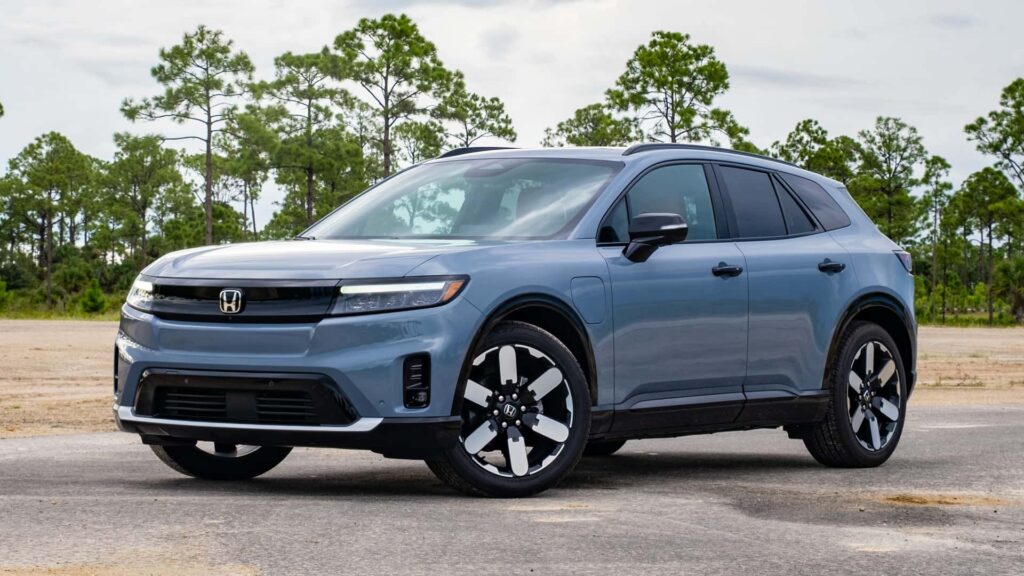
Honda Prologue: 39,194
The Honda Prologue’s sales rose by 18.7%, with 39,194 units sold, outperforming its Acura ZDX counterpart significantly.
Ford F-150 Lightning: 27,307
Although the F-150 Lightning was the top-selling electric pickup, it saw an 18.5% decline and was ultimately discontinued by Ford.
Rivian R1S: 24,852
Rivian’s R1S SUV experienced a 7.7% decrease in sales, totaling 24,852 units, as the startup looks forward to the R2 SUV launch.
Chevrolet Blazer EV: 22,637
The Chevrolet Blazer EV saw a modest 2.1% sales decline, with 22,637 units sold, as consumers favored the more affordable Equinox EV.
Volkswagen ID.4: 22,373
Volkswagen’s ID.4 enjoyed a 31.4% sales increase, with 22,373 units sold, as anticipation builds for its upcoming update.
Cadillac Lyriq: 20,971
Cadillac’s Lyriq saw a decrease in momentum, selling 20,971 units compared to 28,402 in 2024.
BMW i4: 20,114
BMW’s i4 sedan sold 20,114 units, a 14.1% decrease, as the brand prepares for the iX3 and i3 releases.
Tesla’s 2025 Performance
Data from Cox Automotive
Tesla Model Y: 357,528
The Model Y continued to dominate with 357,528 units sold.
Tesla Model 3: 192,440
The Model 3 maintained strong sales, reaching 192,440 units.
Tesla Cybertruck: 20,237
The Cybertruck found 20,237 buyers, marking its entry into the market.
Tesla Model X: 13,066
The Model X recorded 13,066 sales.
Tesla Model S: 5,889
The Model S sold 5,889 units, reflecting a shift in consumer preferences within Tesla’s lineup.
The American EV market is clearly evolving, with consumers exploring options beyond Tesla’s offerings. As new models emerge, the competition is set to intensify, promising an exciting landscape for EV enthusiasts.
Original Story at insideevs.com