Teaching Biodiversity: Insights from Tokyo’s School System
In a remarkable study conducted in Hachioji City, Tokyo Prefecture, researchers have delved into how biodiversity, a critical component of environmental science, is being taught in schools. The findings reveal a landscape where key biodiversity topics are well-covered, yet certain essential aspects such as mass extinctions are notably underrepresented. These discrepancies are largely influenced by teachers’ personal experiences with nature, shedding light on the complexities of environmental education.
While biodiversity is recognized globally as essential to conservation efforts, its definition and scope remain subjects of debate. This ambiguity presents a challenge for educators who aim to construct a cohesive educational narrative amidst a vast array of available media. The flexibility inherent in official curricula further complicates consistent messaging in classrooms.
A team led by Professor Shinya Numata from Tokyo Metropolitan University undertook a study to explore how biodiversity is taught across 69 public elementary schools and 37 public junior high schools in Hachioji City, an area home to approximately 580,000 people. The research not only examined the extent to which biodiversity topics are covered but also investigated the teachers’ backgrounds, focusing on metrics such as Nature Relatedness (NR) and Childhood Nature Experiences (CNE), which reflect attitudes towards the environment.
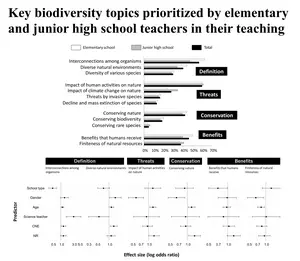
The study found that biodiversity stands out among environmental topics in terms of focus at both elementary and junior high school levels. However, within biodiversity education, the importance given to subtopics varied. For instance, while ecosystem services are frequently covered due to their explicit mention in syllabi, topics like the conservation of endangered species and mass extinctions are often overlooked. This trend may result from a preference for locally relatable content over broader, global issues. The survey revealed that teachers with a high NR are more likely to emphasize environmental threats and conservation, indicating that an emotional connection to nature drives the focus on these areas.
Interestingly, certain factors such as teachers’ age, academic background, and gender correlated with the selection of specific topics, highlighting the multifaceted nature of biodiversity education. The study underscores the need for balanced inclusion of both local and foundational concepts to ensure comprehensive coverage of biodiversity.
This research was supported by a JST-JICA-SATREPS Grant Number JPMJSA1902 and published in the journal Conservation Science and Practice on April 7, 2026. For more information about the study, you can view the full survey results.
Original Story at www.eurekalert.org