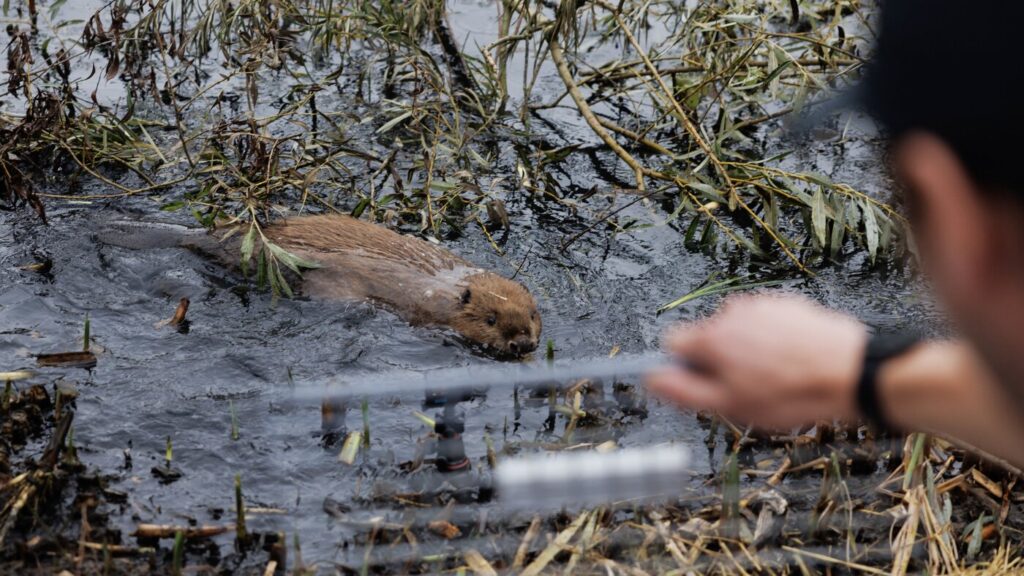
Beavers Make a Comeback in London to Combat Flooding
In an unexpected twist of nature, beavers have been reintroduced to West London’s Paradise Fields, marking the return of this species to the area for the first time in 400 years. This initiative, known as the Ealing Beaver Project, aims to tackle the modern issue of climate change by utilizing these natural engineers to manage water flow and prevent flooding.
Greenford Tube station, once prone to flooding during heavy rains, has seen a notable change since the beavers arrived. These industrious creatures have constructed a pond and wetland that effectively acts as a sponge, absorbing excess rainfall and reducing the likelihood of water spilling into the city.
Sean McCormack, a veterinarian and founder of the Ealing Beaver Project, highlights the beavers’ role in transforming the area. “They effectively turned this site into a giant sponge that can take heavy rainfall and slowly release water back into the landscape, creating a lot more resilience for flooding,” McCormack explains.
Reviving Biodiversity and Reducing Costs
The presence of beavers has not only mitigated flooding but has also led to an increase in biodiversity. Their activities have attracted various wildlife, including freshwater shrimp, eight new bird species, and two kinds of bats. The rare brown hairstreak butterfly, whose eggs are laid on blackthorn branches chewed by beavers, has also made a return.
Moreover, the natural water management provided by the beavers has allowed the city to abandon costly plans for constructing a reservoir and levee. McCormack notes, “We said the beavers can do it for a fraction of the cost, certainly more sustainably.”
The Wider Impact of Beaver Reintroduction
Beyond London, the rewilding movement has taken root across Britain, with land managers increasingly relying on beavers to restore wetlands and control flooding. However, this resurgence has not been without its challenges. In Scotland, for instance, beavers have ventured onto private lands, sometimes causing conflicts with farmers by flooding crops or damaging infrastructure.
Kate Maitland of Scotland’s National Farmers Union acknowledges the concerns of farmers who have seen their lands submerged, but the Scottish government has established a fund to address beaver-related damages where it benefits the public.
Learning to Coexist with Beavers
Some farmers, like Tom Bowser in central Scotland, have found ways to harmonize with their new neighbors. By protecting young trees with chicken wire and embracing the ecological benefits beavers bring, Bowser has turned challenges into opportunities, even offering beaver-watching tours that attract visitors from around the world.
The enthusiasm for beavers extends beyond Britain, with successful reintroduction projects in countries like Italy and Portugal. In the United States, initiatives like the Methow Beaver Project leverage beavers to rehabilitate fire-damaged areas.
As the global community grapples with climate change, the humble beaver emerges as an unexpected ally, proving that nature itself can offer innovative solutions to modern problems.
Original Story at www.npr.org