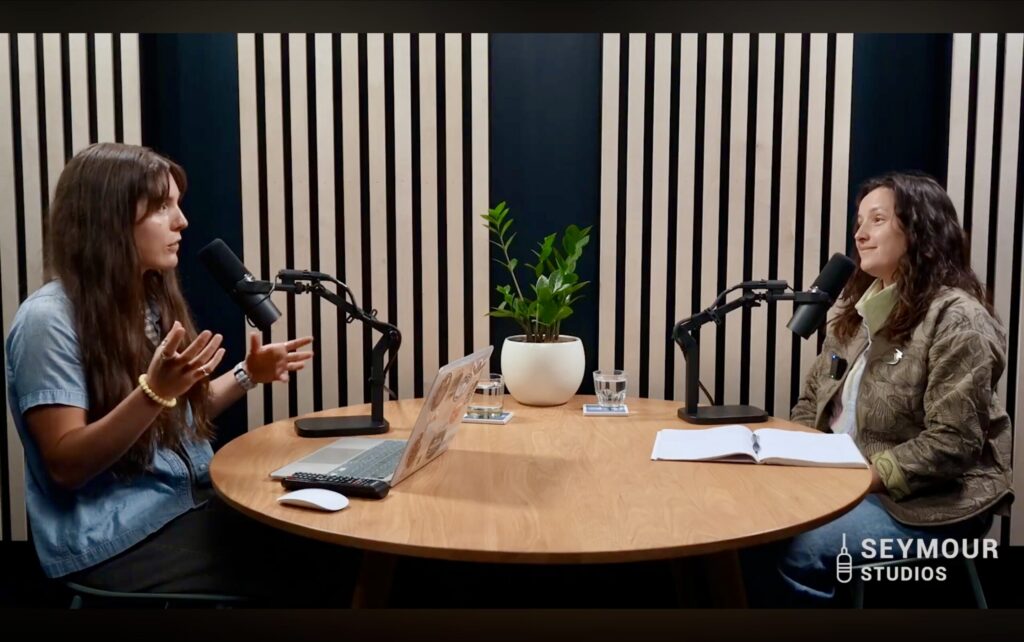
In an innovative move to enhance science communication, the Seymour Marine Discovery Center has launched Seymour Studios, a new hub for podcasting and multimedia production. This initiative aims to provide students with hands-on experience in conveying marine and coastal science through modern media channels.
The UC Santa Cruz Science Communication (SciComm) Program has long offered students with scientific backgrounds opportunities to intern at the Seymour Center, focusing on crafting exhibit content and educational materials. With the center’s recent updates, including efforts like Ms. Blue’s restoration, Seymour Studios is now at the forefront of using digital storytelling to highlight science-driven environmental solutions.
Supported by the Science Division’s Degree-Defining Experiences Program, the studio equips students with state-of-the-art tools and software, preparing them for careers in digital journalism.
Cassidy Beach, a SciComm student and multimedia intern at Seymour, expressed her enthusiasm: “This experience has solidified my desire to work at the intersection of field research and multimedia storytelling, which I think is especially important because there seems to be such a massive appetite for science stories that feel personal, local, and immersive.”
Beach has been actively involved in producing episodes for Seymour’s podcast, “Science, Solutions, Santa Cruz,” and has introduced a segment called “Field Diaries” to provide an on-site experience for listeners. “It’s been the perfect marriage of my background in field research and my new skills in production,” she said.
Building career skills and impact
Jonathan Hicken, the director of the Seymour Center and primary host of the podcast, mentors students in multimedia storytelling. The studio offers a vibrant environment with access to cameras, audio equipment, and production software, fostering a practical learning experience. Hicken noted that the studio connects students with scientists and community leaders, emphasizing how science can effect positive change in coastal communities.
Interns like Beach and Kari Goodbar find the experience empowering, gaining confidence in their ability to pursue journalism careers. Goodbar remarked, “Seymour Center not only supported my creative ideas, but gave me the resources to pursue them.”
Undergraduate Valarie Situ has also contributed as a multimedia intern, creating engaging content for social media and collaborating with the Seymour Center team. Situ highlighted the rewarding experience of integrating Gen Z humor into marine science storytelling, noting a viral swell shark skit she produced.
Ready to launch
With a background in earth and environmental science from the University of Michigan, Beach plans to continue her journey in science communication as a fellow on a Viking Cruise. There, she intends to launch a podcast series in collaboration with the National Oceanic and Atmospheric Administration. “The timing couldn’t be better,” Beach stated, expressing her readiness for the project due to her experiences at Seymour Studios.
Looking ahead, Hicken envisions Seymour Studios evolving into a media network with diverse productions and hosts, aiming to broadcast impactful climate-resilience stories to a broader audience.
Original Story at news.ucsc.edu