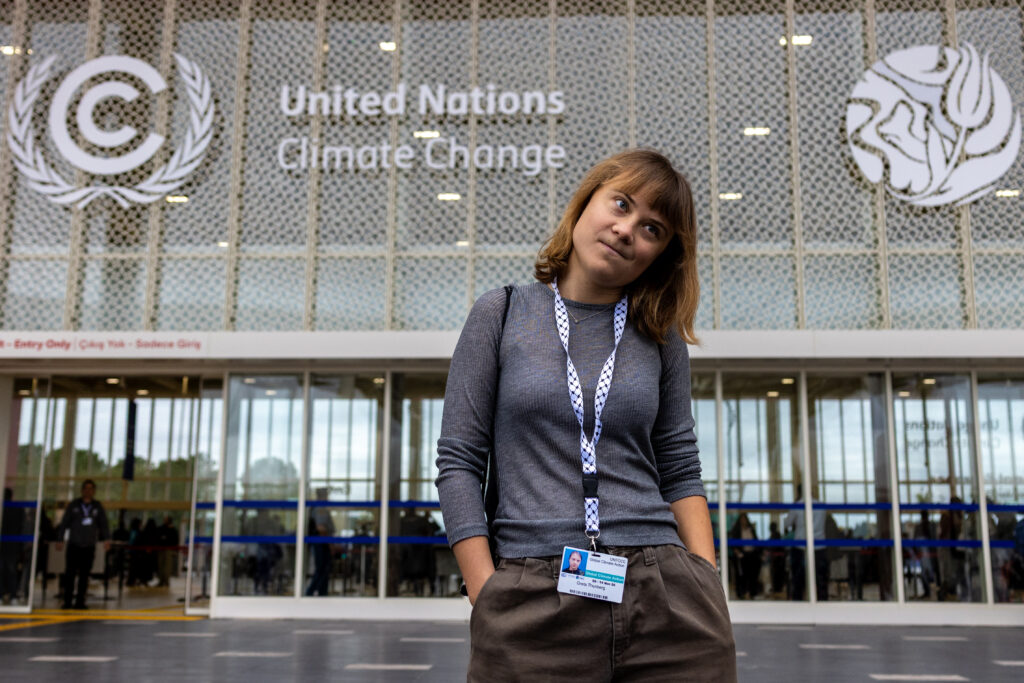
Climate change profoundly impacts today’s youth, known as the “climate generation.” Researchers link climate change to significant shifts in living and education conditions, such as children in Bangladesh relocating due to environmental changes, girls in Kenya dropping out of school during extreme weather events, and declining student mental health globally. Read more about Bangladeshi children’s adaptation, Kenyan school dropouts, and students’ mental health challenges.
The climate generation is also taking action, engaging in global climate strikes inspired by Greta Thunberg in 2019, and through legal avenues, such as students from the University of the South Pacific campaigning for the International Court of Justice’s 2025 climate opinion. During COP31 in Antalya, Turkey, this generation again played a crucial role. Learn more about the 2019 climate strikes and the ICJ’s climate campaign.
Draft Texts: At COP31, a draft cover decision was released summarizing agreements to advance the Paris Agreement goals. The November 16 draft urged nations to prioritize children’s climate impacts in planning. A revised draft followed on November 19, maintaining youth participation in climate decisions but omitting references to fossil fuels, gender, education, and a proposed $120 billion adaptation finance target. Notably, agriculture, employing 44% of youth worldwide, was excluded. Read about youth employment in agriculture.
Before the summit, YOUNGO’s food and agriculture working group called for grant-based adaptation finance accessible to young farmers. However, the latest draft reserves direct access for national development banks, not individuals. See YOUNGO’s call for adaptation finance.
The summit’s finance decision on the loss and damage fund emphasizes engaging with youth and incorporating their perspectives.
Inside the Venue: The climate generation had a dedicated space in Antalya, continuing the tradition of a youth-led pavilion. Sally Higgins, the COP31 Youth Climate Champion, attended to bridge global youth voices with COP leaders. At the youth roundtable, Jayanti Bam of UNICEF Nepal urged leaders to protect and listen to children.
Outside the Venue: Greta Thunberg, a key figure in the climate movement, returned to COP after a two-year hiatus. She criticized the summit, accusing host governments of using it for self-promotion while packed with fossil fuel industry lobbyists. Thunberg’s criticism linked lobbyists to the summit’s agreement breakdown. Read about Thunberg’s criticism at COP31.
Addis Ababa, Ethiopia, is set to host the next COP in November. The climate generation must regroup to seek more support after this year’s unmet requests.
This Week on Earth
The Senate passed the Bipartisan American Affordability and Jobs Act (BAAJA), which could lower energy costs but may weaken environmental laws. Learn more about BAAJA’s implications.
Other noteworthy stories include: warming affecting cranberry-growing regions, with Wisconsin seeing significant ice melt affecting cranberry vines; the UK and EU agreeing to link carbon markets, impacting clean-energy export exemptions; and Anthropic’s IPO raising $81 million, with plans for its own natural gas-supported power supply. Cranberry-growing report, EU-UK carbon market linkage, and Anthropic IPO details.
From our Bureaus: Nicholas Kusnetz on BAAJA
Natural gas exports are likely to grow as BAAJA makes it easier to build energy projects. Nicholas Kusnetz shares insights on the implications of LNG growth. Explore more on BAAJA and LNG.
WAXMAN: What impact will BAAJA have on LNGs?
KUSNETZ: Liquefied natural gas is critical for U.S. fossil fuel growth due to its export potential. BAAJA could simplify building necessary infrastructures, like pipelines, to facilitate LNG’s global demand, particularly in Asia.
WAXMAN: Which overseas countries rely most on LNG?
KUSNETZ: European countries are currently major importers, but Asia is seen as the future growth market due to its high coal usage.
News From Us and Our Partners
Deep-sea mining: The Trump administration issued the first federal leases for deep-sea mineral exploration in Pacific waters, reported Teresa Tomassoni.
Detonating unstable lead: A court temporarily halted the Army’s plan to detonate unstable lead at an Iowa plant, as reported by Anika Jane Beamer.
Chemically fueled fires: A creosote-induced fire in Alabama raises health concerns, reported Lee Hedgepeth and Dennis Pillion.
For more conversations and insights into these topics, tune in to Inside Climate on YouTube, Spotify, Apple Podcasts, Amazon Music, and iHeart.
Original Story at insideclimatenews.org