Innovative Solar Desalination: A Promising Path to Fresh Water
As the demand for clean drinking water rises, innovative solutions become crucial. The United Nations reports that 2.2 billion individuals still lack access to safely managed drinking water. Many areas, including California and parts of the Middle East, have turned to desalination plants to transform seawater into fresh water.
Conventional desalination techniques, like reverse osmosis and thermal distillation, are known for being costly and energy-intensive. These methods frequently involve chemical treatments and result in brine discharge, which can harm marine life by elevating salinity and diminishing oxygen levels.
Advancements in Solar Desalination Technology
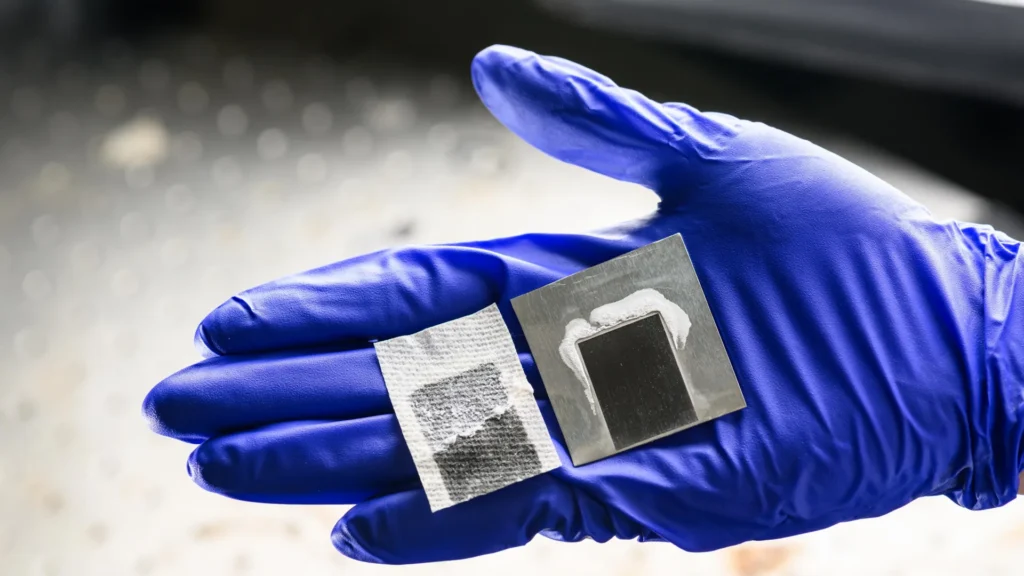
A research team at the University of Rochester, led by Chunlei Guo, has introduced a solar-powered desalination system that promises to address these drawbacks. This system, which was detailed in the journal Light: Science & Applications, efficiently produces fresh water without requiring chemical pretreatment and avoids generating brine waste.
How Laser-Treated Panels Work
The system employs solar panels crafted from black metal, treated with femtosecond lasers. This treatment endows the panels with two essential properties: they absorb nearly all sunlight and exhibit superwicking, a strong attraction to water.
Water is drawn across a laser-patterned active region, where it evaporates and is distilled into fresh water as sunlight is absorbed. Meanwhile, salts and minerals are directed away to untreated sections known as passive regions, preventing buildup in the evaporation zone.
Preventing Clogging with Innovative Techniques
Guo highlights that while some solar thermal desalination technologies have performed well in lab settings with simple saline solutions, real seawater presents more challenges due to its complex mineral content. To combat potential clogging from minerals like magnesium and calcium, the team designed microscopic grooves on the panels.
These grooves facilitate the movement of salts away from the active area, using a phenomenon known as the coffee ring effect. “If you drop coffee on a surface, eventually the water evaporates and there’s a ring left at the outer edge that is the concentrated coffee particles,” explains Guo. This principle helps advance the salts to passive regions.
Testing with samples from the Pacific, Atlantic, and Indian Oceans demonstrated the system’s self-cleaning ability, continuously producing fresh water while directing salts to passive regions for collection.
Valuable Mineral Recovery
Beyond fresh water production, the system offers the potential to recover valuable minerals from seawater. Unlike traditional desalination, which results in liquid brine that requires disposal, this method retrieves nearly all dissolved salts in solid form.
These recovered materials, including lithium—a critical component for lithium-ion batteries—could become significant resources. A related study in the Journal of Materials Chemistry A showed that the panels could selectively isolate lithium using embedded hydrogen titanate nanoparticles.
Guo notes, “Mining lithium from the Earth has proven to be very taxing from an energy and environmental standpoint, so pulling lithium directly from saltwater could be a very important future route.” Experiments with water from Utah’s Great Salt Lake recovered about 50% of the lithium from post-desalination salts.
Scaling Up for Broader Impact
While the technology is currently in the proof-of-concept phase, its potential scalability could significantly enhance access to clean water and sustainable mineral resources. Supported by the National Science Foundation, the Bill & Melinda Gates Foundation, and the Worldwide Universities Network, the research team, including contributors from the Institute of Optics, sees a promising future for this innovative approach.
Original Story at www.sciencedaily.com