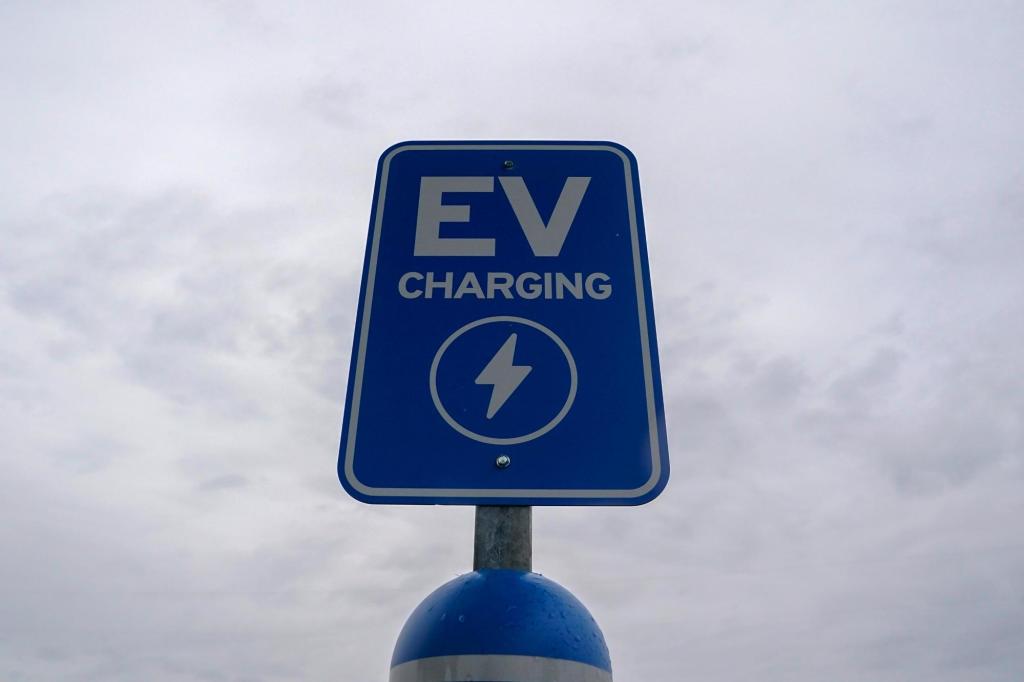
Rising Oil Prices and the Shift Toward Electric Vehicles
With the world grappling with a significant energy crisis, the closure of the Strait of Hormuz has put a spotlight on the impact of rising oil prices. Globally, the effects are varied: Asian schools are closing, European flights are being canceled, and Americans are feeling the strain at gas pumps.
As per AAA, the national average gas price in the United States surged to $4.46 as of Monday, climbing from under $3 before the conflict began. Projections from the Federal Reserve Bank of Dallas indicate that crude oil might reach $167 per barrel, suggesting $5 per gallon gas prices if the Strait remains shut till September.
Some experts, including major banks like Macquarie, predict even higher peaks, with crude possibly hitting $200 per barrel by early summer. This scenario could see U.S. gas prices soar to $7 a gallon, risking a global economic downturn.
Lars Lysdahl of Rystad Energy commented, “The market is saying that this will solve itself within a month, which I don’t believe.” He highlights that even reopening the Strait won’t immediately stabilize oil prices due to infrastructure damage.
This turbulent period could prompt many to reconsider their reliance on gasoline, potentially accelerating the electric vehicle (EV) market. The 1970s oil crisis similarly reshaped consumer habits, leading to a demand for fuel-efficient cars and a shift in the automotive landscape.
Electric Vehicles in the Spotlight
EVs are positioned to capitalize on this moment. Historically, they have offered about 60 percent savings per mile in fuel costs compared to gasoline cars. If gas prices rise to $5.50 per gallon, this advantage could increase to 74 percent, according to calculations by James Hamilton, an economics professor at the University of California, San Diego.
For typical EV owners, the annual savings could jump to around $1,600 from about $550 earlier this year. These estimates consider average U.S. driving distances, home electricity rates, and fuel-efficiency data.
Despite the higher initial costs of EVs, they have generally proven financially beneficial when factoring in fuel and maintenance savings. However, the repeal of federal incentives like the $7,500 new EV tax credit has widened the price gap, leading to a decline in new EV sales.
Conversely, the used EV market is thriving. Prices of used EVs have become competitive with, and sometimes even lower than, their gasoline counterparts. Many of these vehicles have low mileage and retain substantial battery capacity, making them attractive options for buyers.
March saw a significant rise in used EV sales, with a nearly 28 percent increase from the previous year, driven by heightened interest in EVs and hybrids on platforms like Edmunds.
Challenges and Opportunities
The path to widespread EV adoption faces hurdles. Britta Gross from the Electric Power Research Institute highlights that market volatility, rather than just high prices, spurs interest in fuel-efficient alternatives. Electricity prices have remained stable compared to oil.
Yet, the upfront cost remains a deterrent for many. A 2024 YouGov survey found that 40 percent of potential buyers see the initial expense as a major barrier. Deloitte’s research suggests that EV market share plateaus when there’s a price premium over gas vehicles.
Lysdahl from Rystad notes that EV sales typically surge when low-cost Chinese models enter the market or when government incentives offset the premium.
Once price parity is achieved, EV sales can quickly surpass conventional vehicles. Norway’s experience, where incentives have driven 96 percent of new car sales to be electric, exemplifies this potential shift.
In the U.S., political and economic factors have delayed the expected price parity of EVs with gasoline cars. However, the transition to electric is seen as inevitable. As Ellen Hughes-Cromwick from Ford stated, “We are all going to EVs globally. It is just a question of when.”
Original Story at www.themorningsun.com