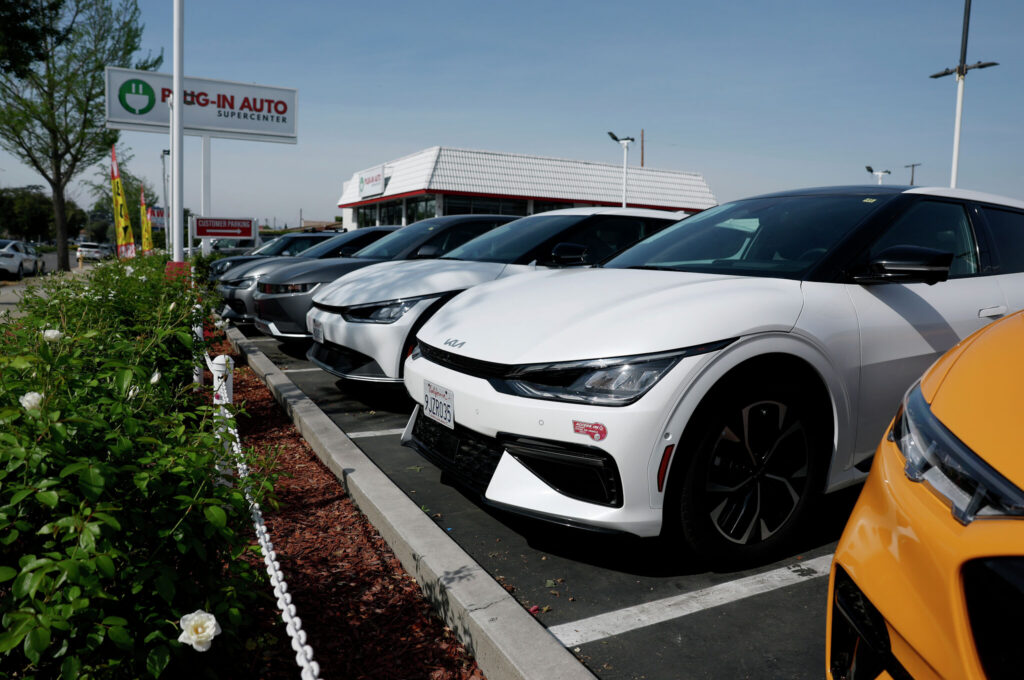
California’s New Rebate Program: A Boost for First-Time EV Buyers
With the ever-rising gas prices, Californians are exploring cost-effective alternatives, and electric vehicles (EVs) are at the forefront. The state is launching a groundbreaking rebate initiative aimed at making zero-emission vehicles more affordable for first-time buyers.
The upcoming program, set to commence this summer, offers significant financial incentives: $3,500 off the purchase or lease of a new zero-emission vehicle (ZEV) and $1,750 off for used ZEVs. This initiative is backed by a collaboration with 13 automakers, creating a $270 million fund to support these rebates.
Unlike many financial assistance programs, this rebate is available to all California residents regardless of income, provided it’s their initial ZEV purchase. The rebate applies exclusively to fully electric vehicles, excluding hybrids. To qualify, new ZEVs must be priced at $50,000 or less, while used vehicles must be available through a manufacturer pre-owned program with a price ceiling of $25,000.
An exception exists for manufacturers headquartered in California with an all-ZEV fleet, such as Rivian and Lucid, where no price caps apply. However, Tesla vehicles are subject to the $50,000 limit, given their headquarters moved to Texas in 2021.
Other automakers participating in this initiative include Ford, General Motors, Honda, Hyundai, Kia, Mitsubishi, Nissan, Subaru, Toyota, and Volvo.
If this rebate echoes a familiar tune, it’s due to its resemblance to the federal tax rebate under President Joe Biden’s 2022 Inflation Reduction Act. Previously, income-qualified buyers could receive a $7,500 tax credit for new EVs and $4,000 for used ones, which was discontinued by a GOP tax and spending bill signed by President Donald Trump.
California’s rebate is part of a broader strategy to meet climate goals by encouraging the transition to electric vehicles, thereby reducing emissions and the number of gas-fueled cars on the roads. Scott Evans, a features editor for MotorTrend, stated, “A big part of California’s goal here is to reduce emissions and reduce the number of gas-powered cars on the road. They’re trying to encourage more people to take the plunge.”
For those considering the switch to an EV, now might be an opportune time, especially with used EVs becoming more accessible as leases from 2023 return to the market. Jessica Caldwell, Edmunds’ head of insights, noted that lower monthly lease costs, spurred by such rebates, attract more consumer interest.
Targeting First-Time Buyers and Closing the Enthusiasm Gap
This rebate specifically targets first-time buyers to bridge the enthusiasm gap in the EV market. As Jessica Caldwell highlights, early adopters, who were initially driven by technological interest, now have their electric cars, and the focus shifts to appealing to cost-conscious consumers.
Scott Moura, a UC Berkeley professor, underscores that once consumers switch to EVs, they tend to remain loyal, with an 80% likelihood of choosing an EV for their next purchase. However, the rebate’s finite funding means potential buyers should act promptly, as Moura estimates the resources may deplete within six months.
Overall, while the rebate won’t address every barrier to EV adoption, it aims to alleviate cost concerns, making EVs a more practical choice for Californians amidst tight financial circumstances and fluctuating gas prices.
Original Story at www.sfchronicle.com