
Prometeo, the Offshore Rover by AXIST: A Breakthrough That Reinvents Mono-Pile Flange Measurement
In offshore wind operations, precision is crucial. Any deviation can result in deformation, lower performance, and expensive corrective measures. Measuring a mono-pile flange after piling is a critical step. Traditionally, this involved lengthy procedures, specialized personnel, a second vessel, and temporary platforms for each mono-pile.
AXIST has introduced an innovative solution: an autonomous metrological Rover designed for offshore conditions, completing flange inspections in just 30 to 40 minutes.
A Challenge Born at Sea
Metrological measurements offshore have always been a technical and logistical challenge. Mono-piles, post-piling, lack platforms or safe access for operators. Conditions are unpredictable, and installation vessel costs necessitate rapid interventions.
Previously, verifying flange quality required building and installing an access platform, deploying specialized personnel, and dismantling the platform. This slow, costly process kept the installation vessel on standby throughout the inspection.
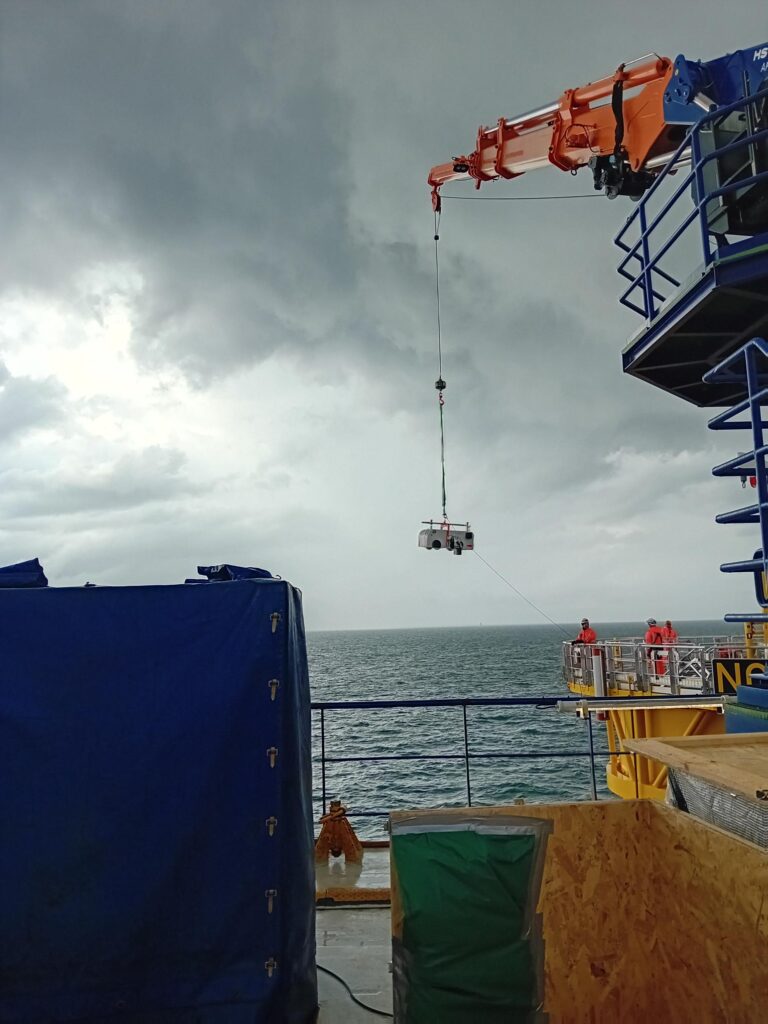
Prometeo, AXIST’s Rover, eliminates this complexity. Transported aboard the installation vessel, it is placed on the mono-pile flange with the crane and performs automatic, remote inspections safely.
Non-Contact Precision
The innovation’s core lies in its laser-based measurement technology and complete autonomy. Placed on the flange, the Rover performs a 3D scan, measuring flatness, local run-out, tilt, and inclination with sub-millimetric accuracy.
The system, needing no external references, avoids adhesive targets or surface preparation. Prometeo assesses the actual flange surface, even affected hammer areas, delivering a precise digital report swiftly.
Ensuring reliability, the device integrates a blower to clear water and debris, a camera for damage documentation, and a fiberglass cover for protection from rain and sea spray. It is remotely operated via an intuitive interface.
A Project Built Through Collaboration
Prometeo was developed by AXIST and ALTO, first applied on the OceanWind – Moray West project with installer DEME, which provided feedback. The initial prototype underwent testing in the UAE on a mock-up by Lamprell, ensuring design optimization and system validation before offshore deployment.
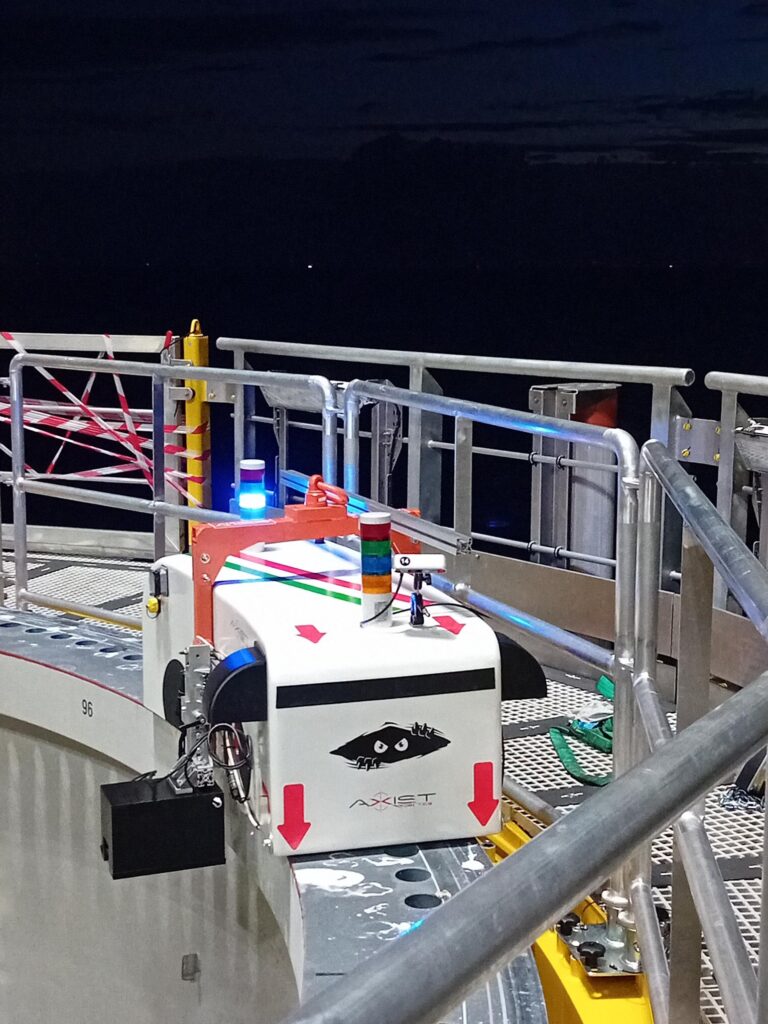
The Rover is now patented, with in-house developed algorithms, firmware, and mechanical architecture.
Tangible Benefits: Lower Costs, Increased Safety
The Rover’s introduction offers immediate benefits. Inspection costs drop significantly: no temporary platforms are needed, and a single vessel handles all tasks, reducing CO₂ emissions from extra vessel use.
Safety improves as operators control the system remotely, with no need for physical access to the mono-pile. The speed of execution allows for 100% flange inspections, giving engineers immediate data for corrective measures.
Shaping the Future of Offshore Inspections
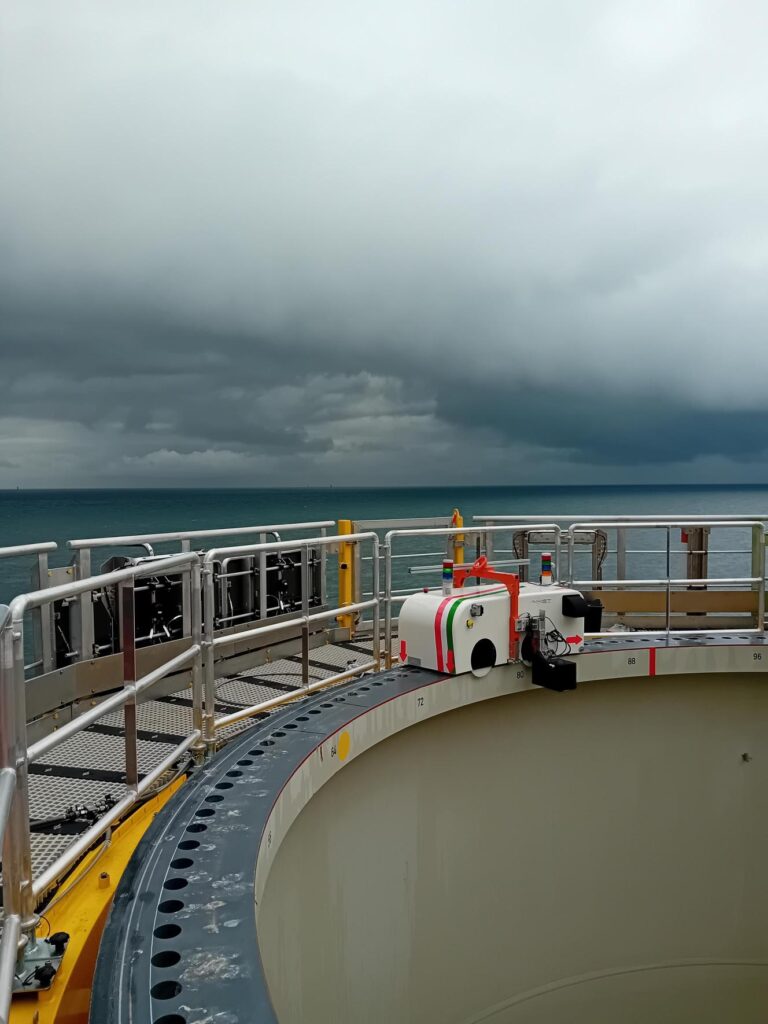
AXIST’s Rover is more than a measurement device; it’s a technological platform ready to adapt. It can be configured for various flange sizes and sampling densities, operating continuously with short charging intervals.
Future plans include adaptations for onshore, naval, and industrial environments, as well as rental and licensing options. Its user-friendliness and rapid reporting make it suitable for any geometric control activity in challenging settings.
Note: The opinions, beliefs, and viewpoints expressed in this article do not necessarily reflect the opinions of offshoreWIND.biz.
Original Story at www.offshorewind.biz