As El Niño conditions intensify, Southern California is experiencing elevated sea levels and the threat of heavy rains. Coastal erosion has already begun, exacerbated by a Kelvin wave, and with Tropical Storm Rachel on the horizon, residents are being urged to prepare for an unusually wet season.
Officials are emphasizing the importance of readiness. L.A. County Supervisor Hilda Solis stated, “Residents need to hear this information, and they need to hear it repeatedly, enough times so that they too can act.” Preparation is crucial to mitigate the risks of heavy rain, flooding, and debris flows that could threaten homes and infrastructure.
Understanding Your Flood Risk
To protect your home, it’s essential to assess its vulnerability to flooding. As Kerjon Lee from the L.A. County Department of Public Works advises, “It really is incumbent upon people to pause, evaluate where they live, where they travel and to really think about what would happen if those areas were flooded out.” Analyzing your neighborhood, especially in terms of potential mud and debris flows, is critical. The MyHazard tool can help identify risks by inputting your address.
Floodwaters and Landscape Precautions
Historical flooding data and landscape features around your property can provide insights into your flood risk. Homes located below hillsides, particularly those scarred by wildfires, are susceptible to debris flows due to the absence of stabilizing vegetation. Check for nearby creeks, canals, and drainage channels, and ensure rainwater flows safely through your property by clearing gutters and drains.
Residents are encouraged to report clogged storm drains to local public works departments. L.A. County residents can seek free advice from the county’s Department of Public Works if concerned about mud or debris flows.
Utilizing Sandbags
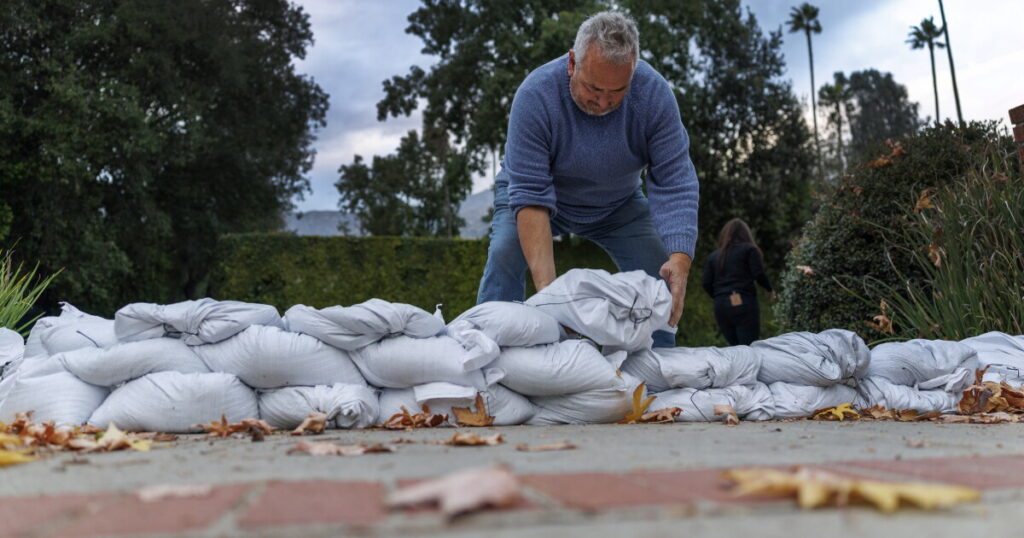
Properties at high flood risk should consider having sandbags ready. Many local fire and public works departments provide them, though residents often need to fill them. Avoid using beach sand and learn proper sandbagging techniques:
- Fill sandbags halfway.
- Avoid placing them directly against building walls.
- Arrange parallel to water flow, with open ends folded underneath.
- Use sandbags to redirect water, not block it.
- Protect doorways with a waterproof layer behind sandbags.
Detailed instructions are available in the L.A. County Public Works Homeowners Guide. Store materials like sandbags and plywood in dry areas.
Additional Flood Preparations
Move valuables to higher ground and store critical documents in waterproof containers. Regularly inspect trees for stability to prevent them from becoming hazards during storms. Consider hiring an arborist for professional assessments.
Flood insurance is another consideration, as typical homeowner policies do not cover flood damage. Policies from the National Flood Insurance Program require at least 30 days to take effect, so act early.
In case of flooding, dry affected areas promptly to prevent mold growth. Clean mold-affected areas with disinfectant while wearing protective gear. For items that can’t be cleaned, disposal is recommended.
Original Story at laist.com