While many Americans report feeling overwhelmed by the news, with only 7% expressing that it makes them feel happy or empowered, there are still positive stories to be celebrated, particularly in science and climate progress. According to a Pew Research Center report, a significant portion of the population finds the news to be a source of anger or sadness. Yet, 2025 has shown that progress is possible, and not all news is disheartening.
Here are some uplifting developments from 2025 that might have flown under the radar:
Reduction in Antarctic Ozone Hole
NASA and the National Oceanic and Atmospheric Administration (NOAA) have reported that the Antarctic ozone hole has decreased to its fifth-smallest size in over three decades. This improvement is largely due to the Montreal Protocol, which restricts substances that deplete the ozone layer, as well as a weaker polar vortex. The ozone layer is crucial for blocking harmful ultraviolet solar radiation, and its recovery helps prevent increased risks of skin cancer, cataracts, and agricultural damage.
Stephen Montzka from NOAA’s Global Monitoring Laboratory noted, “Since peaking around the year 2000, levels of ozone-depleting substances in the Antarctic stratosphere have declined by about a third relative to pre-ozone-hole levels.” Read more.
Progress Toward an HIV Cure
In a promising development for the estimated 40.8 million people living with HIV, researchers in Melbourne found a method to expose the virus hiding within white blood cells, as published in Nature Communications. Although HIV remains incurable due to its high mutation rate and ability to infect immune cells, this breakthrough offers hope. Dr. Paula Cevaal explained, “Our hope is that this new nanoparticle design could be a new pathway to an HIV cure.”
ICJ’s Climate Ruling
The International Court of Justice (ICJ) issued a landmark ruling in July, declaring that nations have a legal duty to ensure a “clean, healthy, and sustainable environment” as part of international human rights law. The decision underscores the need for global cooperation to mitigate climate change and emphasizes the importance of addressing historical emissions. Nikki Reisch from the Center for International Environmental Law remarked, “It is about the past, present, and future of climate action.” Learn more.
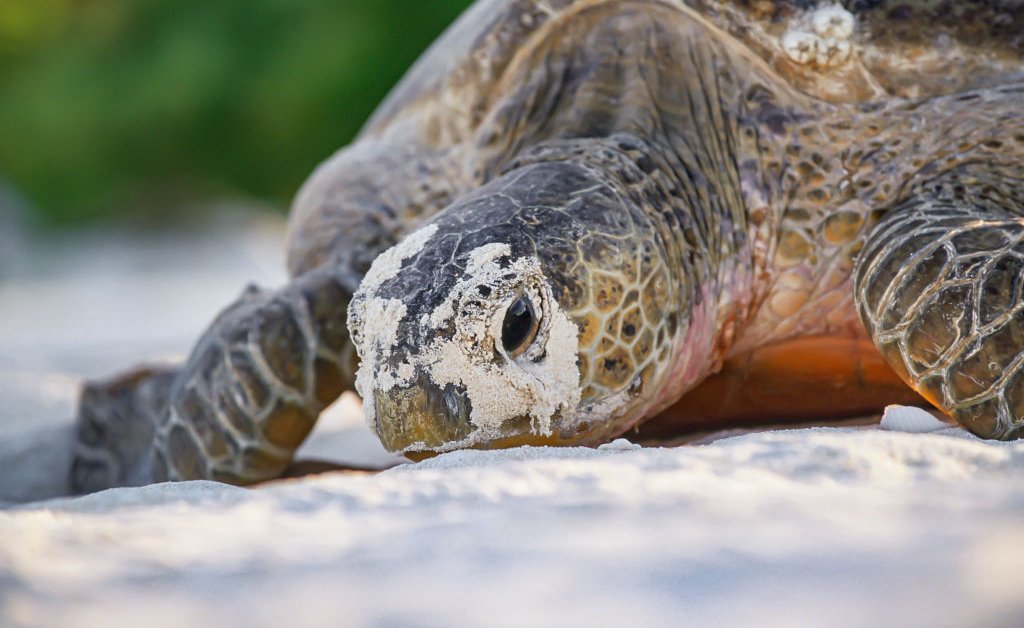
Green Sea Turtles’ Comeback
The International Union for Conservation of Nature (IUCN) announced a significant recovery in green sea turtle populations, which have increased by nearly 30% since the ’70s. Conservation efforts in regions like Ascension Island, Brazil, Mexico, and Hawaii have been instrumental. The IUCN noted, “Conservation efforts have focused on protecting nesting females and their eggs on beaches, expanding community-based initiatives, and using Turtle Excluder Devices.” Despite ongoing threats from climate change, these measures have successfully moved the species from “endangered” to “least concern.” Details here.
Innovative Treatment for Infant Brain Cancer
Dr. Matt Clarke, from the Institute of Cancer Research in London, discovered that existing medications can treat high-grade gliomas in infants, a type of rapidly spreading brain tumor. This advancement eliminates the need for chemotherapy or radiotherapy, which can be particularly harmful to young children. Clarke stated, “To be able to identify a group of tumours that previously would’ve sadly had a terminal prognosis, where we can now have a treatment that can actually make a difference and ensure these children can survive is a massive step forwards.” More information.
Renewable Energy Outpaces Coal
The International Energy Agency (IEA) reported that renewable energy is set to grow faster than fossil fuels over the next decade, a trend confirmed by energy think tank Ember. Their study revealed that renewable energy accounted for 34.3% of global electricity generation in early 2025, surpassing coal for the first time. Despite calls for increased fossil fuel production, the global shift towards renewables appears “inevitable.” Read further.
The Grand Egyptian Museum Opens
November marked the opening of the Grand Egyptian Museum (GEM), a vast cultural repository near the pyramids of Giza. With over 100,000 artifacts, including King Tutankhamun’s tomb, the museum is the world’s largest archaeological museum. Egypt anticipates that this new attraction will invigorate its tourism industry, showcasing the complete contents of King Tut’s tomb for the first time since its discovery in 1922. Explore more.
Original Story at time.com