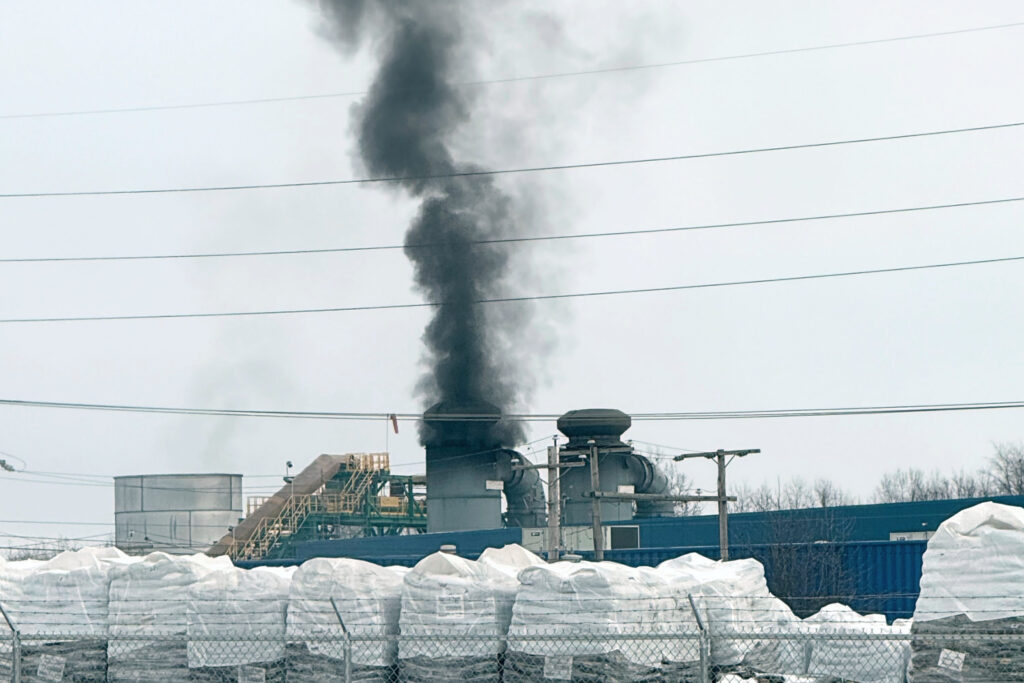
Smoke emissions from a new plastic waste processing plant in central Ohio are raising concerns about a larger “chemical recycling” facility planned in Arizona by the same company.
The Freepoint Eco-Systems plant in Hebron, Ohio, started its operations in 2024 and has since been subject to multiple citizen complaints regarding sooty emissions and emergency shutdowns. The Ohio Environmental Protection Agency reports that plant operators have frequently bypassed pollution controls to vent gases through a flare. The state regulator has issued four violation notices to the company and launched an enforcement case in December.
Kevin Greene, a pollution-prevention expert from Tucson, warns that the Ohio plant’s issues should alert officials overseeing the company’s plans in Eloy, Arizona, around 60 miles south of Phoenix.
Greene also points to the industry’s struggles in using chemical processes to convert mixed plastic waste into fuels or new feedstocks as a warning sign. He suggests a six-month pause to investigate the Hebron plant’s issues and reassess the industry.
Eloy City Councilmember Josephine “JoAnne” Galindo expressed interest in exploring the potential impact on her community and suggested a visit to the Ohio facility.
Freepoint officials declined interviews on their Ohio plant’s performance or the proposed Arizona facility. However, in a statement, the company invited Arizona officials to tour the Ohio plant and stated that they are working with environmental and safety officials to ensure compliance.
At meetings in Arizona, Freepoint’s Chief Development Officer, Geof Storey, assured the Pinal County Board of Supervisors of the learnings from the Ohio project, emphasizing that the Arizona plant would only proceed if the first one succeeds.
The Hebron plant, located near Interstate 70, processes up to 175 million pounds of plastic waste annually, sourced from packaging companies and recycling programs as far as Louisville, Kentucky. Freepoint Eco-Systems, a subsidiary of Freepoint Commodities, aims to build multiple facilities in the U.S., with the proposed Eloy plant set to be twice the Ohio plant’s capacity.
Deregulatory Agenda Boosts Chemical Recycling
The chemical recycling industry, promoted as a solution to the global plastic waste crisis, typically employs pyrolysis, a high-temperature decomposition process. While seen as an alternative for recycling varied plastic waste, the method has faced criticism from environmental groups for being similar to incineration. Critics argue that pyrolysis converts minimal plastic waste into new plastic.
A 2024 lawsuit by California’s Attorney General against ExxonMobil’s Baytown complex alleges that no more than 8% of the incoming plastic waste is converted into new plastic feedstocks.
Freepoint’s reliance on pyrolysis has raised questions, and they declined to disclose how much waste they convert into new plastic. However, Storey told Arizona officials their plants reduce landfill waste and offset oil demand, stating that 70% is converted into pyrolysis oil, 25% into gas for heating, and the remainder into “black carbon.”
Efforts to ease regulations on advanced recycling are ongoing in states like Arizona and Ohio. The U.S. Environmental Protection Agency is considering exempting pyrolysis from federal Clean Air Act regulations.
Fewer than 10 chemical recycling plants operate in the U.S., often on a limited scale. However, about 40 new facilities are in various stages of development, according to Oil and Gas Watch.
Ohio EPA Opens an Enforcement Case
In Ohio, the Freepoint plant has faced repeated pollution issues. Citizen complaints prompted the Ohio EPA to issue violation notices and open an enforcement case. The state’s most recent notice in December cited air-permit violations, including excess emissions of particulates. Ohio EPA is now requiring emissions testing to determine what pollutants are released into the air.
Local organizer Cat Adams from the Buckeye Environmental Network said workers have reported unsafe conditions, and residents are concerned about health impacts. Shawn Jones, a resident who has documented pollution incidents, expressed fears about safety and compliance with environmental regulations.
In Arizona, Greene and Eloy resident Ralph Atchue are calling for stricter permit conditions, citing the company’s pollution record in Ohio. They suggest real-time fenceline air-quality monitoring to detect leaks and equipment failures, ensuring improvements in Eloy and preventing a recurrence of Ohio’s issues.
“`
Original Story at insideclimatenews.org