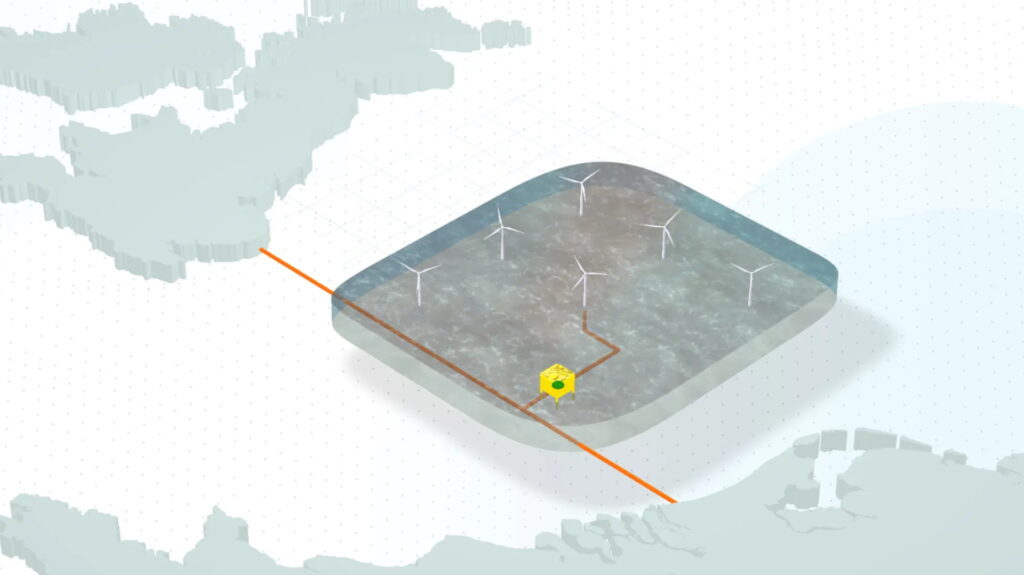
The Netherlands is set to unveil a new offshore electricity bidding zone for wind farms linked to the 1.8 GW LionLink hybrid interconnector, bridging Dutch and UK grids.
Launched in April 2023, the LionLink project is spearheaded by transmission system operators (TSOs) TenneT and National Grid. By early 2025, LionLink was incorporated into the Dutch Offshore Wind Energy Development Framework. In the UK, National Grid sought approval from the energy market regulator Ofgem for the interconnector. The TSOs have signed a Joint Development Agreement (JDA), outlining development steps towards a final investment decision (FID), including procurement, governance, and planning.
The new offshore bidding zone in the Netherlands will cover the Nederwiek 3 wind farm sites (Nederwiek 3a and 3b), connecting to TenneT’s offshore platform linked to LionLink.
The decision was formalized in a parliamentary letter from Stientje van Veldhoven-van der Meer, Dutch Minister of Climate and Green Growth, on 31 March.
This move aims to address structural congestion, adhering to EU guidelines that bidding zones should avoid persistent congestion.
“For LionLink, structural congestion will occur between the offshore platform and the Dutch coast, as shown in a report approved by the Authority for Consumers and Markets (ACM) on 25 March 2025,” the Minister stated.
“EU regulations require bidding zones to be free of structural congestion. Hence, establishing a new offshore bidding zone is essential.”
The Netherlands currently operates a single bidding zone. The new zone will function independently, with its own pricing mechanism.
Prices in the new zone are expected to be lower annually than those in the existing Dutch bidding zone due to the lack of electricity demand. Consequently, the Nederwiek 3 wind farms are projected to earn less revenue compared to those in the existing zone, the letter explains.
However, the realization of LionLink, along with the new bidding zone, offers significant societal benefits, the Minister noted. The project is expected to generate revenue for TenneT, potentially lowering grid tariffs and bolstering electricity supply security. The interconnection line’s dual purpose as an offshore wind export cable landing reduces the number of landing sites needed, easing spatial constraints and cutting TenneT’s investment costs.
Taking into account the anticipated impact on wind energy project revenues in the new bidding zone, financial support for the Nederwiek 3 wind farms might be considered, welcomed by the Dutch wind energy trade association NedZero.
“The cabinet has heeded market concerns about the separate bidding zone’s impact on offshore wind energy business cases,” commented André Craens, Offshore Wind Sector Specialist at NedZero.
The Minister emphasized the need for price certainty in offshore wind farm development, given current market conditions. Any additional subsidies will depend on future electricity demand, prices, and production costs, sourced from the coalition agreement’s offshore wind reserve. The Netherlands Environmental Assessment Agency (PBL) will advise on the maximum bid before the tender, guiding the budget.
A new offshore wind roadmap, detailing progress towards national wind targets, is anticipated by year-end.
Follow offshoreWIND.biz on:
Original Story at www.offshorewind.biz