Shifting Gears: The Electrification Challenge in Automotive Supply Chains
The global automotive industry is at a crossroads as it navigates the intricate shift from internal combustion engines (ICE) to electric vehicles (EVs). This transition is not uniform across the globe, with China leading in electric advancements thanks to substantial investments in critical minerals and new energy vehicle (NEV) manufacturing. Meanwhile, Europe and the United States are making strides, albeit at a varying pace. As a result, Original Equipment Manufacturers (OEMs) are emphasizing battery logistics, infrastructure readiness, and compliance to manage risks and scale operations effectively.
David D’Annunzio, global vice-president and vertical head for Automotive at DP World, highlights the complexity OEMs face: “If you are an OEM now you have to provide multiple powertrains because that shift to electric vehicles (EVs) is somewhere in transition depending on where in the world you are.” The dual demand for ICE and EV models has also led to a 30% increase in the volume of service parts required.
Battery Production Decisions
Automakers are faced with a pivotal decision: to purchase batteries from suppliers or to integrate production vertically. This strategic choice has significant implications for cost, quality, and resilience. For instance, Toyota has initiated its own battery production in the US with a $14 billion factory in North Carolina, while Stellantis is collaborating with CATL for a lithium iron phosphate (LFP) battery plant in Spain. D’Annunzio draws parallels to Henry Ford’s early manufacturing strategies, emphasizing the benefits of vertical integration.
Specialized Logistics for Batteries
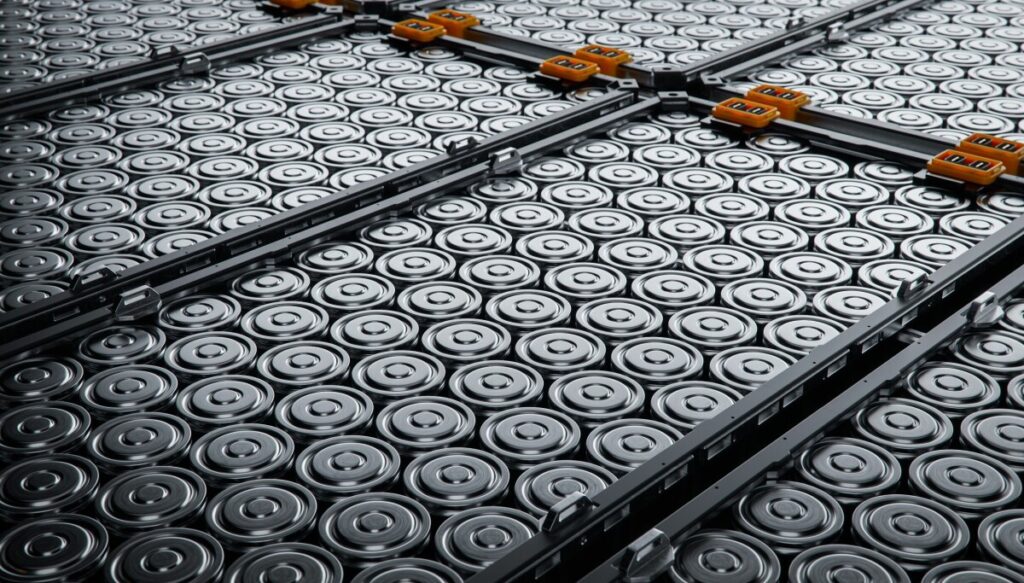
The handling of lithium batteries requires specialized logistics due to their classification as hazardous goods under international regulations. Variables such as temperature, humidity, and state of charge must be controlled to prevent thermal runaway risks. DP World has been instrumental in providing logistics support, ensuring that battery movements are safe and compliant. D’Annunzio explains that most battery deliveries are short-haul, minimizing risks by keeping manufacturing close to assembly plants.
Furthermore, DP World is invested in the circular economy for battery management. “The way the automotive aftermarket is set up for EV batteries is very simple,” states D’Annunzio. “If you take a battery and deliver it to the dealership you have to pick up the old battery and bring it back and recycle the black mass for somebody else. That is exactly what we do.”
Regulatory and Technological Innovations
Europe is set to introduce the battery passport by 2027, a digital certification ensuring the sustainability of EV batteries. Companies like BMW and VW Group are at the forefront of developing this industry-wide standard. Meanwhile, DP World applies digital monitoring to its battery logistics operations, ensuring real-time checks on storage conditions.
The future promises simplified regulations with the advent of solid-state batteries, though the transition remains complex due to current lithium-ion batteries in circulation.
Global Dynamics and Market Challenges
Global trade dynamics are influencing supply chain complexities, with China maintaining a dominant position in NEV production. D’Annunzio notes, “We are all grappling with that. What we are telling our customers is that the best that you can do today is have flexibility, or as Jim Tompkins [CEO Tomkins Ventures] calls it, ‘optionality in your supply chain’.”
Chinese automakers like BYD are aggressively scaling exports and localizing production in key markets. DP World is poised to support these efforts, providing comprehensive logistics services tailored to the needs of Chinese NEV manufacturers.
As the automotive world transitions, DP World continues to innovate, offering solutions that cater to the evolving demands of the industry, ensuring that OEMs can navigate the complexities of the electric future.
Original Story at www.automotivelogistics.media